

 Français
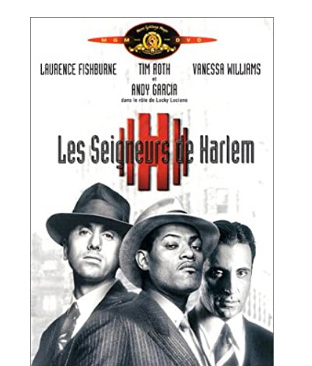
Hoodlum
Synopsis
Set in Harlem during the turbulent 1930s Great Depression, a recently paroled numbers runner and intellectual gangster named Ellsworth 'Bumpy' Johnson returns home to find his turf controlled by mob boss Dutch Schultz. Backed by mafia syndicate chiefs Lucky Luciano and Meyer Lansky, Bumpy wages a brutal, high-stakes turf war against the psychotic, volatile Schultz for control of the Harlem illegal lottery. Amidst the bloodshed, Bumpy romances a local church choir singer, struggling to balance his criminal empire with a path toward redemption.
The Making of the Film
Director Bill Duke sought to bring a stylish, historically rich perspective to the 1930s Harlem underworld, focusing on the real-life African-American gangster Bumpy Johnson. Producers invested heavily in period-accurate jazz club sets, vintage 1930s automobiles, and Harlem street reconstructions. Laurence Fishburne anchored an exceptional ensemble cast featuring Tim Roth, Andy Garcia, and Vanessa Williams. United Artists backed the prestige crime drama.
Critical Reception
Critics offered mixed reviews, praising Laurence Fishburne's commanding lead performance, Tim Roth's manic villainous turn as Dutch Schultz, and the film's stylish Harlem jazz aesthetic, while criticizing its uneven script pacing and historical softening of mob violence. Audiences appreciated the high-wattage star power and unique African-American gangster perspective. It stands as a memorable, stylish entry in 1990s crime cinema.
Behind-the-Scenes Stories
Bill Duke drew visual inspiration from Harlem Renaissance photography, 1930s jazz album covers, and classic Warner Bros. gangster films. Laurence Fishburne studied Bumpy Johnson's intellectual reputation, chess skills, and prison background to craft a thoughtful gangster persona. During filming in Chicago and New York, stunt coordinators orchestrated explosive 1930s mob shootouts. Tim Roth famously improvised several of Dutch Schultz's unhinged manic outbursts.
Themes Explored
The narrative explores Harlem underworld history, racial dynamics in organized crime, numbers racket economics, loyalty, and redemption. It examines how minority gangsters navigated white-dominated syndicates. Furthermore, it highlights survival.
Ending Explained
Dutch Schultz is assassinated by syndicate hitmen for attempting to break mafia rules, and Bumpy Johnson steps away from the bloodshed to seek a new life, securing Harlem's numbers autonomy. A dramatic, satisfying crime resolution closes the film.
Meaning of the Title
The title 'Hoodlum' refers to street-level criminals and gangsters, contrasting the sophisticated boardroom syndicates with violent street enforcers.
Other stylish 1930s Harlem and urban crime films such as New Jack City, American Gangster, and Cotton Club.