

 Français
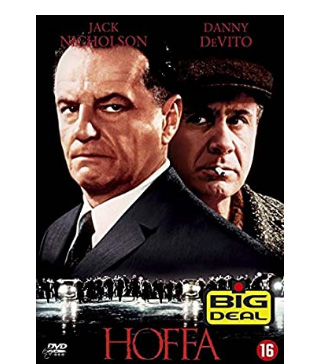
Hoffa
Synopsis
The biographical crime drama chronicles the controversial rise and mysterious disappearance of Jimmy Hoffa, the powerful, iron-fisted president of the International Brotherhood of Teamsters labor union. Spanning decades from the tumultuous labor strikes of the 1930s through his cozy alliances with organized crime, his federal imprisonment, and his eventual 1975 disappearance, the film details his fierce loyalty to workers and his ruthless political power plays. A trusted fictionalized union associate reflects on Hoffa's turbulent life as they wait in a parked car for a fateful meeting.
The Making of the Film
Director Danny DeVito teamed up with screenwriter David Mamet to craft a muscular, theatrical biographical drama exploring labor politics and mafia corruption. Producers invested heavily in period-accurate set design, recreating 20th-century union halls, gritty docks, and federal courtrooms. Jack Nicholson was cast as Jimmy Hoffa, delivering an electrifying, powerhouse lead performance under extensive prosthetic makeup. Danny DeVito co-starred in a major supporting role. 20th Century Fox backed the prestige production.
Critical Reception
Critics offered mixed reviews, praising Jack Nicholson's powerhouse, charismatic lead performance and David Mamet's razor-sharp, rhythmic dialogue while criticizing the film's loose historical chronology and lack of a definitive solution to Hoffa's disappearance. Audiences appreciated the high-wattage star power and gritty union drama, though box office returns were modest. Jack Nicholson earned a Golden Globe nomination for his portrayal. It stands as a solid, compelling biographical drama.
Behind-the-Scenes Stories
Danny DeVito drew visual inspiration from historical newsreels, labor union archives, and classic political dramas like Citizen Kane. Jack Nicholson spent months studying Jimmy Hoffa's actual speeches, vocal cadence, and aggressive physical posture. During filming across Pittsburgh and Detroit studio sets, the production orchestrated massive period labor strike riot sequences with hundreds of extras. David Mamet's screenplay underwent very few structural revisions due to its theatrical precision.
Themes Explored
The narrative explores labor union politics, mafia collusion, power corruption, loyalty, and historical mystery. It examines how championing workers can entangle leaders with dangerous criminal syndicates. Furthermore, it highlights ambition.
Ending Explained
Hoffa is assassinated by mob hitmen inside a desolate Detroit parking lot restaurant meeting, his body allegedly incinerated, leaving behind an enduring American political mystery. A bleak, abrupt historical conclusion closes the film.
Meaning of the Title
The title 'Hoffa' refers directly to the surname of the legendary labor union leader Jimmy Hoffa.
David Newman composed a stirring, brass-heavy orchestral score that captured the gritty blue-collar tension and political ambition of the labor movement.
Other political and biographical crime dramas such as JFK, Nixon, and The Irishman.