

 Français
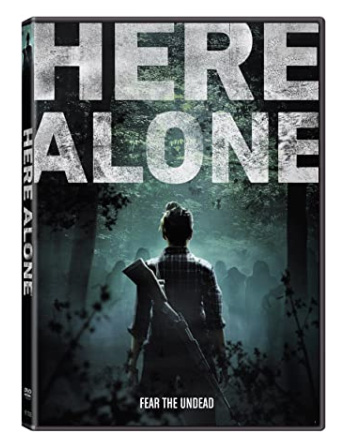
Here Alone
Synopsis
Ann has been surviving alone in the woods of upstate New York since a virus turned most of the population into flesh-hungry creatures. She lives off the land, scavenges supplies and avoids contact with other people. One day she meets a stepfather and his teenage stepdaughter, who need her help. As they settle into an uneasy alliance, Ann must decide whether to trust them or to protect her solitude.
The Making of the Film
Here Alone is the feature debut of director Rod Blackhurst, who had spent a decade making short films. The screenplay was written by David Ebeltoft, who aimed to tell a quiet, character-driven story set in the aftermath of a zombie-like outbreak. The film was largely self-financed, with help from a successful Kickstarter campaign. Blackhurst found his lead actress, Lucy Walters, by contacting her through Twitter messages. Gina Piersanti, Adam David Thompson and Shane West joined the cast. The film premiered at the Tribeca Film Festival in 2016, where it won the Audience Award for Best Narrative Feature. It was then released in cinemas in March 2017 by Vertical Entertainment.
Reviews and reception
Summary of professional reviews
Critics were divided but largely positive. Many praised Lucy Walters's performance and the film's focus on isolation and grief rather than gore. Others felt that the story was thin and that the dialogue was sometimes repetitive.
Audience reception
The film had a small theatrical release and reached most of its audience on home video and streaming. Viewers who enjoy slow-burn horror and character-driven survival stories often responded warmly. It was praised for being a different kind of zombie movie. It remains a favorite of independent horror fans.
Awards and nominations
Here Alone won the Audience Award for Best Narrative Feature at the Tribeca Film Festival in 2016. Lucy Walters later received the Best Actress Award at the Tallgrass Film Festival. The film was also recognized by several other festival audiences. These honors helped to bring attention to the small independent production.
Filming anecdotes
Director's inspirations
Blackhurst wanted to make a film about loneliness and survival, using the zombie genre as a backdrop rather than the main subject. He kept the infected unseen for nearly half the film so that the audience would focus on Ann's struggle. The forest setting adds to the sense of quiet dread.
Production difficulties
The film was made on a very small budget, with a tiny crew and long days in the woods. Filming outdoors in changing weather conditions was a challenge for the actors and the technical team. The shoot was supported by crowdfunding, which helped to complete the production.
Anecdote about a particular scene
One of the film's most striking moments shows Ann performing a careful ritual to distract the infected so that she can scavenge supplies from a nearby farmhouse. Another is the quiet opening, in which she goes through her daily routine in the woods. Many viewers also remember the cinematography of misty lakes and forests.
Themes explored
The film is about loneliness, grief and the struggle to stay human in a hostile world. Ann is haunted by the loss of her family, which shapes her behavior. It explores trust and the difficulty of letting others into one's life. The film also deals with survival and the moral choices it demands. It uses the zombie genre as a metaphor for emotional isolation. The tone is quiet and contemplative.
Ending explained
In the final scenes, Ann is forced to face the dangers around her and the consequences of her choices. Only Ann and Olivia survive, and the two leave together by car. Olivia rests her head on Ann's lap, while Ann breaks down in pain and frustration over what she has endured. The ending suggests that a new bond has formed out of tragedy. It is bittersweet and open-ended.
Meaning of the title
The title Here Alone describes the situation of the main character, who is stranded in the woods in the aftermath of a disaster. The word here points to a specific place, while alone emphasizes her isolation. Together, they sum up the film's theme of solitude. The title is simple and evocative, in keeping with the film's minimalism.
Original Soundtrack
The music was composed by Eric D. Johnson, who created a spare and atmospheric score that suits the film's quiet mood. It supports the sense of isolation without overpowering the natural sounds of the forest.
Similar Films
- 28 Days Later (2002): survivors in the aftermath of a deadly outbreak.
- The Road (2009): a father and son in a bleak post-apocalyptic world.
- It Comes at Night (2017): a family in isolation faces a deadly sickness.
- Z for Zachariah (2015): survivors in a quiet post-apocalyptic setting.
- The Girl with All the Gifts (2016): a thoughtful take on the zombie story.