

 Français
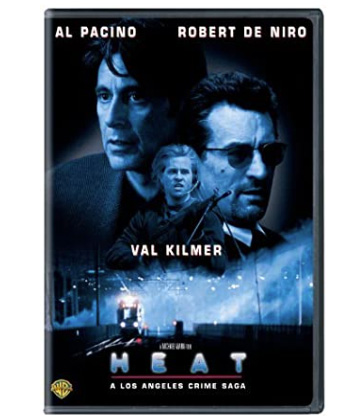
Heat
Synopsis
Neil McCauley, a disciplined professional thief, leads a crew that carries out meticulously planned heists in Los Angeles. On his trail is Vincent Hanna, a driven police lieutenant who is just as obsessive. As each man learns more about the other, a mutual respect grows. Their paths are heading toward an unavoidable confrontation.
The Making of the Film
Michael Mann had explored the story earlier in a TV movie, L.A. Takedown (1989), and revisited it with a bigger scale. The story was inspired by a real Chicago detective, Chuck Adamson, who pursued a criminal named Neil McCauley and later met him for coffee. Robert De Niro and Al Pacino were cast as the two leads, with a large supporting cast including Val Kilmer.
Reviews and reception
Summary of professional reviews: Critics largely praised the film, highlighting the direction, the cast and its portrayal of Los Angeles. Some found it long, but many considered it a landmark crime thriller.
Audience reception: The film did well at the box office, with around $187 million worldwide, and its reputation has grown considerably. It is now regarded as a classic of the genre.
Behind-the-scenes anecdotes
Production difficulties: The downtown shootout was filmed with real gunfire, and the actors trained extensively with weapons. The sound was captured live, which gave the scene its raw impact.
Anecdote about a particular scene: The diner scene between De Niro and Pacino is a highlight, as the two actors shared an extended scene together for the first time.
Themes explored
The film explores the parallels between cop and criminal, devotion to a profession at the expense of personal life, and loneliness in a modern city. It also examines the cost of living by a strict code.
Ending explained
Hanna tracks McCauley to an airfield and kills him in a final confrontation. As McCauley dies, Hanna takes his hand, an act of respect between enemies.
Meaning of the title
"Heat" is slang for police pressure, and also evokes McCauley's code of never getting attached to anything he cannot walk away from if he feels the heat around the corner.
Soundtrack
Elliot Goldenthal's score and the use of music by Moby, among others, give the film a distinctive, atmospheric sound.
Similar films
Fans of this film might enjoy Collateral, The Departed, Public Enemies, Ronin or The Town.