

 Français
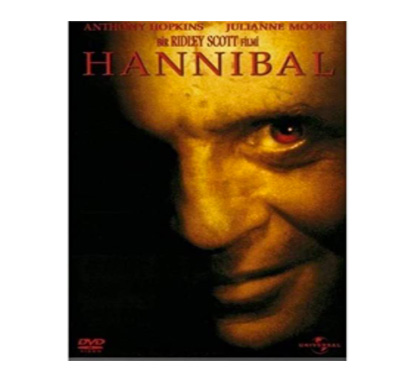
Hannibal
Synopsis
Ten years after the events of "The Silence of the Lambs", Dr. Hannibal Lecter lives in hiding in Florence, Italy, enjoying art, music and fine food. FBI agent Clarice Starling, whose career is in trouble, is drawn back into his orbit when a wealthy and disfigured victim, Mason Verger, plots a terrible revenge. As an Italian detective closes in on Lecter, the cat-and-mouse game between the cannibal and the agent resumes. The film is a gothic thriller about obsession, horror and the strange bond between two opposites.
The Making of the Film
Hannibal is the sequel to "The Silence of the Lambs" and is based on the 1999 novel by Thomas Harris. After the success of the earlier film, the producers waited many years to adapt the book, which was far more graphic and operatic. Ridley Scott took over as director, since Jonathan Demme had declined to return. Anthony Hopkins reprised his Oscar-winning role as Lecter, but Jodie Foster chose not to play Clarice again, and Julianne Moore replaced her. The screenplay, written by David Mamet and Steven Zaillian, adapted the novel and notably changed its controversial ending. Filming took place in Italy and the United States, with Florence as a key backdrop. The film was released in early 2001.
Reviews and Reception
Summary of Professional Reviews
Critics were divided. Many admired the film's striking visuals, the lavish settings in Florence and Anthony Hopkins' performance. Others felt that it lacked the psychological subtlety of its predecessor and indulged too much in gore. Julianne Moore's portrayal of Clarice was generally praised, though she was inevitably compared with Foster. The film was seen as an elegant but uneven follow-up.
Audience Reception
The film was a huge commercial success, earning over 350 million dollars worldwide. Audiences were drawn by the chance to see Hopkins as Lecter again, and its grisly set pieces generated plenty of discussion. Some fans of the original were disappointed by its different tone. Even so, it remains a popular and much-debated entry in the franchise.
Filming Anecdotes
Production Challenges
The decision to make the sequel was complicated by the departure of the original director and lead actress. The adaptation also had to find a way to handle the novel's extremely dark ending, which was not suitable for a mainstream film. Scott chose to keep the visual richness of the book, but softened its most controversial turn.
Anecdote About a Particular Scene
Gary Oldman, who plays the disfigured Mason Verger, was almost unrecognizable under heavy prosthetic makeup and appeared uncredited. His transformation was so complete that many viewers did not realize it was him. The character remains one of the film's most striking and unsettling creations.
Themes Explored
The film is a dark meditation on obsession, appetite and the fascination with evil. It explores the strange bond between Lecter and Clarice, a relationship built on admiration, fear and mutual understanding. Revenge is another central theme, embodied by Verger, who is as monstrous as the man he hunts. The story also contrasts refined culture with savage violence, as Lecter moves comfortably through art and opera. Power and institutions appear as corrupt forces, represented by the officials who turn against Clarice. In its gothic way, the film asks where civilization ends and barbarity begins.
Ending Explained
The finale brings Clarice face to face with Lecter once more, and the film leaves their relationship deliberately ambiguous. Lecter escapes after a daring and gruesome sequence, vanishing into the world again. Unlike the novel, the film does not end with Clarice joining him, and instead leaves her as a determined and independent figure. This choice softens the book's most shocking twist while keeping the sense that the cat-and-mouse game is never entirely over.
Meaning of the Title
The title is the first name of the franchise's iconic villain, Hannibal Lecter. Choosing only the name puts the focus squarely on the character, who had become one of cinema's most famous monsters. It also hints at a more intimate story, centered on the man rather than the investigation.
Soundtrack
The score was composed by Hans Zimmer, with passages inspired by classical and operatic music. The score matches the film's gothic, elegant tone and plays well with the Florence setting. It adds a haunting beauty to even the most disturbing scenes.
Similar Films
- The Silence of the Lambs (1991): the original film and a classic thriller.
- Red Dragon (2002): another adaptation of a Thomas Harris novel featuring Lecter.
- Se7en (1995): a dark thriller about a methodical killer.
- Manhunter (1986): the first film adaptation of the Lecter saga.