

 Français
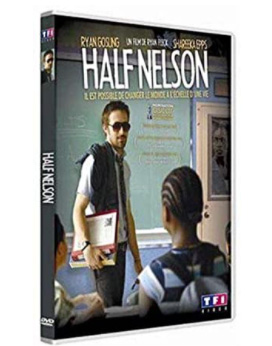
Half Nelson
Synopsis
This gritty, deeply intimate independent drama follows Dan Dunne, an idealistic inner-city junior high school history teacher and basketball coach struggling with a severe cocaine addiction. When one of his dedicated students, a sharp young girl named Drey, discovers him unconscious in the locker room after a bender, an unlikely and poignant friendship forms between them. As Dan tries to inspire his students with progressive historical lessons, his personal life spirals dangerously out of control amidst the bleak urban backdrop of Brooklyn. It is a raw, heartbreaking masterclass in human frailty and redemption.
The Making of the Film
The project originated from director Ryan Fleck and co-writer Anna Boden's desire to expand their acclaimed short film 'Gowanus, Brooklyn' into a feature-length character study. Filmmakers sought to avoid melodramatic addiction clichés by presenting a nuanced, non-judgmental portrait of a functional addict caught between intellectual idealism and self-destruction. Inspiration was drawn from real urban school environments, independent gritty realism, and documentary-style filmmaking. The creative team aimed to construct an authentic, low-budget drama driven entirely by complex human performances.
Critical Reception
Critics offered overwhelming, rapturous acclaim, heavily praising Ryan Gosling's staggering, Oscar-nominated lead performance and the naturalistic chemistry of the cast. Reviewers noted that the film successfully navigated the delicate terrain of addiction and urban poverty without resorting to cheap sentimentality or moral preaching. The quiet, unvarnished direction and intimate hand-held cinematography received universal praise for making the viewer feel like a silent observer in the characters' lives. It was immediately celebrated as a pinnacle of American independent cinema.
Audience reception was deeply appreciative among cinephiles and indie film enthusiasts, driving the low-budget drama to strong critical momentum and arthouse success. Viewers on public platforms commended the film's raw emotional honesty, complex character dynamics, and refusal to offer easy Hollywood resolutions. Word-of-mouth solidified Ryan Gosling's status as one of his generation's finest dramatic actors. It remains widely regarded as a modern indie classic.
Awards season brought major recognition, most notably culminating in an Academy Award nomination for Ryan Gosling as Best Actor. Independent Spirit Awards and various film critic associations showered the production with honors for Best Screenplay and breakthrough performances, particularly highlighting newcomer Shareeka Epps. These accolades cemented its status as a landmark triumph in independent filmmaking.
Behind-the-Scenes Stories
The director drew aesthetic inspiration from 1970s American independent cinema and gritty documentary photography to establish an authentic, unpolished visual style. Every classroom, apartment, and basketball court in Brooklyn was chosen to reflect the real socioeconomic realities of urban life. The production team collaborated with teachers and counselors to ensure that classroom teaching methods and addiction struggles mirrored real-world behavior. These artistic choices created a fully realized, believable world.
Production presented unique logistical and financial challenges, operating on a very tight independent budget that required efficient scheduling and natural lighting setups. Shooting on location in real Brooklyn neighborhoods exposed the cast and crew to authentic urban environments and street sounds. Ryan Gosling spent weeks shadowing real inner-city teachers and attending addiction support meetings to prepare for the physically and emotionally demanding role. Furthermore, fostering a safe, collaborative environment was vital for guiding young newcomer Shareeka Epps through heavy dramatic scenes.
During the filming of the pivotal locker room discovery sequence, the director utilized continuous, unbroken takes to capture the raw shock and confusion of the characters. To maintain authentic emotional vulnerability, Gosling and Epps spent extensive time building trust off-camera prior to principal photography. The crew utilized handheld cameras and available window light to enhance the documentary-style intimacy. This rigorous dedication resulted in mesmerizing, career-defining performances.
Casting was anchored by discovering exceptional young talent alongside casting a rising Ryan Gosling. Shareeka Epps was found through local youth outreach programs in Brooklyn, bringing a natural, unstudied brilliance to the role of Drey. Supporting roles were filled with authentic local actors who grounded the school and neighborhood scenes in gritty realism. This targeted casting strategy was the absolute cornerstone of the film's emotional authenticity.
Themes Explored
The narrative deeply explores themes of addiction, idealism, and the painful collision between personal failure and public responsibility. It examines urban isolation, mentorship, and the complex bonds that form across generational divides. Additionally, it highlights dialectical philosophy as a tool for understanding systemic societal struggles. Ultimately, the film reflects on redemption, human frailty, and finding small moments of grace amidst chaos.
Ending Explained
The poignant conclusion reveals that after Dan hits rock bottom following an arrest for drug possession, he shares a quiet, understanding moment with Drey at a post-basketball tournament party. Though Dan remains a recovering addict with an uncertain future, their shared look acknowledges mutual survival and personal growth without offering a false Hollywood cure. This ambiguous resolution emphasizes that healing is an ongoing, fragile journey.
Meaning of the Title
The title refers both to a wrestling hold (the half nelson) and metaphorically to how addiction and systemic pressures keep individuals pinned down.
Original Soundtrack
The atmospheric musical score by the band Broken Social Scene received praise for utilizing melancholic indie-rock textures that amplified the film's emotional intimacy.
Similar Films
Films sharing similar gritty addiction and intimate character-study themes include Leaving Las Vegas (1995), Hustle & Flow (2005), and The Florida Project (2017).