

 Français
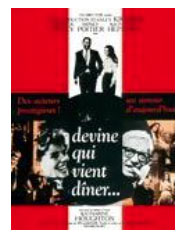
Guess Who's Coming to Dinner
Synopsis
Set in San Francisco in 1967, a liberal, well-to-do American couple, Matt and Christina Drayton, find their progressive values put to the ultimate test. Their twenty-three-year-old daughter, Joey, returns home unexpectedly from a Hawaiian vacation accompanied by her new fiancé, Dr. John Prentice—a brilliant African-American physician. While the young couple is deeply in love and eager for family blessing, the parents must confront their own hidden racial biases within a single tense, transformative day. Adding further complications, John's parents arrive unexpectedly from Los Angeles, bringing their own generational objections to the interracial engagement. Ultimately, this groundbreaking comedy-drama challenges societal prejudice with sharp wit, profound grace, and moral courage.
The Making of the Film
Director and producer Stanley Kramer collaborated with pioneering screenwriter William Rose to tackle the taboo subject of interracial marriage during the height of the American civil rights movement. The project was conceived as a brave, progressive social comedy-drama designed to challenge racial prejudice in mainstream Hollywood cinema. Kramer drew inspiration from the shifting legal and cultural landscape of 1967 America, shortly before the Supreme Court legalized interracial marriage nationwide in Loving v. Virginia. The production prioritized intimate theatrical drawing-room staging, brilliant verbal sparring, and legendary screen chemistry.
Critical Reception
Critics offered generally favorable reviews upon release, praising its bold social relevance, witty screenplay, and legendary lead performances. Reviewers noted that Stanley Kramer handled a revolutionary racial milestone with warmth, humor, and immense theatrical dignity. Some film critics, however, felt that the film was overly idealistic and staged too much like a polite theatrical play. Despite minor stylistic critiques, audiences and cultural historians embraced it as a monumental cinematic milestone.
Audiences flocked to theaters, turning the social comedy-drama into a massive commercial blockbuster and a defining cultural touchstone of the late 1960s. Viewers worldwide praised the crackling chemistry between Katharine Hepburn and Spencer Tracy, as well as Sidney Poitier's undeniable charisma. It became a powerful agent of social change, normalizing interracial romance for millions of mainstream moviegoers. Many hailed it as an emotional triumph of human empathy and progressive values.
Guess Who's Coming to Dinner won two Academy Award wins out of ten nominations, including Best Actress for Katharine Hepburn and Best Original Screenplay for William Rose. Spencer Tracy received a posthumous Oscar nomination for his profoundly moving final cinematic performance. The film also triumphed at various international film awards. These prestigious accolades cemented its legacy as an immortal classic of American cinema and civil rights history.
Behind-the-Scenes Stories
Stanley Kramer was deeply inspired by the urgent need for Hollywood to address racial equality and challenge anti-miscegenation laws through accessible comedy-drama. He wanted to use the warmth of domestic comedy to disarm prejudiced viewers and promote universal human empathy. The visual style utilized sun-drenched San Francisco bay views, elegant home interiors, and classical framing. The director also worked closely with writer William Rose to ensure the dialogue balanced moral gravity with sparkling humor.
Making the film carried immense emotional weight for the cast and crew, as legendary actor Spencer Tracy was severely ill with terminal heart and kidney disease during production. Katharine Hepburn personally arranged and guaranteed Tracy's insurance bond so he could complete his final film role before his passing. Shooting took place across soundstages in Hollywood under deeply emotional and protective conditions for Tracy. Despite the heartbreaking circumstances, the cast delivered flawless, legendary performances.
During the filming of Spencer Tracy's famous final monologue defending young love, the entire crew on set stood in absolute silence with tears in their eyes. Katharine Hepburn watched from off-camera, deeply moved by her lifelong partner's final cinematic gift to the world. Sidney Poitier brought immense dignity and intellectual grace to his trailblazing role as the perfect fiancé. The profound love and professional respect on set gave the production an unforgettable emotional resonance.
Casting directors secured the ultimate Hollywood dream team to anchor the historic social experiment. Katharine Hepburn and Spencer Tracy were cast as the progressive parents, bringing decades of real-life partnership to the screen. Sidney Poitier was chosen as Dr. John Prentice, representing the pinnacle of Black excellence and charm. Katharine Houghton, Hepburn's actual niece, was cast as the young bride Joey Drayton, adding family authenticity.
Themes Explored
The film heavily explores interracial marriage, generational divides, and the hypocrisy of hidden racial prejudices among self-proclaimed liberals. It examines the courage required to love freely across societal barriers in 1960s America. Another core motif is parental love, acceptance, and the wisdom of trusting the younger generation. It also touches upon human dignity, social etiquette, and civil rights progress.
Ending Explained
The film concludes with a legendary, deeply moving final monologue delivered by Spencer Tracy as the father, Matt Drayton, who sets aside his initial generational hesitations. He passionately declares that true love between two exceptional young people is all that matters, giving the interracial engagement his unconditional blessing. As the families finally sit down together for dinner in harmonious unity, the room is filled with profound relief, joy, and mutual respect. This iconic finish celebrates the triumph of love and progress over ancient prejudice.
Meaning of the Title
The title refers literally to the unexpected dinner invitation extended by the young daughter to her parents, introducing her Black fiancé without prior warning. It invokes a classic domestic comedy premise infused with revolutionary social stakes. The playful phrasing sets a welcoming, deceptively light tone for a groundbreaking cultural milestone. It encapsulates the pivotal domestic summit where racial barriers are dismantled over a family meal.
Similar films include Loving, Get Out, The Big Sick, and Hidden Figures, which feature interracial relationships, social barriers, and civil rights themes.