

 Français
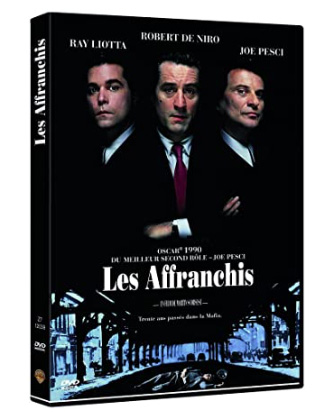
Goodfellas
Synopsis
A young Henry Hill grows up fascinated by the world of organized crime in his Brooklyn neighborhood. Determined to become a respected gangster, he gradually rises through the ranks alongside Jimmy Conway and Tommy DeVito. His involvement in increasingly dangerous criminal activities brings him wealth, influence and excitement, but also exposes him to paranoia, violence and betrayal. As his world begins to collapse, Henry must make a decision that will permanently change his life and the lives of those closest to him.
The Film's Origins
The origins of Goodfellas lie in Nicholas Pileggi's nonfiction book Wiseguy: Life in a Mafia Family, published in 1985. The book recounts the extraordinary criminal career of Henry Hill, a real-life mob associate who eventually became an FBI informant. Martin Scorsese discovered the book while working on The Color of Money and immediately recognized its cinematic potential. Fascinated by the everyday reality of organized crime, he contacted Pileggi to discuss adapting the story. The two men developed a screenplay together, drawing extensively on Hill's personal experiences and recollections. Rather than presenting the Mafia through the romanticized conventions of traditional gangster movies, they wanted to portray it as an ordinary social environment governed by loyalty, hierarchy and violence. The narrative was designed to capture several decades of American criminal history through the perspective of someone who had experienced it firsthand. Pileggi's collaboration with Scorsese allowed the film to combine investigative detail with the director's distinctive visual storytelling. The result became one of the most influential gangster films in modern cinema.
Critical Reception
Goodfellas received exceptional reviews from professional critics upon its release. Many praised Scorsese's energetic direction, the extraordinary editing by Thelma Schoonmaker and the film's innovative use of narration and music. Ray Liotta was widely appreciated for his portrayal of Henry Hill, while Robert De Niro and Joe Pesci received particular acclaim for their performances. Some commentators expressed reservations about the film's graphic violence and its apparently glamorous depiction of criminal life, but most recognized its remarkable artistic achievement.
The film also became a major success with audiences and established itself as a landmark of American gangster cinema. Its compelling characters, dark humor and fast-moving narrative attracted viewers well beyond the traditional crime-film audience. Its reputation continued to grow over the following decades, with many viewers and filmmakers considering it one of the finest films ever made about organized crime. Its influence can be seen in numerous subsequent films and television productions.
Goodfellas received six Academy Award nominations, including Best Picture, Best Director and Best Adapted Screenplay. Joe Pesci won the Oscar for Best Supporting Actor for his terrifying and memorable performance as Tommy DeVito. The film also earned nominations at the Golden Globes and other major awards ceremonies. Its recognition by critics and professional organizations confirmed its importance within American cinema. Today, it remains one of Martin Scorsese's most celebrated achievements.
Behind-the-Scenes Stories
Martin Scorsese drew inspiration from the atmosphere of the neighborhoods where he grew up in New York. His childhood observations of Italian-American communities helped him reproduce the social codes, expressions and everyday behavior of the characters. He wanted the audience to experience the criminal world from the inside rather than observe it from a conventional distance. Nicholas Pileggi also contributed his extensive knowledge of organized crime and the people he had interviewed.
One of the production's greatest challenges was transforming a complex true story spanning approximately twenty-five years into a coherent cinematic narrative. The filmmakers had to condense numerous real-life events while preserving the essential relationships and chronology. Ray Liotta prepared extensively for his role by studying recorded conversations between Nicholas Pileggi and Henry Hill. The actor also worked to reproduce Hill's speech patterns and mannerisms. The production required careful attention to period details, particularly costumes, hairstyles, cars and interior decoration.
The famous Copacabana nightclub sequence was filmed using an elaborate continuous tracking shot. The camera follows Henry and Karen through the back entrance, past the kitchen and into the nightclub, where they receive a privileged table. This sequence illustrates how easily Henry can manipulate his environment and how impressive his lifestyle appears to Karen. It was carefully choreographed to create the impression that the audience is discovering the establishment alongside the couple. The scene has since become one of the most studied tracking shots in American cinema.
Several actors considered for important roles were ultimately not selected. Val Kilmer, Nicolas Cage and Alec Baldwin were among those who pursued the role of Henry Hill before Ray Liotta was chosen. Robert De Niro, who had initially considered himself too old for the central character, reportedly helped direct Scorsese's attention toward Liotta. The casting of Joe Pesci as Tommy DeVito proved particularly inspired, as his performance became one of the film's defining elements.
Themes Explored
Goodfellas explores the seductive appeal of power, money and social recognition within organized crime. Henry Hill initially sees the Mafia as a community offering protection, friendship and opportunities unavailable to ordinary people. The film examines how this attraction gradually turns into dependence and imprisonment. Loyalty is presented as a fundamental value, but one constantly undermined by personal ambition and fear. Friendship becomes fragile when financial interests and survival are at stake. The story also examines the relationship between violence and masculinity, showing how aggression becomes a means of establishing authority. Family life is another important theme, particularly through Karen's changing perception of Henry and his criminal activities. The film contrasts the apparent glamour of criminal success with the insecurity and paranoia hidden beneath it. It also questions the possibility of escaping a world in which betrayal is often the only route to survival. Ultimately, Goodfellas portrays organized crime as a system that destroys the very relationships and freedoms it initially promises.
Ending Explained
The ending of Goodfellas shows Henry Hill entering the witness protection program after deciding to cooperate with the authorities. Having betrayed his former associates, he must abandon the criminal identity that defined his entire existence. Jimmy and Tommy are no longer part of his world, and the lifestyle he once considered extraordinary has disappeared. Henry now lives an ordinary suburban existence, far removed from the excitement and privileges of his former life. His final complaint about having to live like an ordinary person reveals that he has not fundamentally rejected the values of the criminal world. He misses the money, the attention and the sense of importance that accompanied his former position. This dissatisfaction suggests that his escape is physical rather than psychological. The film deliberately avoids presenting his new circumstances as a straightforward redemption. Henry has survived, but he has lost the identity around which he built his entire life. The final images emphasize the emptiness of a man who can no longer return to his former world. Scorsese therefore ends the story with a bitter reflection on the price of a life devoted to power and criminal ambition.
Meaning of the Title
The title Goodfellas refers to the expression used to describe respected members or associates of the American Mafia. In criminal slang, being a goodfella suggests belonging to an exclusive community with its own rules, privileges and expectations. The expression initially conveys friendship, solidarity and mutual protection. However, the film gradually reveals the hypocrisy hidden behind this reassuring terminology. The characters who call themselves friends are frequently capable of betrayal, intimidation and murder. The title therefore carries an ironic meaning, contrasting the image of respectable insiders with their violent behavior. It also reflects Henry Hill's fascination with belonging to a world in which recognition and status seem more important than morality. By choosing this title instead of the original book title Wiseguy, the filmmakers created a memorable expression that captures both the attraction and the contradictions of Mafia culture.
Original Soundtrack
Goodfellas is particularly famous for its exceptional musical selection, which is one of the most recognizable elements of the film. Rather than relying primarily on a traditional orchestral score, Martin Scorsese assembled an extensive collection of popular songs from the 1950s, 1960s and 1970s. The soundtrack includes memorable recordings by Tony Bennett, The Ronettes, The Rolling Stones, Cream and Derek and the Dominos. Songs such as Layla, Gimme Shelter and Rags to Riches are closely associated with some of the film's most important sequences. Scorsese carefully selected the music to reflect the characters' changing circumstances and the different periods of the story. The contrast between cheerful popular songs and brutal criminal events creates a particularly striking cinematic effect. This approach gives the film an energetic rhythm while reinforcing its historical atmosphere. The soundtrack is widely regarded as one of the greatest examples of popular music used in cinema.
Films with similar themes include Casino, The Godfather, The Godfather Part II, Donnie Brasco, A Bronx Tale, The Irishman, Once Upon a Time in America and American Gangster. These films explore organized crime, loyalty, family relationships, ambition and the consequences of a life governed by violence.