

 Français
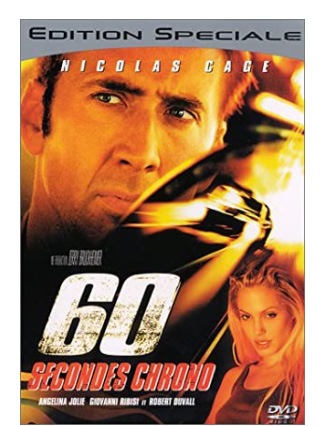
Gone in 60 Seconds
Synopsis
A legendary, retired master car thief named Memphis Raines is forced to return to the criminal underworld one last time when a ruthless international gangster threatens to execute his reckless younger brother. To save his brother's life, Memphis must assemble his eccentric crew of veteran carjackers and steal fifty rare, high-end luxury sports cars across Los Angeles in a single night. With federal agents and local police hot on their heels, they race against the clock through chaotic streets and rooftop jumps. This high-octane action thriller delivers turbo-charged automotive spectacle.
The Making of the Film
The concept for Gone in 60 Seconds was adapted as a remake of H.B. Halicki's cult classic 1974 independent action film of the same name. Producer Jerry Bruckheimer and director Dominic Sena wanted to update the premise into a high-budget Hollywood blockbuster featuring an all-star cast, cutting-edge electronic music, and pristine customized muscle cars like the legendary 1967 Shelby Mustang GT500 known as "Eleanor." Screenwriter Scott Rosenberg crafted a slick, fast-paced script balancing automotive enthusiasm with family redemption stakes. The production team aimed to deliver premier popcorn entertainment.
Critical Reception
Professional critics gave mixed-to-negative reviews to Gone in 60 Seconds, criticizing its predictable plot tropes, thin character development, and excessive music-video style editing while praising its thrilling car chases and Nicolas Cage's cool screen presence. Reviewers noted that while narrative depth was minimal, the film delivered the high-octane automotive carnage action fans craved. The public response was a massive worldwide box office blockbuster, driving strong ticket sales and cementing its status as an iconic car-culture classic of the early 2000s. Audiences loved the final Mustang chase sequence. The film received multiple MTV Movie Award nominations.
Filming Anecdotes
Director Dominic Sena drew heavy inspiration from classic car-chase cinema like Bullitt and The French Connection, as well as southern California street-racing culture. Production involved building twelve custom-built replica 1967 Shelby GT500 "Eleanor" Mustangs, several of which were heavily damaged or destroyed during daring stunt jumps. During the filming of the intense shipyard and bridge jump sequences, Nicolas Cage and Angelina Jolie performed many of their own driving stunts under professional supervision. Before Nicolas Cage was cast as Memphis Raines, the script went through various studio casting revisions.
Main Themes
The film explores deep themes of family loyalty, brotherhood, redemption, temptation, and the obsessive love of high-performance automobiles. It highlights how a reformed criminal can risk everything to protect a sibling from deadly mistakes. Additionally, it celebrates automotive craftsmanship and speed.
Ending Explanation
The climax resolves the high-stakes heist when Memphis Raines delivers the fiftieth and final car—the battered Shelby Mustang—to the dockside shipping yard just as the midnight deadline expires, securing his brother's freedom. When the treacherous crime boss attempts to execute them anyway, a shootout ensues, resulting in the villain's death and the police arriving to close the case. With his brother safe and his criminal debt paid off, Memphis attends a celebratory backyard barbecue with his crew and rekindles his romance with Sway. The film ends on a triumphant, roaring engine note of freedom and brotherhood.
Title Significance
The title directly references the central, legendary car-stealing challenge of the film: stealing any vehicle in sixty seconds or less.
The film features a pulsating, energetic electronic rock and techno musical soundtrack featuring artists like The Cult, Moby, and The Chemical Brothers that drives the high-speed car chases.
NULL
The Fast and the Furious, Need for Speed, Driven, Bad Boys