

 Français
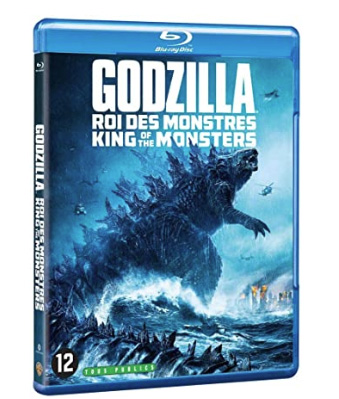
Godzilla
Synopsis
In 1999, a mysterious structural collapse at a nuclear quarantine zone in Japan claims the life of scientist Joe Brody's wife, leaving him obsessed with uncovering the truth. Fifteen years later, Joe's estranged son Ford, a bomb disposal U.S. Navy officer, travels to Tokyo to bail his father out after he sneaks into the ruins of the quarantine zone. There, they witness the awakening of a massive, parasitic ancient creature known as a MUTO that feeds on radiation. As a second, even larger MUTO threatens global destruction, a colossal, ancient apex predator known as Godzilla emerges from the deep ocean to hunt them down. Humanity finds itself caught in an apocalyptic crossfire between warring prehistoric titans.
The Making of the Film
Directed by Gareth Edwards, the film was conceived as a gritty, realistic reboot of Toho's legendary Godzilla franchise, launching Legendary Pictures' MonsterVerse. Edwards sought to approach the giant monster narrative through a terrifying, grounded disaster-movie lens reminiscent of Steven Spielberg's Jaws and Close Encounters of the Third Kind. The production focused heavily on building massive tension by concealing the full view of the monsters during early acts. The screenplay blended environmental Cold War paranoia with modern tactical military action.
Critical Reception
Critical reception for the film was generally positive, with reviewers praising its breathtaking cinematography, atmospheric tension, patient pacing, and respectful homage to classic Toho kaiju films. Critics lauded Edwards's visual style, though some viewers expressed frustration with the human character development and monster screen-time distribution. Audiences flocked to theaters worldwide, turning the blockbuster into a massive financial success. It is celebrated today as a stellar modern monster movie.
Behind-the-Scenes Stories
Gareth Edwards utilized innovative visual effects techniques, shooting action sequences from low human-eye perspectives to emphasize the terrifying towering scale of the monsters. Aaron Taylor-Johnson underwent intensive military tactical training to portray a bomb disposal Navy soldier authentically. Bryan Cranston brought immense emotional intensity to his role as the grieving scientist Joe Brody. The iconic Godzilla roar was carefully redesigned and amplified for modern IMAX sound systems.
Themes Explored
The film explores nuclear hubris, environmental destruction, human insignificance before natural forces, and ancient ecosystem balance. It highlights family survival, military resilience, and paternal duty. Apex predators drive the apocalyptic plot. It also touches upon nature fighting back against human interference.
Ending Explained
Godzilla defeats both MUTO creatures in a brutal beachfront battle in San Francisco, using his atomic breath to obliterate them before collapsing in exhaustion. Having restored ecological balance to the planet, the bruised giant slowly wakes up and lumbers back into the ocean depths, vanishing beneath the waves. Humanity honors Godzilla as a silent savior rather than an enemy, recognizing the earth belongs to ancient powers. The conclusion provides a magnificent, awe-inspiring end to the monster disaster.
Meaning of the Title
The title is the iconic, single-word name of the legendary prehistoric monster created by Toho Studios in 1954, symbolizing atomic destruction and nature's wrath. It sets an epic creature-feature tone.
Alexandre Desplat composed a brooding, dissonant orchestral score featuring heavy brass and percussion that amplified the terrifying disaster dread.
Godzilla: King of the Monsters, Jurassic Park, Pacific Rim, Cloverfield