

 Français
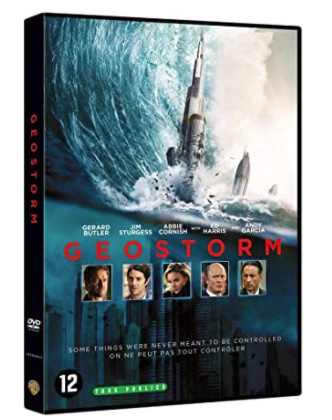
Geostorm
Synopsis
In the near future, after unprecedented climate disasters devastate the Earth, an international coalition of scientists builds "Dutch Boy"—a vast network of orbital weather-control satellites designed to neutralize natural disasters. However, years later, the system malfunctions, suddenly generating massive localized man-made extreme weather catastrophes that threaten to trigger a global extinction-level "Geostorm." The brilliant satellite designer who created the system is dispatched into space to fix the glitch while his brother uncovers a government assassination conspiracy on Earth. This high-octane disaster sci-fi spectacle delivers massive destruction and global thrills.
The Making of the Film
The concept for Geostorm was conceived by writer-director Dean Devlin, who was inspired by conversations with his daughter about climate change and whether humanity could ever technologically control planetary weather. Producer and co-writer Devlin wanted to craft a classic 1990s-style disaster blockbuster reminiscent of Independence Day and The Day After Tomorrow. The production team spent years developing complex digital particle simulations to render catastrophic tsunamis, freezing storms, and heatwaves engulfing global cities. The project underwent extensive reshoots under producer Jerry Bruckheimer to punch up action pacing.
Critical Reception
Professional critics gave overwhelmingly negative reviews to Geostorm, criticizing its cliché-ridden script, wooden dialogue, implausible science, and derivative disaster movie formulas. Reviewers noted that despite Gerard Butler's rugged screen presence and impressive digital destruction sets, the film felt like an outdated relic of 1990s popcorn schlock. The public response was modest domestically, though international box office markets cushioned the financial blow. Audiences found the over-the-top weather disasters entertaining in a campy way. The film did not receive major mainstream awards.
Filming Anecdotes
Director Dean Devlin drew heavy inspiration from classic Irwin Irwin disaster epics and modern climate science fiction to construct the global catastrophe scenarios. Production took place in New Orleans soundstages and localized outdoor sets equipped with massive water tanks and wind machines to simulate extreme storms. During the filming of the zero-gravity orbital space station sequences, Gerard Butler and Jim Sturgess underwent specialized stunt wire training. Before Gerard Butler signed on to star, various casting iterations were evaluated during early studio development.
Main Themes
The film explores themes of climate change, technological hubris, government conspiracy, sibling rivalry, and global unity in the face of planetary extinction. It highlights how tampering with nature's fundamental forces can trigger catastrophic blowback. Furthermore, it celebrates family sacrifice and heroism.
Ending Explanation
The climax resolves the global weather crisis when Jake and Max upload a system reboot command from the collapsing space station just in time to stop the Dutch Boy network from self-destructing, escaping in a shuttle moments before the station explodes. Back on Earth, they expose the corrupt U.S. Secretary of State who engineered the weather conspiracy to assassinate the president. With the conspirators arrested and the weather-control satellites safely stabilized, humanity begins repairing the damaged planet. The film ends on an optimistic note of planetary recovery and renewed brotherhood.
Title Significance
The title is a portmanteau combining "geographic" or "global" with "storm," describing the apocalyptic global weather catastrophe threatening the planet.
NULL
NULL
San Andreas, The Day After Tomorrow, 2012, Independence Day