

 Français
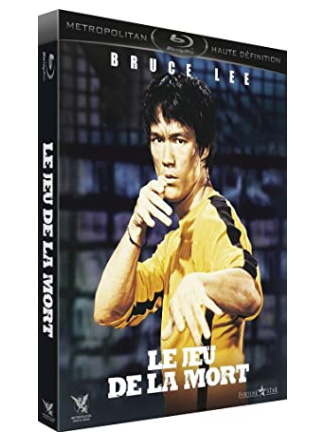
Game of Death
Synopsis
Billy Lo, a famous martial arts film star, is pressured by a criminal syndicate that wants to control his career. When he refuses, the gangsters try to eliminate him, and he decides to fake his own death. Disguised and in hiding, he sets out to take revenge on the organisation that tried to destroy him. His quest ends in a pagoda where he must defeat a series of masters, level by level, to reach the leader.
The Making of the Film
Game of Death was conceived by Bruce Lee himself in 1972, shortly after he finished The Way of the Dragon. The idea was to build a film around his philosophy of combat, in which a hero climbs a tower where each floor is guarded by a master of a different fighting style. Lee shot about 40 minutes of footage, including the legendary pagoda fights with Dan Inosanto, Ji Han-jae and Kareem Abdul-Jabbar. He then interrupted the project to make Enter the Dragon, which became the greatest success of his career. Bruce Lee died suddenly in July 1973, leaving the film unfinished. Golden Harvest, the studio that had produced his films, decided to complete it a few years later, with director Robert Clouse. The new version, released in 1978, wrote a new story around the fragments of footage that Lee had completed. The result is a film that became as famous for its backstory as for its content.
Reviews and reception
Professional critics' summary
Critics were largely negative, accusing the film of exploiting the legend of Bruce Lee with a hastily assembled plot. Many noted that the use of body doubles and archive footage was often unconvincing. However, they agreed that the last 30 minutes, with Lee's original fight scenes, were exciting. Over time, the reputation of these sequences has grown, and they are regarded as some of the best fights in martial arts cinema.
Audience reception
The film was a commercial success, especially in Asia, where Bruce Lee's popularity remained immense. Fans were eager to see his last work, despite the uneven quality. It also contributed to the continuing Bruce Lee cult, which inspired countless imitators and tributes. The famous yellow jumpsuit worn by Lee in the film became an enduring pop culture symbol.
Awards
The film did not receive notable awards, as its release was seen more as a posthumous curiosity. Its true legacy lies in its cultural impact and the global fascination with Bruce Lee. The yellow outfit has been referenced in many films, including Quentin Tarantino's Kill Bill. The film remains a key chapter in the history of martial arts cinema.
Filming anecdotes
Director's inspirations
Bruce Lee's original concept was inspired by his own philosophy of Jeet Kune Do, which stresses adaptability and the rejection of rigid styles. Each floor of the pagoda was meant to represent a different fighting art, which he would defeat by using the right approach. The idea of a tower guarded by masters was influenced by martial arts legends and Eastern folklore. Robert Clouse, who had directed Enter the Dragon, tried to preserve the spirit of Lee's ideas in the new story.
Production difficulties
Completing the film after Lee's death was a delicate and controversial task. Several stand-ins, including Kim Tai-chung and Yuen Biao, were used to play Billy Lo in new scenes. To hide their faces, the film used shadows, sunglasses and creative editing. The production even used images of Lee from earlier films and a cardboard cutout in some shots, which attracted much criticism.
Anecdote about a particular scene
The most controversial moment of the film is the funeral sequence, which uses real footage from Bruce Lee's actual funeral. Fans were shocked that the studio chose to include these images in a fictional story. The legendary fight with basketball star Kareem Abdul-Jabbar is one of the highlights, with the huge height difference creating a spectacular duel. The fight with Dan Inosanto, Lee's student and friend, using nunchaku is also widely praised.
Originally planned casting
Bruce Lee wanted to surround himself with real martial artists rather than actors, so he cast friends and students. Dan Inosanto, Ji Han-jae and Kareem Abdul-Jabbar were chosen for their skills and their personal connections. After his death, Gig Young, Dean Jagger and Colleen Camp joined the new cast for the added scenes.
Themes explored
The film presents a battle against corruption and exploitation in the entertainment industry. It also explores the idea of personal freedom, as the hero refuses to let criminals dictate his career. The pagoda sequence expresses a philosophy of self-improvement through overcoming obstacles. Each opponent represents a different approach to combat, reflecting Lee's belief in adaptability. The story also touches on the theme of death and rebirth, with the hero faking his own demise. Honour and loyalty are other key ideas, as Billy Lo seeks justice for his friends. Beyond the plot, the film is a tribute to the ideals of martial arts. Its most powerful theme is perhaps the question of legacy, since the film itself is a monument to a man who died too young.
Ending explained
After pretending to be dead, Billy Lo infiltrates the syndicate and gradually eliminates its members. He eventually reaches the pagoda, where he faces a series of fighters, each more dangerous than the last. After defeating the final guardian, he confronts the leader, Dr. Land, and ends the criminal organisation's reign. The film closes with a freeze-frame of the hero as a symbol of justice and resilience. Because of the film's production history, the final scenes mix original footage with newly shot sequences. The finale is therefore a mixture of the actor's authentic art and the filmmakers' attempt to honour it. Many viewers see it as a bittersweet farewell to Bruce Lee.
Meaning of the title
The title Game of Death refers to the deadly test that the hero must go through in the pagoda. Each level is a game in which the stakes are life and death, and only a true master can survive. Bruce Lee himself chose the name, drawing on his idea that combat is both a game and a serious reflection on mortality. The title takes on an eerie meaning after Lee's death, as the film was left incomplete. It now evokes both the on-screen tower and the tragedy that stopped its production. Within Lee's philosophy, the phrase also suggests that one must confront fear of death to achieve true freedom. It remains one of the most chilling titles in action cinema.
Original Soundtrack
The film's score was composed by John Barry, the legendary composer of the James Bond series. His music adds a sophisticated, atmospheric touch to the action, with a mix of dramatic orchestration and jazz-inflected moments. The soundtrack gave the film a polish that it might otherwise have lacked.
Similar Films
Enter the Dragon, Fist of Fury and The Way of the Dragon are the essential Bruce Lee films. Game of Death II, also known as Tower of Death, is a sequel using other footage. Kill Bill by Quentin Tarantino pays tribute to the yellow jumpsuit. Enter the Dragon and Drunken Master are also excellent examples of classic kung fu cinema.