

 Français
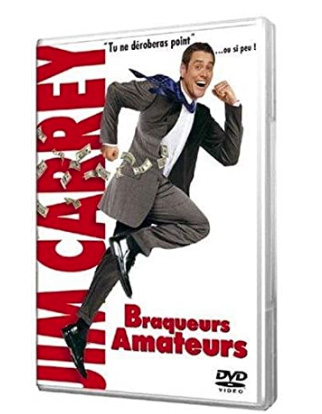
Fun with Dick and Jane
Synopsis
Dick Harper appears to have the perfect suburban life until he loses his job at the powerful corporation Globodyne. His wife Jane soon discovers that their financial security has disappeared along with his career. As their debts grow and normal employment proves impossible to find, the couple turns to increasingly elaborate forms of theft. Their criminal activities become a comic attempt to recover their money while taking revenge on the executives responsible for their downfall.
The Making of the Film
The film is a modern remake of the 1977 comedy Fun with Dick and Jane. The new version was developed during a period when corporate scandals and financial misconduct were major subjects in American public debate. The filmmakers updated the original story to incorporate references to corporate fraud and the collapse of companies inspired by real events such as Enron. Jim Carrey became the central star and also served as one of the producers. Dean Parisot directed the film from a screenplay credited to Peter Tolan and Judd Apatow, with several additional writers contributing to revisions. The production wanted to preserve the original idea of ordinary people becoming criminals while making the story relevant to contemporary economic anxiety. Alec Baldwin was cast as the wealthy and unscrupulous corporate executive Jack McCallister. The result combines workplace satire, marital comedy, social commentary and physical humor.
Reviews and reception
Professional critics gave the film mixed to negative reviews. Rotten Tomatoes recorded a 30% approval rating, with critics arguing that the movie struggled to maintain a consistent tone. Some reviewers appreciated the decision to update the original story around corporate scandals and economic insecurity. Others believed that the satire was too obvious and that the comedy frequently returned to familiar slapstick. Audiences were more receptive and gave the film a B grade in CinemaScore polling. The movie performed strongly at the box office, earning more than 202 million dollars worldwide against a reported 100 million dollar production budget. It became especially topical because of the real corporate scandals that influenced its premise. The film did not become a major awards contender, but its commercial performance demonstrated the continuing popularity of Jim Carrey comedy.
Filming anecdotes
The production involved more than two weeks of reshoots and numerous screenplay revisions. Several writers contributed uncredited material during the development process, reflecting the effort to balance social satire with broad comedy. Jim Carrey and Téa Leoni had to perform numerous physical sequences involving increasingly desperate attempts to survive financially. The production also used animals in several scenes, including the Harper family dog. American Humane Society monitored the animal performances during filming. One memorable scene involving a barking dog used a prop collar without batteries, while the apparent shock effect was created with visual effects. The production also staged scenes involving chickens and other animals under controlled conditions. The combination of practical comedy, visual effects and animal coordination added considerable complexity to otherwise simple comic scenes.
Themes addressed
The film explores unemployment, consumerism, corporate corruption, financial insecurity and marital solidarity. It asks how ordinary people might react when the economic system they trusted suddenly collapses. Dick and Jane initially believe that hard work will restore their comfortable life. Their desperation gradually pushes them toward criminal behavior. The story also questions the enormous difference between corporate wrongdoing and the consequences suffered by ordinary employees.
Explanation of the ending
Dick and Jane eventually discover that the collapse of Globodyne was deliberately manipulated by Jack McCallister. Rather than simply accepting their financial ruin, they organize a plan to expose him and recover what was taken from them. Their actions transform them from desperate criminals into comic antiheroes seeking a form of justice. McCallister loses the control and wealth that he had accumulated through deception. Dick and Jane are able to restore their family stability. The ending suggests that the real target of their anger was not ordinary wealth but corporate greed and the abuse of power.
Meaning of the title
The title is inherited from the original 1977 comedy and uses the names Dick and Jane as symbols of an ordinary American couple. The phrase sounds innocent and domestic, which contrasts with the increasingly criminal situations faced by the protagonists. The title also evokes the simplicity of traditional educational stories in which Dick and Jane represent everyday American life. The film deliberately destroys that simple image through unemployment, debt and corporate corruption. The title therefore reinforces the contrast between suburban normality and economic chaos.
News
There is no major current sequel or remake announcement associated with the film. Its relevance has increased in retrospective discussions about movies inspired by corporate scandals and economic insecurity. The film is also frequently mentioned when discussing Jim Carrey more socially oriented comedies. Its updated treatment of the Enron era remains one of its most distinctive characteristics.
Similar films
Fans of Fun with Dick and Jane may enjoy Office Space, another comedy about dissatisfied employees confronting dysfunctional corporate culture. The Other Guys also combines comedy with corruption and financial crime. American Psycho offers a much darker examination of corporate greed and status. Horrible Bosses similarly transforms workplace frustration into an exaggerated criminal plot. The original 1977 Fun with Dick and Jane provides an interesting comparison because it reflects the economic concerns of its own period.