

 Français
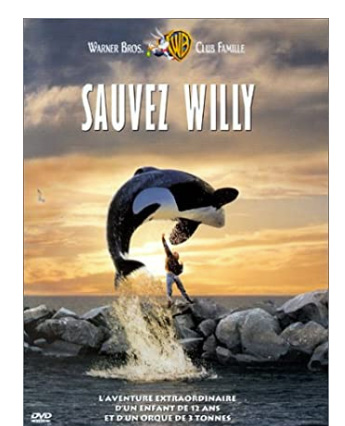
Free Willy
Synopsis
Jesse, a troubled twelve-year-old boy, is caught vandalising an aquarium and is made to work there as punishment. He forms a bond with Willy, an orca who is kept in a small pool. When Jesse learns that the owners plan to exploit the whale for money, he decides to help Willy escape. With the help of his friends, he sets out to bring Willy back to the sea.
The Making of the Film
The film was directed by Simon Wincer, from a script by Keith A. Walker and Corey Blechman, and released in the United States in 1993. The story was inspired by the idea of a friendship between a lonely boy and a captive whale. The orca Keiko, who was held in an amusement park in Mexico City, played Willy. The film's success led to a campaign to release Keiko, who was eventually moved to Iceland and later to Norway.
Reviews and reception
Summary of professional reviews: Critics were generally positive, praising the film's sincerity and its beautiful whale sequences, though some thought it sentimental.
Audience reception: The film was a huge hit, grossing more than $150 million worldwide, and became a family favourite. It also raised public awareness about whales in captivity.
Behind-the-scenes anecdotes
Anecdote about a particular scene: The film's final sequence, in which Willy leaps over the sea wall to freedom, became one of the most famous moments of family cinema in the 1990s.
Themes explored
The film explores the bond between humans and animals, redemption and the value of freedom. It also looks at the ethics of keeping wild animals in captivity.
Ending explained
Willy leaps over the breakwater and returns to the open sea, where he joins his family. Jesse watches him go, having found a sense of purpose and belonging.
Meaning of the title
The title refers to the central character, Willy the orca, and the call for his freedom.
Soundtrack
The film features Michael Jackson's song "Will You Be There", which plays over the final scenes.
Similar films
Fans of this film might enjoy Free Willy 2: The Adventure Home, Flipper, Dolphin Tale, Black Beauty or Born Free.