

 Français
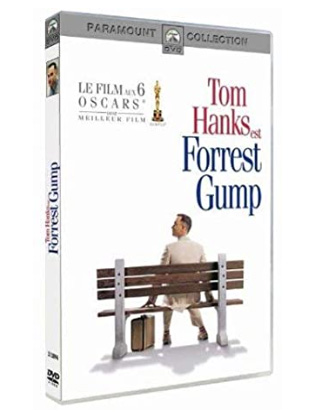
Forrest Gump
Synopsis
Forrest Gump is a kind-hearted man from Alabama whose simple outlook on life leads him through extraordinary experiences. Despite having a low measured intelligence, he becomes an accomplished athlete, a soldier in Vietnam, a successful businessman and an unlikely participant in several major historical events. Throughout his life, he remains devoted to Jenny, a childhood friend whose difficult personal journey contrasts with his own apparent good fortune. As Forrest moves through decades of American history, he demonstrates that kindness, loyalty and perseverance can be more valuable than intelligence or ambition.
The Making of the Film
Forrest Gump is based on the 1986 novel by Winston Groom, which was discovered by producer Wendy Finerman in the mid-1980s. Finerman brought the project to producer Steve Tisch, and the film adaptation gradually developed through several versions of the screenplay. Eric Roth eventually wrote the screenplay that became the basis of Robert Zemeckis's film. Tom Hanks agreed to portray Forrest, and his involvement helped convince Paramount Pictures to finance the production. Zemeckis was selected to direct because of his experience combining emotional storytelling with innovative visual techniques. The filmmakers wanted to tell an intimate story through the perspective of a character who unintentionally witnesses major events in American history. The production required extensive research into historical settings, costumes and cultural references. Its unusual narrative structure combined comedy, romance, historical drama and groundbreaking visual effects.
Reviews and Reception
Professional reviews: Critics widely praised Tom Hanks's performance and Robert Zemeckis's ambitious direction. The film was admired for its technical achievements, emotional storytelling and inventive integration of fictional characters into historical footage. Alan Silvestri's music and the production's visual effects also received considerable recognition. Some critics questioned the film's political interpretation of American history and its portrayal of social change.
Audience reception: Forrest Gump became one of the biggest box-office successes of the 1990s. Audiences responded strongly to its combination of humor, emotion and historical spectacle. The character of Forrest became an enduring cultural figure, and several of his lines entered popular culture. The film continues to attract viewers who appreciate its themes of love, perseverance and the unpredictability of life.
Awards: Forrest Gump received thirteen Academy Award nominations and won six. Its victories included Best Picture, Best Director for Robert Zemeckis and Best Actor for Tom Hanks. It also won awards for its adapted screenplay, visual effects and editing. The film received further recognition at the Golden Globes and other major awards ceremonies.
Behind-the-Scenes Stories
Director's inspirations: Robert Zemeckis wanted to adapt Winston Groom's unusual novel while creating a more emotionally focused cinematic story. He was interested in presenting American history through the perspective of an ordinary man who never fully understands the historical importance of the events around him. The director also wanted to use visual effects to place Forrest alongside real historical figures. This approach allowed the film to combine personal drama with an imaginative reconstruction of the twentieth century.
Production challenges: The production was exceptionally ambitious, involving approximately 150 sets, eleven states and thousands of extras. The visual effects team had to integrate Tom Hanks into archival footage of historical figures. Special effects were also used to alter the appearance of Lieutenant Dan's legs and create several complex sequences. Coordinating the enormous number of locations and period details made the production particularly demanding.
Notable scene: The scene in which Forrest discovers the emotional significance of the feather that appears at the beginning and end of the film is especially memorable. The feather becomes a visual metaphor for the unpredictable direction of human life. It moves wherever the wind takes it, just as Forrest moves through history without deliberately seeking fame or recognition. The image gives the narrative a poetic structure and reinforces its central philosophical question.
Original casting: Tom Hanks was the filmmakers' preferred choice for Forrest, and his involvement was decisive in getting the project approved. Several actors were considered during the development of the production, but Hanks ultimately became inseparable from the character. Robin Wright was selected to play Jenny, while Gary Sinise portrayed Lieutenant Dan. Mykelti Williamson played Bubba, creating one of the film's most memorable friendships.
Themes Explored
Forrest Gump explores destiny, chance and the unpredictable nature of human existence. Forrest repeatedly finds himself involved in important events without deliberately seeking recognition or success. His life suggests that happiness does not necessarily depend on intelligence, social status or ambition. Love and loyalty are central themes, particularly through his lifelong devotion to Jenny and his friendship with Bubba. The film also examines the relationship between individual lives and historical events. Its portrayal of American society touches on war, political conflict, racism, social change and the search for identity. Lieutenant Dan's journey explores trauma, disability and the difficult process of finding a new purpose after war. Jenny represents another response to the same historical period, marked by personal suffering and a desire for freedom. Ultimately, the story celebrates kindness, perseverance and the importance of accepting the uncertainty of life.
Ending Explained
The ending reveals that Forrest has become a father and is raising his young son. Jenny, who has finally returned to his life, tells him about their child and eventually marries him. Their reunion offers Forrest the opportunity to experience the family life he has always wanted. However, Jenny is seriously ill and dies shortly after their marriage. Forrest is left to care for their son, repeating the loving relationship he experienced with his own mother. The final moments show him sending his child to school and watching the bus disappear down the road. The feather returns, creating a visual connection with the beginning of the film. Its unpredictable movement suggests that life is shaped by both circumstances and personal choices. Forrest's story ends not with fame or wealth but with the quiet responsibility of raising his son.
Meaning of the Title
The title Forrest Gump simply uses the name of the film's central character. Its simplicity reflects Forrest's straightforward personality and his inability to understand the complicated social and political systems around him. The name gradually becomes associated with an extraordinary series of historical experiences. The title also emphasizes that the story is not primarily about a particular war, political movement or historical event. It is about one individual whose personal life unfolds alongside all of them. Forrest becomes a witness to history without ever attempting to become its central figure. His name therefore represents the ordinary person caught up in extraordinary circumstances. The title also encourages viewers to approach the story through his perspective rather than through conventional historical explanations. Ultimately, it celebrates the significance of an apparently ordinary individual.
The original score was composed by Alan Silvestri, whose orchestral themes give the film much of its emotional identity. The main theme is particularly recognizable for its gentle piano and orchestral arrangements. The soundtrack also includes a remarkable selection of popular songs from several decades of American music. Artists such as Elvis Presley, The Beach Boys, Creedence Clearwater Revival, Bob Dylan and Simon & Garfunkel help recreate the changing musical atmosphere of the period. The combination of Silvestri's original music and carefully selected songs is one of the film's greatest artistic strengths.
Similar Films
The Curious Case of Benjamin Button explores an extraordinary life unfolding across several decades of history. Big Fish combines personal memories, family relationships and the imaginative transformation of ordinary experiences. The Green Mile follows an unusual central character whose kindness changes the lives of those around him. The Shawshank Redemption explores friendship, perseverance and hope in difficult circumstances. A Beautiful Mind portrays an individual whose personal experiences intersect with major historical and intellectual developments. Rain Man examines the relationship between two brothers with very different ways of understanding the world. The Terminal presents an ordinary man caught in extraordinary circumstances who maintains his humanity. These films share Forrest Gump's interest in personal journeys, human relationships, perseverance and the unexpected ways individuals influence the world around them.