

 Français
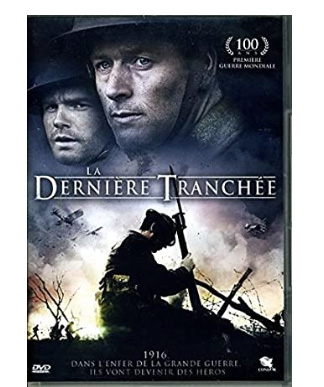
Forbidden Ground
Synopsis
France, 1916. After a failed Allied charge on the German lines, Sergeant Major Arthur Wilkins wakes up in a shell crater in the middle of No Man's Land. He finds two other survivors, the terrified Private O'Leary and the badly wounded Corporal Jennings. As night falls, the three men must crawl back toward the British trenches under machine-gun fire and the threat of an impending artillery attack. Meanwhile, in London, Wilkins' wife struggles to keep a dark secret.
The Making of the Film
Forbidden Ground, released in some markets as Battle Ground, is an independent Australian war film made on a very modest budget. It was written by Johan Earl, who also stars in the lead role, with Denai Gracie and Travis Spiteri, and co-directed by Earl and Adrian Powers. Earl, who ran a special effects company called ArmzFX, wanted to tell a World War I story at a time when the conflict was often ignored by modern action cinema. He felt that his experience with weapons and explosives would allow him to stage battle scenes that would normally be out of reach for a low-budget production. Adrian Powers, a young editor and director, had already worked with Earl on a short film. The two men decided to concentrate on a small group of soldiers trapped in a single night, which allowed them to focus on character and atmosphere. The story also includes flashbacks to England, where the soldiers' families face their own struggles. The result was a compact, intense and personal view of the Western Front.
Reviews and reception
Professional critics' summary
Critics were generally positive, noting that the film worked well in spite of its limited resources. One review praised it for capturing the personal tragedy and human cost of war, even if it could not match the scope of classics such as Gallipoli or Paths of Glory. Reviewers admired the performances of the three leads, particularly Martin Copping. They also appreciated that the film relied mainly on practical effects rather than computer-generated imagery.
Audience reception
The film was released in the United Kingdom in 2013 and in Australia the same year, and it later reached an international audience on home video. Viewers interested in military history found it a gripping and respectful portrayal of the trenches. Because of its modest budget, it did not achieve wide theatrical exposure, but it found a following among fans of war dramas. It has been recognised as a worthy independent effort.
Filming anecdotes
Production difficulties
The film was shot around the farmland of Dubbo, in New South Wales, which stood in for the battlefields of France. Principal photography lasted for nineteen days and nights in a row over the Christmas period of 2011, in demanding and muddy conditions. More than 300 kilograms of explosives were set off during the production, using the pyrotechnic expertise of Johan Earl's company. The team shot with small and lightweight cameras to keep costs low and to move quickly. The crew had to work in the open and in the dark, which made the shoot physically exhausting.
Anecdote about a particular scene
The crawling sequences through the mud, where the three soldiers advance centimetre by centimetre, are among the film's strongest. They capture the desperation, horror and courage needed to cross No Man's Land. The film also includes flashbacks to England, which provide a contrast to the harsh conditions of the front.
Originally planned casting
Johan Earl played Sergeant Major Wilkins, with Tim Pocock as Private O'Leary and Martin Copping as Corporal Jennings. Denai Gracie played Wilkins' wife Grace in the scenes set in England. Adrian Powers had previously cast Earl in his short film Scruples, which began their collaboration.
Themes explored
The film is about camaraderie and the instinct to survive. It shows how men from different backgrounds are drawn together by fear and necessity. It also explores the psychological effects of war, with the soldiers haunted by their memories of home. Another theme is duty, as the sergeant feels responsible for the two men under his command. The film reflects on the futility of orders given from afar, shown through the failed assault that leaves the men stranded. It touches on secrets and betrayal, as the story back in London reveals tensions in the soldier's family. Above all, it presents war as a human tragedy rather than a heroic adventure.
Ending explained
As the night wears on, the three soldiers fight to reach the British lines before dawn and the incoming barrage. Their ordeal tests their loyalty to one another, as exhaustion and injuries threaten to separate them. The story at home reaches its own turning point, revealing the secret that has been troubling Wilkins' wife. The ending is not a triumphant one, but a sober reflection of the cost of war. It leaves the audience with a sense of the fragility of life and of the bonds that hold men together. The film closes on a note that is more about humanity than about victory.
Meaning of the title
The title Forbidden Ground refers to No Man's Land, the dangerous strip of earth between the opposing trenches where no soldier was supposed to linger. The word forbidden evokes both the physical danger and the sense of crossing a boundary that should not be crossed. The title also carries a moral dimension, as the soldiers are forced into a place where the normal rules of life no longer apply. In some markets, the film was released as Battle Ground, which highlights the combat aspect. In French, it became La Derniere Tranchee, which stresses the idea of a final stand. The different titles show how the film can be read as both a war story and a human drama.
Original Soundtrack
The score was composed by Jason Fernandez, who gave the film a sombre and atmospheric sound. His music underlines the loneliness of the soldiers and the tension of their journey without becoming overbearing. The restrained approach suits the film's intimate scale.
Similar Films
Beneath Hill 60 is another Australian film about the First World War. Paths of Glory and 1917 offer more famous views of the Western Front. Gallipoli and Passchendaele also explore the human cost of the Great War. War Horse and Joyeux Noel show different facets of the same conflict.