

 Français
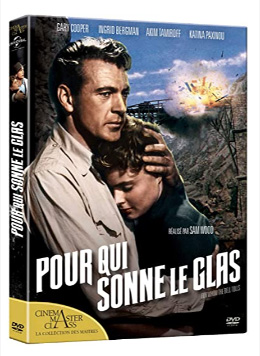
For Whom the Bell Tolls
Synopsis
In 1937, during the Spanish Civil War, Robert Jordan, an American explosives expert, is sent into the mountains to blow up a strategic bridge. He joins a band of Republican guerrillas led by the weary Pablo and the fierce Pilar. There, he meets Maria, a young woman who has been traumatized by war, and the two fall deeply in love. As the hour of the mission approaches, Jordan must face the likelihood that he will not survive.
The Making of the Film
For Whom the Bell Tolls is based on the 1940 novel by Ernest Hemingway, which drew on his experiences covering the Spanish Civil War. Sam Wood directed the film for Paramount, with a screenplay by Dudley Nichols. Gary Cooper played Robert Jordan and Ingrid Bergman played Maria, in roles that Hemingway himself reportedly supported. The film was shot in Technicolor, with the mountains of California standing in for the Spanish Sierra. It was released in 1943 and was one of the major Hollywood productions of the war years.
Critical Reception
Summary of Professional Reviews
Critics praised the film for its sweep, its romance and the performances of its leads, especially Katina Paxinou as Pilar. Some reviewers felt that the political content had been softened compared with the novel. The visual beauty of the mountain landscapes and the emotional intensity of the love story were widely admired. Overall, it was regarded as a stirring and impressive wartime drama.
Audience Reception
The film was a major box-office success and drew large audiences. Viewers responded to the romance between Cooper and Bergman and to the story's sense of sacrifice. It has remained a classic of Hollywood romance and war cinema. Its length and grandeur made it an event of its time.
Awards Received
Katina Paxinou won the Academy Award for Best Supporting Actress for her role as Pilar. The film received nine Oscar nominations in total, including Best Picture, Best Actor for Gary Cooper, Best Actress for Ingrid Bergman and Best Supporting Actor for Akim Tamiroff. It also won a Golden Globe for Paxinou. These honors established it as one of the most celebrated films of 1943.
Behind-the-Scenes Stories
Originally Planned Cast
Ballet dancer Vera Zorina was initially cast as Maria, but she was replaced shortly after filming began. Ingrid Bergman, who had recently risen to fame, took the role and cut her hair short to look the part. Her performance became one of the most beloved of her career. Gary Cooper, who had also been the author's preferred choice, remained as the hero.
Themes Explored
The film is a story about love and sacrifice in the shadow of war. It shows how a brief romance can feel more intense when death is close. The Spanish Civil War is presented as a conflict full of idealism, cruelty and moral ambiguity. Duty and conscience weigh heavily on Jordan, who must choose between his mission and his desire to live. The theme of human interconnection runs through the story, echoing the poem that inspired the title. Ultimately, it is a meditation on courage and loss.
Ending Explained
After the bridge is destroyed, Jordan is wounded and cannot escape with the others. He insists that Maria leave with the group, promising that he will remain behind in spirit. In the final scene, he sets up a machine gun to cover their retreat and waits for the enemy to appear. The film closes with his last stand, a gesture of sacrifice that gives the story its emotional weight.
Meaning of the Title
The title is taken from a famous meditation by the poet John Donne, which says that no person is an island and that every death diminishes humanity. The "bell" in the title is a funeral bell, tolling for all who are affected by loss. It conveys Hemingway's message that the fate of one person is tied to everyone.
Original Soundtrack
The score was composed by Victor Young, who received an Academy Award nomination for his work. His music blends sweeping romantic themes with Spanish-flavored melodies. It supports the emotional power of the story and became one of the memorable scores of the 1940s.
Similar Films
- Casablanca (1942): a wartime romance about love and duty.
- A Farewell to Arms (1932): another Hemingway adaptation about love and war.
- Doctor Zhivago (1965): an epic romance set against historical upheaval.
- Lawrence of Arabia (1962): a sweeping epic about war and idealism.