

 Français
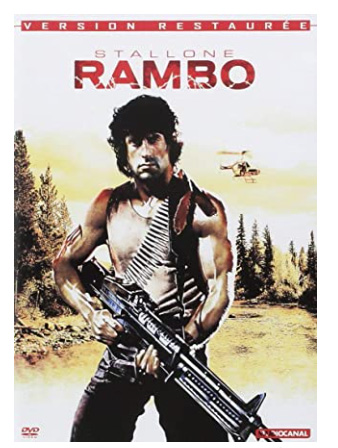
First Blood
Synopsis
John Rambo, a decorated Vietnam War veteran, walks into a small town in the Pacific Northwest, hoping to find an old comrade. Sheriff Will Teasle, who dislikes drifters, arrests him and his deputies mistreat him in custody. Traumatised by flashbacks, Rambo escapes into the mountains, where he uses his guerrilla training to outwit the pursuing posse. As the manhunt spirals out of control, his former commander Colonel Trautman arrives to try to prevent a tragedy.
The Making of the Film
First Blood is based on the 1972 novel of the same name by David Morrell, which tells the story of a troubled veteran who fights a one-man war against a small town police force. The rights bounced around Hollywood for ten years, with several studios and stars attached and then dropped. Actors considered for the lead included Steve McQueen, Al Pacino, Robert De Niro and Clint Eastwood, among many others. Sylvester Stallone, fresh from the success of Rocky, took on the project and rewrote the script to make Rambo more sympathetic and less violent. In the novel, Rambo dies at the end, but the filmmakers decided to let him live. Ted Kotcheff, a Canadian director known for dramas and comedies, was chosen to direct. He wanted the story to be a human drama about a wounded soldier rather than just an action film. The result was a thriller that dealt openly with the aftermath of Vietnam.
Reviews and reception
Professional critics' summary
Critics gave the film generally positive reviews, noting that it was more thoughtful than they had expected. Stallone's performance was praised, especially the final monologue in which Rambo breaks down. Many reviewers admired the tense mountain chase and the way the film makes the audience sympathise with the hunted man. Some, however, felt that the violence was excessive and the plot too simple.
Audience reception
The film was a major hit, earning around 125 million dollars worldwide. Audiences connected with the troubled veteran, and many Vietnam veterans felt that the film spoke about their experiences. First Blood turned John Rambo into one of the most recognisable action heroes of the 1980s. It led to a long series of sequels, though none matched the human depth of the original.
Awards
The film did not win major prizes, as action films of the period rarely did. Stallone's performance was nevertheless considered a turning point in his career, showing that he could carry a serious drama. Over the years, the film has been recognised as a landmark of 1980s cinema. Its enduring reputation has become its most important reward.
Filming anecdotes
Director's inspirations
Kotcheff drew on the paranoia and disillusion of post-Vietnam America and on the Westerns of the 1950s. He saw Rambo as a lonely warrior who cannot find a place in the society he fought for. The mountain setting reminded him of survival films, where the hero fights both nature and his pursuers. He insisted on maintaining ambiguity about who the villain really was.
Production difficulties
The film was shot in British Columbia, in cold and rainy conditions that made life hard for the cast and crew. Stallone performed many of his own stunts and was injured several times, particularly during the demanding mountain sequences. Despite these problems, the shoot produced striking and realistic images.
Anecdote about a particular scene
The final scene, in which Rambo breaks down in front of Trautman, was a turning point for the film. Stallone improvised and extended the monologue about his experiences in Vietnam, making it far more emotional than planned. In an earlier version, Rambo was meant to die in the end, but the filmmakers changed their minds and chose a more hopeful conclusion. The sequence in which Rambo sews up his own wound is another well-known moment.
Originally planned casting
Stallone was not the first choice for Rambo, as many famous actors had been approached over the years. Richard Crenna played Colonel Trautman and Brian Dennehy took on the role of Sheriff Teasle. Both performances added depth to the confrontation. Their contributions helped to make the film more than a simple chase story.
Themes explored
The film deals with the psychological scars of war and the difficulty of returning to civilian life. It questions how society treats the veterans who fought on its behalf. Another theme is the abuse of power, shown through the sheriff's need to control a stranger. The story explores the line between survival instinct and violence. It also reflects the divisions in American society after Vietnam. Rambo is shown as both a victim and a threat, which makes the film morally complex. The film also touches on loneliness, as the hero has lost his comrades and his place in the world. Ultimately, it is a plea for understanding rather than a celebration of violence.
Ending explained
After a long manhunt, Rambo returns to the town, destroys part of it and sets a gas station on fire. Colonel Trautman confronts him in the police station and tries to convince him to surrender. Rambo finally breaks down, weeping as he recounts the horrors he saw in Vietnam and the friends he lost. He lets Trautman lead him away, and the film ends with his arrest. In the original novel, Rambo is killed, but the film chooses to let him live and face the consequences. This changed ending emphasises compassion rather than punishment. It leaves open the question of what society owes to its veterans.
Meaning of the title
The phrase first blood comes from old combat sports, such as boxing and duelling, where it means the first strike or injury inflicted. In the film, it refers to the sheriff, who starts the conflict by mistreating a man who has done nothing wrong. The title therefore points to who is truly responsible for the violence that follows. It is also a reference to Rambo's own war wounds, and to the blood he has already shed in Vietnam. The phrase carries a dark irony, as the one who draws first blood is not always the one who ends up paying for it. It is a compact and powerful title that sums up the conflict.
Original Soundtrack
Jerry Goldsmith composed the score, blending tense orchestral passages with a haunting central theme. The song It's a Long Road, sung by Dan Hill, plays over the end credits and gives the film a melancholy farewell. Goldsmith's music underlines the isolation of Rambo and the suspense of the manhunt. It is often regarded as one of the most memorable action scores of the 1980s.
News
The Rambo saga concluded with Rambo: Last Blood in 2019, in which Stallone returned as the aging veteran. The character remains a cultural icon and a symbol of 1980s action cinema. The original film is still regarded as the most serious and emotional entry in the series.
Similar Films
Rambo: First Blood Part II and Rambo III continue the story, with a more action-focused tone. Taxi Driver and Rolling Thunder also explore the psychological damage suffered by veterans. Deliverance and Southern Comfort show survival in hostile wilderness. Cobra and Death Wish are other 1980s films about men taking justice into their own hands.