

 Français
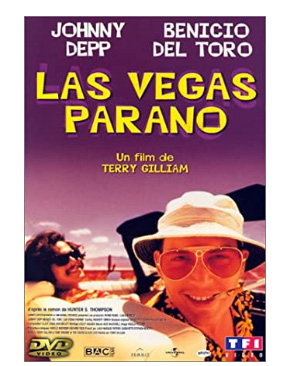
Fear and Loathing in Las Vegas
Synopsis
In 1971, eccentric journalist Raoul Duke and his psychopathic attorney, Dr. Gonzo, drive a red convertible stuffed with an illegal arsenal of mind-altering substances from Los Angeles to Las Vegas. Sent to cover a motorcycle race, the duo instead embark on a surreal, drug-addled psychedelic odyssey across casinos, hotels, and deserts, witnessing the bizarre underbelly of the American Dream turning into a nightmarish hallucination.
The Making of the Film
Director Terry Gilliam adapted Hunter S. Thompson's iconic, semi-autobiographical gonzo journalism novel after decades of failed attempts by other filmmakers to bring the unfilmable book to the screen. Gilliam wanted to capture the frantic, hallucinatory paranoia and the death of 1960s counterculture idealism through a wild, uncompromised visual assault on the senses.
Critical Reception
Critics upon release were deeply divided; some dismissed the film as an incoherent, nauseating, and chaotic drug trip lacking narrative structure, while others hailed it as a fearless, visually brilliant masterpiece of dark satire.
Over time, the film achieved legendary cult status among cinephiles and counterculture fans who appreciated its fearless commitment to Thompson's chaotic vision and Johnny Depp's manic performance.
While it did not receive major mainstream awards upon its initial theatrical run, it is now widely celebrated as a defining cinematic exploration of counterculture excess.
Filming Anecdotes
Terry Gilliam drew heavy inspiration from underground comix, psychedelic art of the 1970s, and Hunter S. Thompson's genuine journalistic chaotic style. He used exaggerated wide-angle lenses and skewed horizon lines to simulate chemical intoxication.
Production faced severe logistical hurdles in Las Vegas casinos, which were reluctant to be associated with drug-fueled debauchery, forcing the crew to build elaborate studio sets and shoot guerrilla-style night scenes.
Johnny Depp lived with Hunter S. Thompson for months prior to filming, wearing Thompson's actual clothes and driving his iconic red Chevrolet Impala convertible to master his unique physical mannerisms and speech patterns.
Jack Nicholson and Marlon Brando were originally considered for the lead roles in an earlier adaptation attempt in the 1970s, before Johnny Depp and Benicio del Toro took over decades later.
Major Themes
The death of the 1960s counterculture dream, drug-induced paranoia, American consumerism, journalistic integrity, and the surrealism of Las Vegas culture.
Explanation of the Ending
Raoul Duke finally escapes Las Vegas and drives back to Los Angeles, realizing that the chaotic drug binge was a manifestation of the shattered illusions of an entire generation, leaving him to write his gonzo report in peace.
Title Significance
The title captures the central paradox of the story: the terror ("fear") and grotesque fascination ("loathing") experienced by journalists navigating the surreal capitalist excess of Las Vegas.
The Big Lebowski, Trainspotting, Easy Rider, Withnail and I