

 Français
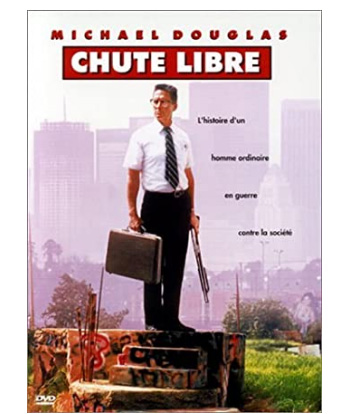
Falling Down
Synopsis
William D-Fens Foster is a frustrated, laid-off defense electronics worker suffering from a severe mental breakdown during a scorching summer day in Los Angeles. Stuck in excruciating highway traffic and pushed past his breaking point by the relentless pressures of modern urban life, economic displacement, and his estranged restraining order from his ex-wife, Foster abandons his car on the freeway and embarks on a violent, destructive walking rampage across the city. Armed with a briefcase and a growing arsenal, Foster lashes out at fast-food restaurants, convenience store owners, construction workers, and gang members. Pursued by an aging, retiring police detective on his final day, Foster descends deeper into urban anarchy.
The Making of the Film
Screenwriter Ebbe Roe Smith conceived the dark social satire script after experiencing a frustrating traffic gridlock in Los Angeles. Director Joel Schumacher brought an intense, kinetic urban visual style to the script, blending pitch-black social critique with a psychological character study of middle-class male alienation.
Critical Reception
Professional critics gave the film mixed to positive reviews, praising Michael Douglas's powerhouse lead performance, gripping tension, and bold social commentary on urban frustration, while noting its controversial vigilante themes.
The general public made it a major box office success worldwide, resonating deeply with audiences feeling modern societal stress.
The film received a Palme d'Or nomination at the Cannes Film Festival.
Behind-the-Scenes Stories
Director Joel Schumacher drew inspiration from modern urban alienation, economic recessions, and LA traffic rage. Production required location shooting across boiling Los Angeles streets, managing complex stunt sequences and mob street riots.
During the filming of the infamous fast-food breakfast confrontation, Michael Douglas performed meticulous escalation acting.
Initially, various Hollywood stars were evaluated before Douglas secured the iconic briefcase-wielding protagonist role.
Themes Explored
The film explores urban stress, middle-class male alienation, economic displacement, societal breakdown, and mental collapse.
Ending Explained
The ending shows Foster cornered on a Los Angeles pier by the retiring detective, drawing an unloaded water pistol to force the cop to shoot him in a tragic suicide-by-cop realization.
Meaning of the Title
The title 'Falling Down' references both the nursery rhyme lyric and the protagonist's total psychological and moral collapse under the weight of modern society.
Similar Films
Taxi Driver, Joker, Fight Club, Unforgiven