

 Français
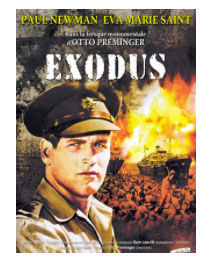
Exodus
Synopsis
Set in 1947 in the turbulent aftermath of World War II, a passionate and determined Jewish freedom fighter named Ari Ben Canaan works covertly in British-controlled Palestine to help thousands of Holocaust survivors immigrate to their ancestral homeland despite strict British blockades. Working alongside an idealistic American nurse named Katherine Fremont, Ari orchestrates a daring operation to smuggle refugees aboard a blockade ship named the *Exodus* from a detention camp in Cyprus. When the British military intercepts and quarantines the ship, Ari and the refugees launch a desperate hunger strike that captures global media attention and pressures the United Nations toward the historic 1947 partition vote. Ultimately, this grand historical epic explores the founding of Israel, geopolitical struggle, and humanitarian survival.
The Making of the Film
Director and producer Otto Preminger collaborated with legendary screenwriter Dalton Trumbo to adapt Leon Uris's massive international bestselling novel Exodus. The project was conceived as a monumental historical epic exploring the birth of modern Israel, refugee survival, and Middle Eastern geopolitical conflict. Preminger drew inspiration from historical archives, Zionist pioneer accounts, and Hollywood widescreen prestige traditions. The production prioritized authentic location shooting across Israel and Cyprus, massive crowd set-pieces, and Ernest Gold's immortal Academy Award-winning musical score.
Critical Reception
Critics offered mixed reviews upon release, praising its staggering widescreen cinematography, noble humanitarian themes, and Ernest Gold's legendary musical score, while noting its overwhelming three-and-a-half-hour runtime. Reviewers lauded Otto Preminger for tackling complex, sensitive geopolitical subject matter with cinematic ambition and grand scale. Some film critics, however, felt that the screenplay oversimplified complex Middle Eastern political tensions into conventional Hollywood melodrama. Despite polarized critical opinions, global audiences embraced its powerful emotional sweep and historical significance.
Audiences flocked to theaters, turning the historical epic into a massive global box-office success and a defining cultural touchstone of the early 1960s. Viewers worldwide were moved by the harrowing refugee struggles, sweeping romance, and Paul Newman's charismatic star-making performance as the freedom fighter Ari Ben Canaan. It became a cultural phenomenon that shaped global awareness of Holocaust survivor immigration. Many hailed it as a monumental achievement in historical epic filmmaking.
Exodus achieved massive academy recognition, winning the Academy Award for Best Original Score for Ernest Gold. Supporting actor Sal Mineo won a Golden Globe Award and earned an Oscar nomination for his powerful portrayal of Dov Landau. Otto Preminger's direction and Sam Leavitt's breathtaking cinematography also received major accolades. These prestigious awards cemented its legacy as an immortal cinematic milestone of historical drama.
Behind-the-Scenes Stories
Otto Preminger was heavily inspired by the urgent global impact of Leon Uris's novel, wanting to bring the monumental struggle of Holocaust survivors to the screen with absolute historical authenticity. He made the bold, controversial decision to hire blacklisted screenwriter Dalton Trumbo openly, helping break the Hollywood blacklist era. The visual style utilized expansive Panavision widescreen framing, sun-drenched Israeli desert landscapes, and massive crowd choreography. The director also worked closely with Israeli military advisors to ensure tactical realism.
Shooting on location across historic cities, kibbutzs, and ports in Israel and Cyprus presented immense logistical, diplomatic, and weather challenges for the international production crew. Paul Newman performed many of his own stunts and immersed himself deeply in the cultural history of the Zionist underground movement. Sal Mineo underwent intense emotional preparation to portray a traumatized concentration camp survivor turned militant. Despite heavy political tensions and scorching Middle Eastern heat, the technical crew successfully delivered a breathtaking historical epic.
During the filming of the tense ship blockade and detention camp riot sequences, the massive cast of international extras brought authentic emotional weight to the historical drama. Director Otto Preminger maintained notoriously strict control on set, demanding absolute professionalism from every actor and crew member. Crew members reported feeling awestruck by the sheer scale of the historical reenactments staged across Israeli ports. The profound dedication of the cast gave the epic its enduring soul.
Casting directors secured an extraordinary international ensemble to anchor the historical epic. Paul Newman was secured for the lead role of Ari Ben Canaan, transforming him into a legendary global superstar. Eva Marie Saint was cast as the compassionate nurse Katherine Fremont. The supporting cast featuring Peter Lawford, Lee J. Cobb, and Sal Mineo added stellar dramatic weight.
Themes Explored
The film heavily explores the founding of Israel, Holocaust survival, and the geopolitical struggle of Jewish refugees seeking a homeland in Palestine. It examines Zionism, British colonial rule, terrorism, and cross-cultural diplomacy. Another core motif is pioneering spirit, kibbutz life, and sacrifice. It also touches upon romance, freedom, and historical destiny.
Ending Explained
The film concludes with Ari Ben Canaan leading a peaceful convoy to bury young freedom fighters killed in a border skirmish, delivering an impassoned graveside eulogy that brings together Jewish pioneers and Arab villagers in a shared moment of mourning and hope for peaceful coexistence. As the sun sets over the rugged Israeli hills, the characters look toward an uncertain yet hopeful future of nation-building. The final sweeping widescreen shots symbolize endurance and resilience. This powerful finish offers emotional closure to a turbulent historical journey.
Meaning of the Title
The title Exodus refers literally and symbolically to the historic mass migration of Holocaust survivors aboard the blockade ship escaping European persecution to reach their ancestral homeland in Palestine. It evokes both the biblical exodus and the modern Zionist pioneer movement. The single-word phrasing sets a monumental, historic tone for the epic drama. It encapsulates the overarching journey of survival and homecoming at the center of the narrative.
Similar films include Schindler's List, Cast a Giant Shadow, Hotel Rwanda, and The Longest Day, which feature historical epics, wartime survival, and geopolitical struggles.