

 Français
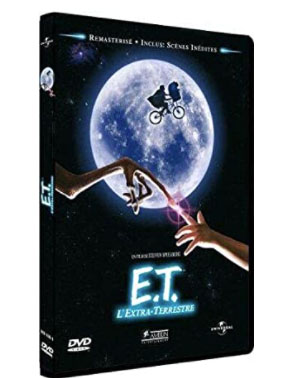
E.T. the Extra-Terrestrial
Synopsis
This timeless, magical science fiction masterpiece follows Elliott, a lonely young suburban boy who discovers and befriends a gentle, lost extraterrestrial stranded on Earth. Hiding the adorable alien creature in his bedroom, Elliott and his siblings introduce E.T. to human culture while forging a deep, telepathic emotional bond with him. As government agents close in on their suburban home, Elliott and his friends must engineer a daring bicycle escape to help E.T. "phone home" and return to his spaceship. It is an emotionally overwhelming, wondrous cinematic milestone.
The Making of the Film
The project originated from director Steven Spielberg's personal childhood loneliness following his parents' divorce, imagining an imaginary alien friend who could comfort him. Spielberg developed the story during the production of 'Raiders of the Lost Ark', working closely with screenwriter Melissa Mathison to craft a deeply moving tale from a child's perspective. Inspiration was drawn from childhood memories, classic fairy tales, and suburban wonder. The creative team aimed to produce a magical family film that honored childhood empathy.
Critical Reception
Critics offered universal, rapturous acclaim, praising Spielberg's visionary direction, the stunning practical puppet effects by Carlo Rambaldi, and the phenomenal child performances. Reviewers noted that Spielberg successfully captured the pure wonder, heartbreak, and magic of childhood with unmatched cinematic grace. John Williams's soaring musical score and the iconic flying bicycle silhouette received universal applause. It was immediately recognized as a towering masterpiece of cinema.
Audience reception was historic and monumental, driving the film to shatter global box office records and surpass 'Star Wars' to become the highest-grossing film of all time for over a decade. Viewers on public platforms praised the emotional tear-jerking climax, endearing alien creature, and unforgettable quotes. Families embraced it as an absolute sacred holiday tradition. Word-of-mouth sustained its legendary status across generations.
Awards season brought massive triumph, securing nine Academy Award nominations and winning four Oscars, including Best Original Score, Best Sound, Best Sound Effects Editing, and Best Visual Effects. John Williams took home an Oscar for his legendary score. These accolades cemented its status as one of the greatest films ever made.
Behind-the-Scenes Stories
The director drew visual inspiration from classic fairy tales, suburban 1980s American architecture, and low-angle camera framing to match the perspective of children. Every set, from Elliott's cluttered bedroom to the forest clearing, was designed to evoke wonder and mystery. The production team collaborated with legendary puppet maker Carlo Rambaldi to build three fully functional, expressive animatronic E.T. puppets that cost millions of dollars. These artistic choices created a magical cinematic world.
Production presented fascinating logistical and emotional hurdles, requiring Spielberg to shoot the entire film in chronological order so the child actors could build genuine emotional attachment to the puppet. Young actor Henry Thomas delivered a legendary improvised emotional audition that brought casting directors to tears instantly. Shooting on soundstages and California locations required careful lighting precision to capture glowing magical effects. Furthermore, working with child labor laws demanded strict scheduling.
During the filming of the emotional goodbye sequence, Henry Thomas channeled genuine tears knowing he was saying farewell to his beloved alien friend on screen. To maintain authentic wonder, the child actors interacted with a real mime artist operating the puppet inside the costume during close-up dialogue scenes. The crew utilized warm backlighting to emphasize the silhouette of the flying bicycles. This rigorous dedication resulted in immortal cinematic moments.
Casting was a legendary discovery process, finding young Henry Thomas for Elliott, Drew Barrymore in her breakout role as Gertie, and Robert MacNaughton as Michael. Thomas was chosen for his incredible emotional depth and natural poise. This targeted casting strategy was the absolute heartbeat of the film's emotional success.
Themes Explored
The narrative deeply explores themes of childhood innocence, empathy, and connecting with the misunderstood "other." It examines the emotional trauma of parental divorce, suburban loneliness, and loyalty among siblings. Additionally, it highlights government intrusion, science versus wonder, and eternal friendship. Ultimately, the film reflects on love, loss, and the magic of home.
Ending Explained
Elliott and his friends successfully evade government agents and reach the forest clearing where E.T.'s glowing spaceship descends to take him back home. In the heartbreaking final moments, E.T. touches Elliott's forehead and promises that he will "be right here" before lifting off into the stars, leaving a rainbow in the sky. The emotional resolution celebrates eternal spiritual connection beyond physical distance.
Meaning of the Title
The title directly references the protagonist's extraterrestrial origin ("Extra-Terrestrial") and his iconic nickname.
Original Soundtrack
The legendary musical score by John Williams won an Academy Award and remains one of the most emotional, soaring orchestral achievements in film history.
Similar Films
Films sharing similar wonder, childhood alien encounters, and Spielbergian magic include Close Encounters of the Third Kind (1977), Super 8 (2011), and The Iron Giant (1999).