

 Français
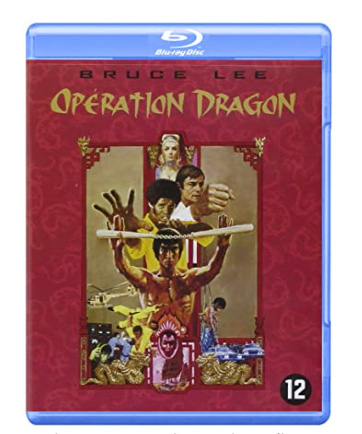
Enter the Dragon
Synopsis
Lee is a highly skilled martial artist recruited by British intelligence to investigate a mysterious island controlled by a powerful criminal named Han. Under the cover of participating in a martial-arts tournament, Lee must gather evidence about Han's illegal activities. He encounters other competitors, including Roper and Williams, who become involved in the dangerous events unfolding on the island. As the tournament progresses, Lee discovers the full extent of Han's criminal operation and prepares to confront him.
The Making of the Film
Enter the Dragon was conceived as an international martial-arts production that would introduce Bruce Lee to a much wider audience. The project emerged from collaboration between Warner Bros., Golden Harvest and producer Raymond Chow. Lee was closely involved in shaping the concept and wanted to combine martial-arts action with a story that could appeal to Western audiences. Screenwriter Michael Allin developed the screenplay around a secret tournament held on a private island. Director Robert Clouse was selected to bring the project to the screen, working with Lee on the action and character elements. The film combines Hong Kong martial-arts traditions with the structure of a spy thriller. Its international cast includes John Saxon and Jim Kelly alongside Bruce Lee. The production was designed to present Lee as a major international action star while retaining the physical precision of his martial-arts performances. Released shortly before Lee's death in 1973, the film became a landmark in the global popularity of martial-arts cinema.
Critical Reception
Professional Reviews: Critics have often recognised Enter the Dragon as one of the most influential martial-arts films ever made. Bruce Lee's physical performance, charisma and screen presence received particular praise. The choreography and tournament structure helped establish a model for later action films. Some reviewers have noted that the supporting characters and dialogue are less developed than the fight sequences, but the film's historical importance remains widely acknowledged.
Audience Reception: The film became a major international success and helped introduce martial-arts cinema to large audiences outside Asia. Bruce Lee became a global cultural icon, and the film attracted viewers who were fascinated by his speed, discipline and distinctive fighting style. Its popularity continued through television broadcasts, home video and later generations of action fans. The production remains a defining reference point for martial-arts entertainment.
Awards: Enter the Dragon did not receive the extensive awards recognition associated with some later international blockbusters, but its cultural influence has been considerable. It has been preserved and celebrated through retrospectives and film-history programmes. Its significance is frequently acknowledged by critics, martial-arts practitioners and filmmakers. The film's legacy rests primarily on its impact on action cinema and Bruce Lee's international reputation.
Behind-the-Scenes Facts
Director's Inspirations: Robert Clouse worked with Bruce Lee to create a film that combined the physical intensity of Hong Kong martial-arts cinema with the structure of a Western spy thriller. Lee wanted the action to express discipline, speed and adaptability rather than rely solely on elaborate choreography. The production also drew on the popularity of international secret-agent films. Its tournament setting provided a natural framework for introducing different fighting styles and personalities.
Production Challenges: The film was an international production involving performers and crew members from different countries. Coordinating martial-arts sequences required detailed choreography and careful camera placement. The island setting also created logistical challenges for transport, accommodation and filming. Bruce Lee's demanding physical standards meant that the fight scenes required extensive preparation and rehearsal.
A Particular Scene: The final confrontation between Lee and Han takes place in a room lined with mirrors. The reflective surfaces create a confusing visual environment in which the characters' movements become difficult to follow. This setting turns the fight into a psychological contest as well as a physical one. The sequence has become one of the most recognisable scenes in martial-arts cinema.
Casting Initially Considered: Bruce Lee was central to the project from its early development and played a major role in shaping its international appeal. John Saxon was cast as Roper, while Jim Kelly was selected as Williams. The combination of performers from different backgrounds reflected the film's ambition to reach audiences across several markets. The casting also helped establish a varied group of competitors for the tournament storyline.
Themes Explored
Discipline is one of the film's central themes, expressed through Lee's approach to martial arts and his commitment to controlling both body and mind. Honour and personal responsibility shape his mission to expose Han's criminal organisation. The story contrasts legitimate martial-arts practice with the exploitation of violence for money and power. Identity is explored through the different fighters who arrive on the island, each carrying personal motivations and histories. Friendship and loyalty become important as Lee develops relationships with Roper and Williams. The film also examines corruption, showing how Han uses wealth and intimidation to control others. Justice is represented by Lee's determination to stop an organisation that operates beyond the reach of ordinary authorities. The tournament setting allows different fighting styles to express distinct philosophies and personalities. Ultimately, Enter the Dragon presents martial arts as a combination of physical ability, self-control and moral purpose.
Ending Explained
The final confrontation takes place inside Han's mirror room, where Lee must overcome an environment designed to confuse and disorient him. The mirrors initially make it difficult to identify Han and distinguish real opponents from reflections. Lee eventually destroys the reflective surfaces, removing the advantage that Han has created. He defeats the criminal leader and helps bring the operation to an end. The resolution confirms that his mission was not simply about winning a tournament but about exposing a criminal organisation. The surviving characters contribute to the collapse of Han's control over the island. Lee's victory represents the triumph of discipline and determination over corruption and exploitation. The ending also completes the film's transformation from a tournament story into a full-scale action thriller. It leaves the protagonist as a symbol of justice and martial-arts mastery.
Meaning of the Title
The title Enter the Dragon combines the idea of entering a dangerous world with the symbolic power of the dragon. The word Enter suggests an invitation or challenge, as the characters cross into Han's isolated domain. Dragon is an important symbol in Chinese culture, often associated with strength, wisdom and supernatural power. In the film, it also evokes Bruce Lee's martial-arts identity and the formidable presence of his character. The title gives the story an immediate sense of danger and spectacle. It reflects the international ambition of the production, presenting Chinese martial arts to a global audience. The phrase also suggests that the central character is entering a world where his abilities will be tested. Its memorable wording helped establish the film as a landmark in action cinema. The title therefore connects cultural symbolism with the protagonist's journey into a criminal stronghold.
Similar Films
- Fist of Fury (1972), another influential Bruce Lee martial-arts film.
- The Way of the Dragon (1972), a martial-arts action film starring Bruce Lee.
- Game of Death (1978), a posthumously completed Bruce Lee production.
- Bloodsport (1988), a tournament-based martial-arts action film.