

 Français
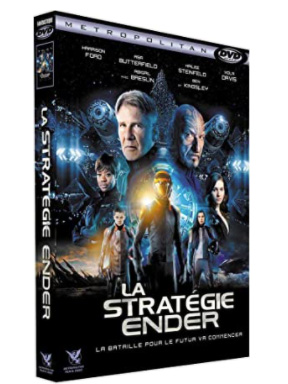
Ender's Game
Synopsis
In the near future, Earth survives a devastating invasion by an aggressive alien insectoid species known as the Formics. To prepare for the inevitable counter-invasion, an elite international military coalition recruits exceptionally brilliant children—including a socially isolated young prodigy named Ender Wiggin—to train at an advanced orbital Battle School. Subjected to extreme psychological simulations and zero-gravity tactical wargames, Ender proves to be a peerless military genius destined to command humanity's final fleet. However, the grueling training pushes him to the absolute brink of his morality and sanity. This thought-provoking sci-fi adaptation explores strategy, war, and empathy.
The Making of the Film
The concept for Ender's Game was adapted from Orson Scott Card's landmark, award-winning 1985 military science fiction novel, which spent decades in development hell because filmmakers struggled to adapt its complex psychological themes. Producer Roberto Orci and director Gavin Hood were finally able to secure financing to bring the beloved book to the big screen. The production team wanted to build stunning zero-gravity combat arenas and futuristic military academies that matched fans' imaginations. Card served as a producer on the film to ensure narrative fidelity.
Critical Reception
Professional critics gave mixed reviews to Ender's Game, praising its impressive zero-gravity visual effects, faithful world-building, and Asa Butterfield's intense lead performance while criticizing its rushed narrative pacing. Reviewers noted that condensing a deeply internal, psychological novel into a two-hour blockbuster inevitably stripped away some of the book's moral complexity. The public response was modest at the box office, falling short of studio franchise expectations. Audiences appreciated the tactical battle room sequences and the shocking twist ending. The film received several Saturn Award nominations.
Filming Anecdotes
Director Gavin Hood drew heavy inspiration from classic military training academies, space exploration technology, and Orson Scott Card's original novel. Production took place in New Orleans, utilizing specialized hydraulic rigs and custom-built zero-gravity stunt wire setups on soundstages to simulate weightless battle room combat. During the filming of the intricate zero-g combat exercises, the young cast underwent months of physical stunt and gymnastics training. Before Asa Butterfield was cast as Ender, several other young actors were evaluated during early casting calls.
Main Themes
The film explores profound themes of military strategy, empathy, the morality of preemptive warfare, child soldiers, and the heavy psychological cost of leadership. It highlights how the line between hero and monster can blur during total war. Additionally, it examines the power of understanding an enemy's perspective.
Ending Explanation
The climax resolves the military simulation when Ender commands the final simulated attack against the alien home planet, only to discover too late from his commanding officers that the simulation was actually a live, real-time military strike resulting in the complete genocide of the Formic species. Horrified by the manipulation and realizing he has been used to commit xenocide, Ender experiences deep moral remorse. Later, exploring an abandoned Formic colony, he discovers an unhatched queen egg left behind for him to understand their peaceful intentions. The film ends on a poignant note as Ender sets off into deep space to find a new home for the alien species.
Title Significance
The title refers both to the high-stakes military wargames ("games") played by Ender Wiggin in orbital school and to the ultimate survival struggle of humanity against an alien civilization.
NULL
NULL
The Matrix, Starship Troopers, Arrival, Edge of Tomorrow