

 Français
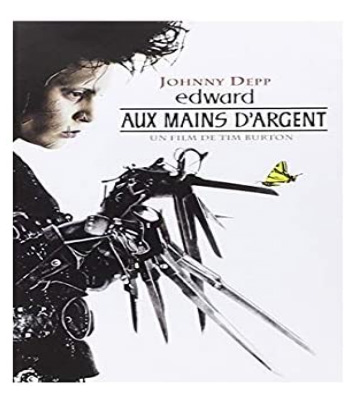
Edward Scissorhands
Synopsis
Edward is an artificial man created by an eccentric inventor who dies before completing his hands, leaving him with sharp scissors instead of fingers. Living alone in a gothic mansion, Edward is discovered by Peg Boggs, a kind-hearted suburban saleswoman who invites him into her home. His unusual appearance initially fascinates the neighborhood, and his remarkable ability to create beautiful sculptures and hairstyles makes him a local sensation. However, the residents' curiosity gradually turns into suspicion and hostility. As Edward falls in love with Peg's daughter Kim, he discovers how difficult it is to find acceptance in a world that fears anyone who is different.
The Making of the Film
Edward Scissorhands originated from a drawing that Tim Burton created during his teenage years. The image represented an isolated character whose unusual hands made ordinary human contact difficult and potentially dangerous. Burton eventually shared the concept with screenwriter Caroline Thompson, and together they developed it into a modern fairy tale. Thompson had previously written the novel First Born, which had attracted Burton's interest. The project was initially imagined as a musical before evolving into the fantasy drama that audiences know today. The story combines elements of Frankenstein, Pinocchio and traditional fairy tales with Burton's personal interest in outsiders and misunderstood individuals. Johnny Depp was eventually cast as Edward, while Winona Ryder played Kim. The production was financed by 20th Century Fox after Warner Bros. declined the original proposal. The result became one of Burton's most personal and recognizable films.
Reviews and Reception
Professional reviews: Critics generally praised the film for its originality, visual imagination and emotional sensitivity. Johnny Depp received considerable recognition for creating a memorable character through physical expression and restrained dialogue. Tim Burton's visual direction and Danny Elfman's musical score were also widely celebrated. Some reviewers considered the suburban satire excessively exaggerated, but the film was generally regarded as a distinctive fantasy.
Audience reception: Edward Scissorhands became a commercial success and gradually developed a devoted international following. Audiences were particularly touched by the relationship between Edward and Kim. The contrast between the gothic mansion and the colorful suburban neighborhood gave the film a memorable visual identity. Its themes of loneliness and acceptance have helped it remain popular across generations.
Awards: The film received an Academy Award nomination for Best Makeup for the work of Ve Neill and Stan Winston. It also earned a Golden Globe nomination for Johnny Depp. Among its other honors, it received the BAFTA Award for Best Production Design and the Hugo Award for Best Dramatic Presentation. These distinctions recognized the production's remarkable visual imagination and artistic achievement.
Behind-the-Scenes Stories
Director's inspirations: Tim Burton drew inspiration from his own drawings and his feelings of social isolation during adolescence. He wanted Edward to represent a sensitive individual who is misunderstood because of his appearance. The contrast between the gothic mansion and the brightly colored suburban neighborhood reflects Burton's interest in the conflict between individuality and conformity. Caroline Thompson helped transform the original visual concept into an emotionally developed fairy tale.
Production challenges: Stan Winston and his team designed the elaborate scissor hands, which required considerable technical precision. Johnny Depp had to perform with prosthetic makeup and a complicated costume that restricted his movements. Applying the makeup and costume took approximately one hour and forty-five minutes each day. The production also required the creation of a complete suburban neighborhood in Florida, with carefully coordinated pastel colors and artificial-looking landscaping.
Notable scene: Edward's ice sculpture sequence is one of the film's most poetic moments. As he carves the ice, small particles fall through the air like snow, creating a magical atmosphere. Kim dances beneath the falling ice and experiences a moment of pure happiness. The scene expresses Edward's artistic sensitivity and his inability to participate fully in ordinary human relationships.
Original casting: Tom Cruise was initially considered for the role of Edward, but he eventually withdrew from the project. Gary Oldman and Tom Hanks were also reportedly considered or approached before Johnny Depp was cast. Vincent Price was specifically chosen for the role of the Inventor because Burton admired his classic horror-film performances. Winona Ryder joined the production as Kim after previously working with Burton on the development of his distinctive visual universe.
Themes Explored
Edward Scissorhands explores loneliness and the difficulty of belonging to a society that fears difference. Edward is gentle and sensitive, yet his unusual appearance causes people to judge him before understanding him. The film examines the superficiality of suburban life through a neighborhood obsessed with appearances, gossip and social approval. Creativity is another major theme, as Edward uses his extraordinary hands to produce beautiful works of art. However, the same hands that allow him to create also prevent him from touching others safely. Love is presented as a powerful emotional connection that cannot always overcome social prejudice or physical limitations. The story also explores innocence, exploitation and the responsibility people have toward those who are vulnerable. Ultimately, it suggests that being different does not make someone less human and that genuine beauty often exists beyond conventional appearances.
Ending Explained
The ending reveals that Edward cannot remain in the suburban community despite the affection he has developed for Kim. After a series of misunderstandings and violent confrontations, the residents turn against him and demand his removal. Kim realizes that protecting Edward means allowing him to return to the isolation of his mansion. She tells the others that Edward has died, creating the impression that he can no longer threaten their peaceful existence. Years later, an elderly Kim explains that she believes Edward is still alive because she continues to see snow falling in the neighborhood. The snow is created when Edward carves ice sculptures in his mansion. This final image suggests that their emotional connection has survived despite their separation. Edward remains isolated, but his art allows him to express the love and memories he cannot communicate directly. The ending is therefore both romantic and melancholic, celebrating a relationship that cannot exist within the ordinary world.
Meaning of the Title
The title Edward Scissorhands identifies the protagonist through his most unusual physical characteristic. His name emphasizes his individuality, while Scissorhands describes the artificial hands that distinguish him from ordinary people. The expression also creates an immediate association with danger, cutting and physical separation. However, the film gradually reveals that these hands are not simply instruments of destruction. They allow Edward to create beautiful sculptures, hairstyles and works of art. This contradiction lies at the heart of the character. His hands symbolize both his extraordinary creativity and his inability to experience ordinary human contact. The title therefore captures the tension between the beauty he can produce and the isolation he must endure. It also gives the character the memorable quality of a fairy-tale figure whose identity is inseparable from his unusual appearance.
Danny Elfman composed the original score, creating one of the most recognizable musical collaborations between the composer and Tim Burton. The music combines orchestral arrangements, a choir and delicate melodic passages to reinforce the film's fairy-tale atmosphere. Its main themes alternate between melancholy, innocence and wonder. The soundtrack is particularly memorable during the ice sculpture sequence, where the music becomes an essential part of the emotional impact. The score remains one of Elfman's most celebrated works and a defining element of the film's identity.
Similar Films
Frankenstein explores the tragedy of an artificial being rejected by human society. Pinocchio examines the desire of an artificial creation to become a real person. The Elephant Man portrays a sensitive individual whose appearance causes others to judge and mistreat him. Big Fish combines fantasy, family relationships and the poetic imagination associated with Tim Burton's cinema. Corpse Bride offers another gothic fairy tale about love, isolation and acceptance. The Shape of Water explores an unusual romantic relationship between two individuals considered outsiders. A.I. Artificial Intelligence examines the emotional life of an artificial being searching for love and belonging. These films share Edward Scissorhands's interest in outsiders, loneliness, compassion and the difference between physical appearance and inner humanity.