

 Français
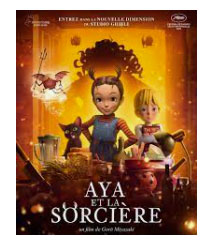
Earwig and the Witch
Synopsis
Earwig is a clever, strong-willed orphan who has always been happy in her orphanage, because she knows how to get what she wants. Everything changes when she is adopted by a strange witch named Bella Yaga and her mysterious companion, the Mandrake. Instead of a loving home, she finds herself serving as a helper for spells and potions. Determined not to be pushed around, Earwig sets out to turn the tables.
The Making of the Film
Earwig and the Witch is based on the children's novel by Diana Wynne Jones, the British author who also wrote Howl's Moving Castle. It was directed by Goro Miyazaki, with a project planning credit for his father Hayao Miyazaki. This was Studio Ghibli's first film made entirely in 3D computer animation, a major departure from the studio's hand-drawn tradition. The screenplay was written by Keiko Niwa and Emi Gunji. The story follows the novel's lively spirit, focusing on a heroine who is stubborn, mischievous and anything but a victim. The film aired on Japanese television in December 2020 and was later released in theaters in other countries in 2021. It was also selected for the Cannes Film Festival's official label in 2020. The project aimed to explore new technology while keeping Ghibli's distinctive sense of magic.
Critical Reception
Critics were mostly lukewarm. Many noted the charm of the story and its heroine, but they were disappointed by the 3D animation, which felt less expressive than the studio's classic hand-drawn style. Others thought the pacing was uneven and that the ending felt abrupt. Even so, some reviewers appreciated its playful tone and its fresh take on witchcraft.
Audiences were divided, with younger viewers often enjoying the humor and the magical house, while longtime Ghibli fans were more critical. Many found Earwig's strong personality refreshing. The film found most of its audience through television and streaming.
It was not a major awards contender, though it received some attention as Ghibli's first full-CG production.
Themes Explored
The film celebrates independence, resourcefulness and the refusal to be defined by others' expectations. It plays with the idea of what makes a family, since Earwig finds herself in a very unconventional household. It also pokes fun at the traditional image of witches by presenting them as grumpy and eccentric rather than glamorous. At heart, it is a story about a girl who learns to stand up for herself.
Ending Explained
The story ends quite suddenly, after Earwig has turned the situation in her favor and found a way to live on her own terms. Much of the household's mystery is resolved, but the final scene leaves many threads open. This abrupt conclusion is faithful to the unfinished nature of Diana Wynne Jones' book, which was published after her death. It leaves viewers to imagine what comes next for Earwig and her strange new family.
Meaning of the Title
The title refers to the heroine, whose name is Earwig, and to the witch who adopts her. It frames the story as a duel between two strong personalities. The unusual name also gives the film an off-beat, fairy-tale flavor.
Original Soundtrack
The music was composed by Satoshi Takebe, who blended rock and pop influences with traditional fantasy elements. The film also features an energetic theme song that matches Earwig's rebellious personality. The result is a lively soundtrack that gives the story a modern and playful tone.
Similar Films
Howl's Moving Castle is the best-known adaptation of another Diana Wynne Jones story. Kiki's Delivery Service is a classic Ghibli tale about a young witch finding her place. Coraline offers a darker, more eerie take on children and magical homes. Matilda also stars a clever girl who refuses to be pushed around by adults.