

 Français
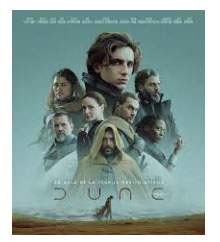
Dune
Synopsis
In the far future, Paul Atreides is the young heir of a noble family that is handed control of Arrakis, a desert planet that is the only source of the most valuable substance in the universe. The gift turns out to be a trap, and betrayal tears his house apart. Forced to flee into the desert with his mother, Paul comes into contact with the Fremen, the people of the dunes. As visions of the future haunt him, he must decide what kind of leader he is willing to become.
The Making of the Film
Dune is the first part of Denis Villeneuve's adaptation of Frank Herbert's legendary 1965 science-fiction novel. The book had a famously troubled screen history, from Alejandro Jodorowsky's unrealized project to David Lynch's 1984 film. Villeneuve, who has said that the novel marked him as a teenager, accepted the job on one condition: that the story be split into two films so it could breathe. He wrote the screenplay with Jon Spaihts and Eric Roth, and shot the film in Jordan, Abu Dhabi and Hungary. The production favored real locations and practical sets over green screens, to give Arrakis a tangible, weathered feel. The release was delayed by the pandemic and finally arrived in October 2021, in theaters and on HBO Max at the same time.
Critical Reception
Summary of professional reviews
Critics were overwhelmingly enthusiastic. They praised the scale of Villeneuve's vision, the stunning cinematography by Greig Fraser and the immersive sound design. Many said it finally did justice to a novel long considered unfilmable. A few reviewers found the pacing slow and regretted that the story ends before its conclusion.
Public reception
Audiences responded warmly, and the film earned around 400 million dollars worldwide despite the pandemic and its simultaneous streaming release. It found a passionate fan base, and its success paved the way for a sequel.
Awards received
Dune received ten Academy Award nominations, including Best Picture, and won six: Best Cinematography, Best Film Editing, Best Original Score, Best Production Design, Best Sound and Best Visual Effects. It also won several BAFTA awards.
Behind-the-Scenes Stories
Director's inspirations
Villeneuve has described Dune as the book that first made him want to make films. He drew inspiration from the architecture of ancient and brutalist buildings, as well as from desert landscapes, to create a world that feels both alien and plausible. He also wanted the sound to be as important as the images.
Production difficulties
Shooting in the deserts of Jordan and Abu Dhabi meant dealing with heat, sand and complicated logistics. The pandemic then delayed the film's release for about a year.
Anecdote about a particular scene
The ornithopters, the dragonfly-like aircraft of the story, were designed with fully articulated wings and built as practical props for key scenes. Villeneuve wanted the actors to react to something real rather than to an empty screen.
Themes Explored
The film explores power, destiny and the danger of messiah figures. Paul is told that he might be a chosen one, and the story asks whether prophecy is a gift or a burden. It also looks at colonialism and the exploitation of natural resources, since the empire's hunger for spice mirrors real-world struggles over oil. Ecology and survival are central, as the Fremen have adapted to the harshest environment imaginable. Family, loyalty and betrayal give the story its emotional core.
Ending Explained
After the fall of House Atreides, Paul and his mother, Lady Jessica, escape into the desert and are taken in by the Fremen. Paul fights and defeats Jamis in a ritual duel and begins to accept his role among them. The film ends with him walking into the desert with Chani, as she says that this is only the beginning. It is deliberately open-ended, since the story continues in the second part.
Meaning of the Title
Dune refers to the sand dunes of Arrakis, the desert planet where the story takes place. Arrakis is also known as Dune, and the title therefore points to the setting that shapes every character and every conflict. It evokes both beauty and danger.
Original Soundtrack
Hans Zimmer's score is one of the most striking elements of the film. He built it around unusual instruments, ethereal voices and custom-made sounds, to avoid the sound of a typical science-fiction film. The score won the Academy Award for Best Original Score.
Similar Films
For other epic science fiction, try Blade Runner 2049, Arrival and Lawrence of Arabia, which inspired much of its desert imagery. David Lynch's Dune (1984) is the earlier adaptation of the same novel. Star Wars, which borrowed heavily from Herbert's ideas, and The Lord of the Rings offer sweeping adventures on a similar scale.