

 Français
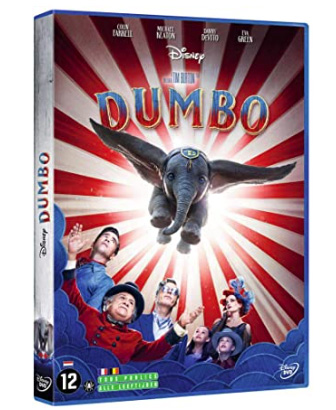
Dumbo
Synopsis
In 1919, former circus performer Holt Farrier returns from the war to find that his life and the circus have changed dramatically. He is given responsibility for caring for a newborn elephant whose unusually large ears make him the object of ridicule. Holt's children, Milly and Joe, discover that Dumbo can use his ears to fly. The extraordinary ability attracts the attention of entrepreneur V. A. Vandevere, who wants to turn the young elephant into the main attraction of his entertainment empire. As the circus becomes increasingly commercialised, Holt and his children must find a way to protect Dumbo and reunite him with his mother.
The Making of the Film
Dumbo is a live-action reimagining of Disney's 1941 animated classic, which was itself based on a story by Helen Aberson and Harold Pearl. Tim Burton was selected to direct the new version because of his experience creating visually distinctive fantasy worlds and sympathetic outsiders. The project was part of Disney's broader effort to adapt its animated catalogue into live-action productions. Screenwriter Ehren Kruger expanded the original story by introducing human characters and a larger conflict involving a powerful entertainment entrepreneur. The filmmakers wanted to preserve the emotional relationship between Dumbo and his mother while giving the narrative a more elaborate setting. The circus became an opportunity to explore spectacle, exploitation and the commercialisation of entertainment. Colin Farrell was cast as Holt Farrier, with Eva Green, Michael Keaton and Danny DeVito playing important roles in the story. Computer-generated imagery was used to create Dumbo and the other animals, allowing the filmmakers to give the elephant realistic expressions and movement. The result combines the familiar emotional core of the original with Burton's interest in outsiders and misunderstood characters.
Critical Reception
Professional Reviews
Dumbo received mixed reviews from professional critics. Many praised the visual design, the performances of the cast and the emotional relationship between Dumbo and his mother. Tim Burton's distinctive production style was also appreciated, particularly in the recreation of the travelling circus. However, several critics felt that the new human storyline made the film less emotionally direct than the 1941 animated original. Some reviewers considered the screenplay predictable and felt that the supporting characters were not sufficiently developed. The computer-generated elephant was generally well received, although opinions differed about the overall effectiveness of the adaptation. The film was therefore viewed as visually attractive but less memorable than the original classic.
Audience Reception
Audience reactions were generally moderate, with many families appreciating the film's visual spectacle and emotional message. Viewers familiar with the original animation were particularly interested in seeing Dumbo brought to life through modern visual effects. The relationship between the young elephant and his mother remained one of the most moving elements for many spectators. However, the film did not achieve the level of commercial success expected from a major Disney adaptation. Some audiences found the expanded human storyline less engaging than Dumbo's original adventure. Its reception was consequently more restrained than that of several other live-action Disney remakes.
Awards
Dumbo did not receive major recognition from the Academy Awards or the principal international film awards. Its production design, costumes and visual effects attracted some attention from specialist organisations. The film was more visible through its technical presentation and the reputation of its cast than through awards nominations. Its reception during the awards season was relatively limited. The production nevertheless remains an example of Disney's large-scale live-action adaptations of animated classics.
Behind the Scenes
Director Inspirations
Tim Burton was drawn to the story because Dumbo is an outsider who is rejected for being different. This theme appears throughout the director's work, particularly in films featuring characters who do not fit into conventional social expectations. Burton also wanted to explore the world of travelling circuses, with its mixture of wonder, spectacle and exploitation. The film pays tribute to the emotional simplicity of the original animation while expanding its setting into a larger story about commercial entertainment.
Production Challenges
Creating Dumbo required extensive computer-generated animation and close coordination between the visual-effects team and the actors. The elephant needed to look convincing while remaining expressive enough to communicate emotions without dialogue. The production also involved elaborate circus sets, costumes and large-scale crowd scenes. The filmmakers had to combine practical environments with digital characters and effects in a consistent visual style. Recreating the atmosphere of a travelling circus in the early twentieth century required detailed research into costumes, equipment and performance traditions.
A Particular Scene
The sequence in which Dumbo first flies in front of an audience is one of the film's central moments. The scene transforms the elephant's physical difference into an extraordinary ability that changes how the crowd sees him. The production combines digital animation, camera movement and the reactions of the human performers to make the moment feel spectacular. It also marks a turning point in Dumbo's story, as his talent attracts the attention of people who see commercial value in his abilities. The scene introduces the conflict between genuine affection and the exploitation of a remarkable animal.
Casting
Colin Farrell was cast as Holt Farrier, a former circus performer returning to a changed world. Danny DeVito plays circus owner Max Medici, while Michael Keaton portrays the ambitious entrepreneur V. A. Vandevere. Eva Green plays aerial performer Colette Marchant. The casting reunites several actors who had previously worked with Tim Burton, including Michael Keaton and Danny DeVito. Their involvement contributes to the film's mixture of fantasy, nostalgia and theatrical spectacle.
Themes
Difference and acceptance are central themes of Dumbo. The young elephant is initially rejected because of his unusual appearance, but the quality that makes him an outsider eventually becomes his greatest strength. The film explores the importance of seeing beyond physical differences and recognising the value of individuals who do not fit conventional expectations. Family love is another major theme, particularly through the bond between Dumbo and his mother. The story also examines the exploitation of animals and performers by people who see them primarily as sources of profit. The circus represents both wonder and commercial manipulation, showing how entertainment can conceal difficult working conditions. Holt's relationship with his children develops as they learn to support one another after a period of family disruption. The film also questions the price of fame and the danger of turning personal talent into a commercial product. Ultimately, it celebrates compassion, freedom and the courage to embrace what makes someone different.
Ending Explained
Holt and his children eventually help Dumbo escape the control of Vandevere's entertainment empire. The entrepreneur's ambition has turned the circus into a place where performers and animals are valued mainly for their commercial potential. Dumbo is reunited with his mother, allowing the emotional centre of the story to reach a satisfying conclusion. The human characters also find a new direction, with the circus moving towards a more independent and humane future. Holt becomes closer to his children and begins to rebuild his family life. Dumbo's extraordinary ability is no longer something that must be exploited for public entertainment. The ending suggests that genuine happiness comes from freedom and meaningful relationships rather than fame or financial success. It also gives the circus performers the opportunity to define their own future. The final scenes celebrate the bond between mother and child and the importance of protecting those who cannot protect themselves.
Meaning of the Title
The title Dumbo is the name given to the young elephant at the centre of the story. It is a teasing nickname derived from the word dumb, reflecting the way other characters initially mock him because of his unusual appearance. The name begins as an insult but gradually becomes associated with courage, affection and extraordinary ability. It also recalls the original 1941 animated film and its famous character. The title therefore captures the transformation of someone who is considered different into a figure admired for precisely that difference. It is a simple name with an emotional meaning that develops throughout the story.
Original Soundtrack
Danny Elfman composed the original score for Dumbo, continuing his long creative collaboration with Tim Burton. The music combines orchestral fantasy themes with more emotional passages that support the relationship between Dumbo and his mother. Elfman also revisits the musical identity of the original animated film, including a new interpretation of the famous song Baby Mine. The score helps establish the atmosphere of the circus, moving between wonder, melancholy and excitement. Its combination of familiar musical references and new compositions reinforces the film's connection to the Disney classic.
Similar Films
- Dumbo (1941), the original Disney animated film about the young elephant.
- The Jungle Book (2016), another live-action adaptation of a Disney animated classic.
- The Greatest Showman (2017), a musical about circus entertainment, ambition and spectacle.
- Big Fish (2003), a Tim Burton fantasy exploring family, memory and extraordinary characters.
- The Elephant Man (1980), a drama about difference, dignity and the treatment of outsiders.