

 Français
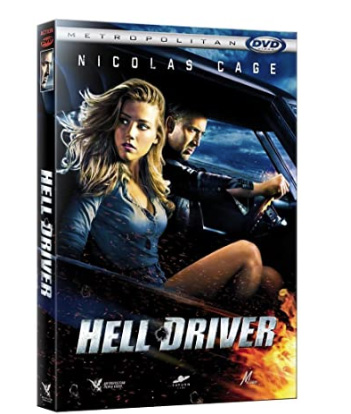
Drive Angry
Synopsis
Milton is a hardened felon who breaks straight out of Hell, stealing a powerful muscle car driven by a fierce young waitress named Piper in a desperate race against time. He is hunting down a satanic cult leader named Jonah King, who murdered Milton's daughter and plans to sacrifice her infant baby during the next full moon. Hot on Milton's tail is a supernatural accountant known only as "The Accountant," sent by Hell to drag the fugitive back to the underworld. Blazing across America with roaring engines and flying bullets, Milton wages a high-octane war against mortals and demons alike.
The Making of the Film
Directed by Patrick Lussier and co-written with Todd Farmer, the film was conceived as an over-the-top, supernatural action-horror extravaganza designed specifically for 3D cinematic presentation. Lussier wanted to combine classic 1970s muscle car exploitation cinema with supernatural demonic mythology and grindhouse grit. Nicolas Cage was cast as the vengeful undead protagonist, bringing his trademark eccentric energy to the pedal-to-the-metal role. The production utilized custom 3D camera rigs to maximize explosive action depth.
Critical Reception
Critical reception for the film was generally mixed to negative, with reviewers criticizing its absurd plot, campy dialogue, and excessive gore. However, many action fans and cult cinema enthusiasts praised its unapologetic B-movie absurdity, thrilling car chases, and William Fichtner's scene-stealing performance. Audiences largely stayed away from theaters during its initial run, resulting in a box office bomb. Over time, it developed a dedicated cult following for its sheer unhinged entertainment value.
Behind-the-Scenes Stories
Nicolas Cage drove several of the classic muscle cars during stunt sequences, working closely with precision driving coordinators. William Fichtner brought dry comedic timing to his role as the supernatural accountant, improvising several memorable deadpan lines. The production was filmed on location in Louisiana, utilizing swampy backroads and dusty highways to mimic a southern grindhouse aesthetic. Stunt coordinators designed elaborate shootouts that integrated practical pyrotechnics and 3D camera angles.
Themes Explored
The film explores vengeance, damnation, fatherhood, and supernatural redemption beyond death. It highlights rebellion against demonic forces and protecting innocent children at all costs. Muscle car subculture and grindhouse excess drive the kinetic narrative. It also touches upon eternal punishment and free will.
Ending Explained
Milton confronts Jonah King during the satanic ritual, slaughtering the cult members and rescuing his infant grandchild just before the full moon sacrifice is completed. The Accountant arrives to collect Milton and drag him back to Hell, but grants him a brief final moment to ensure the baby is safely handed over to Piper. Milton willingly accepts his return to the underworld, knowing his daughter's killer is dead and his grandchild is safe. The conclusion delivers a fiery, action-packed wrap-up to his supernatural revenge trip.
Meaning of the Title
The title is a direct, literal summary of the protagonist's emotional and physical state: driving muscle cars at high speeds while fueled by demonic rage and vengeance. It highlights the high-octane grindhouse tone. The punchy name sets an aggressive action expectation.
Michael Wandmacher composed a roaring heavy metal and rock-infused orchestral score that matched the high-octane muscle car action.
Ghost Rider, Machete, Death Proof, Crank