

 Français
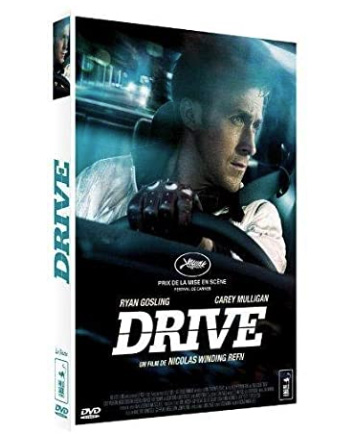
Drive
Synopsis
A mysterious Hollywood stunt driver who moonlights as a getaway wheelman for criminals finds his life upended. He falls for his vulnerable neighbor, Irene, whose imprisoned husband returns home and owes dangerous debts to local mobsters. To protect Irene and her young son, the driver agrees to one last lucrative heist that disastrously goes wrong. Plunged into a brutal underworld war, he must unleash his lethal driving skills and ruthless instincts to survive.
The Making of the Film
Director Nicolas Winding Refn was handed the script adaptation of James Sallis's novel by actor Ryan Gosling, who was already attached to star as the lead. Refn was initially hesitant about making a standard Hollywood action film until he realized he could turn it into an art-house romance disguised as a gritty crime thriller. Inspiration was drawn from classic 1980s neon-noir cinema, European art-house films, and the surreal tone of superhero mythology. This unique creative vision transformed a modest pulp novel into a critically acclaimed cinematic masterpiece.
Critical Reception
Professional critics lauded the film for its mesmerizing visual style, hypnotic synth-pop soundtrack, and Nicolas Winding Refn's visionary direction. Many reviews praised Ryan Gosling's brilliantly understated performance as the quiet, enigmatic driver. Reviewers frequently highlighted the film's striking juxtaposition of tender romantic moments and sudden, shocking bursts of extreme violence. Overall, it was hailed as a modern neo-noir classic that redefined the crime thriller genre.
Public reception was deeply appreciative, finding a strong following among cinephiles and art-house film enthusiasts worldwide. Audiences were captivated by the atmospheric pacing, stunning cinematography by Newton Thomas Sigel, and the brooding protagonist. Word of mouth helped the film achieve sleeper hit status and cemented its reputation as a cult favorite. Spectators frequently cited the iconic scorpion jacket and elevator scene as unforgettable cinematic moments.
The film earned widespread international acclaim, winning the prestigious Best Director award at the 2011 Cannes Film Festival. It also received an Academy Award nomination for Best Sound Editing, alongside numerous accolades from film critic associations worldwide. Its enduring influence on modern neon-soaked cinematography and synthwave aesthetics remains profound to this day.
Filming Anecdotes
The director drew heavy visual and atmospheric inspiration from classic 1980s crime dramas, European auteurs like Alejandro Jodorowsky, and graphic novels. He wanted the film to feel like a fairy tale set in modern Los Angeles, where the protagonist acts as a mythical knight rescuing a damsel in distress. Cinematic influences ranged from classic car chase movies like Bullitt to existential art-house cinema. These artistic choices created a dreamy, hypnotic aesthetic that mesmerized viewers from the opening frame.
Production was characterized by a highly collaborative and intuitive creative process between the director and lead actor. Ryan Gosling personally selected the iconic white satin jacket featuring a golden scorpion on the back to symbolize the driver's dual nature. Many dialogue-heavy scenes were intentionally trimmed down to allow silence and body language to convey the emotional weight of the characters. This minimalist approach required intense focus from the cast to communicate subtext without relying on exposition.
One particularly memorable sequence involved a tense, silent confrontation inside an elevator where the driver shares a tender moment with Irene before unleashing sudden violence. This scene required meticulous spatial choreography and precise lighting to shift the mood from romantic warmth to terrifying brutality in a single second. The actors rehearsed the transition repeatedly to ensure the emotional impact felt raw and shocking. Crew members often recalled this sequence as the emotional pinnacle of the entire production process.
The initial casting process focused on finding actors who could project deep emotional resonance with minimal dialogue. Ryan Gosling was the immediate choice for the driver, bringing an intense, quiet magnetism to the role. Carey Mulligan was cast as Irene, bringing a fragile, empathetic vulnerability that perfectly complemented Gosling's stoic persona. Supporting actors like Bryan Cranston, Albert Brooks, and Ron Perlman added incredible grit and menace to the criminal underworld elements.
Themes Explored
- The duality of human nature, masking gentle romance behind ruthless violence.
- Modern knight-errantry and the pursuit of morality in a corrupt world.
- Isolation, urban alienation, and the search for human connection in Los Angeles.
- Existential heroism and quiet sacrifice for loved ones.
Ending Explained
- The climax features the driver eliminating the remaining mob bosses in a series of brutal, bloody encounters to permanently protect Irene and her son. Severely wounded after his final confrontation, he chooses to drive off into the Los Angeles night alone rather than risk bringing further danger to Irene's life. The ambiguous final shots show him fading into the neon-lit darkness, leaving his exact fate open to audience interpretation. This poignant conclusion reinforces his status as a tragic, wandering modern knight.
Title Significance
The title is a direct, minimalist reference to the protagonist's profession as a stunt driver and getaway wheelman. It doubles as a thematic command representing forward momentum, escape, and the relentless drive required to survive in a hostile criminal world.
Original Soundtrack
The soundtrack is widely regarded as a masterpiece of modern synthwave and electronic pop music, curated brilliantly by composer Cliff Martinez. Tracks like "A Real Hero" by College featuring Electric Youth and "Nightcall" by Kavinsky became instant cult classics that defined the film's hypnotic atmosphere. The music served as the emotional heartbeat of the movie, blending seamlessly with the neon-drenched cinematography.
Similar Films
- Baby Driver (2017)
- Nightcrawler (2014)
- The Place Beyond the Pines (2012)
- Thief (1981)
- Collateral (2004)