

 Français
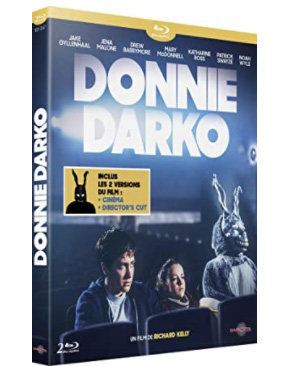
Donnie Darko
Synopsis
In October 1988, troubled teenager Donnie Darko is awakened one night by a sinister figure in a rabbit costume who tells him the world will end in 28 days. Shortly afterward, a jet engine mysteriously crashes into his bedroom, but Donnie is somehow absent. As strange visions and time-bending events pile up, he becomes convinced he must fix a tear in reality. The result is a haunting blend of science fiction, teen drama and dark comedy.
The Making of the Film
Donnie Darko was the debut feature of writer-director Richard Kelly, who wrote it while still in his twenties. He was inspired by a mix of suburban 1980s nostalgia, science-fiction ideas about time travel and his own sense of unease about the era. The film combines elements of teen movies, philosophical sci-fi and psychological drama, creating a strange tone that is hard to categorize. It premiered at the Sundance Film Festival and was released in the United States in October 2001, shortly after the September 11 attacks, which hurt its box-office chances because of its jet-engine plot. It only reached many European countries in 2002.
Reviews and Reception
Summary of Professional Reviews
Critics were intrigued but divided on release. Some admired its originality, atmosphere and ambition, while others found the plot confusing and overstuffed. Over the years, critical opinion has grown more favorable, and many now see it as one of the defining cult films of the early 2000s.
Audience Reception
The film flopped initially, but home video and midnight screenings transformed it into a massive cult favorite. Viewers have spent years debating its meaning, creating theories and analyses about the "tangent universe". A director's cut released later added extra material and fueled further discussion.
Awards Won
It did not win any major awards on release, and its importance comes from its legacy rather than trophies. It is frequently cited in lists of the best films of the 2000s and as an influential independent film.
Filming Anecdotes
Director's Inspirations
Richard Kelly has said he wanted to mix the feeling of a John Hughes high-school movie with the strangeness of a David Lynch dream. The 1980s setting also allowed him to comment on politics, self-help culture and suburban anxiety.
Production Difficulties
The film was shot on a small budget in a short period, which forced the team to be inventive. Complex visual effects and a layered script made the production challenging for such a low-cost indie. Marketing the film after its release was also difficult because of how hard it was to describe.
Anecdote About a Particular Scene
The creepy design of Frank, the giant rabbit, is one of the film's most memorable images. The mask was intentionally unsettling and became an icon of pop culture, appearing on posters and merchandise worldwide.
Themes Explored
Donnie Darko explores fate versus free will, asking whether a person can change a destiny that has already been set. It also looks at adolescent alienation, mental illness and the loneliness of seeing the world differently from everyone else. The film critiques suburban conformity and shallow self-help culture, using humor and satire. Time, death and sacrifice sit at the center of the story, framing Donnie as a reluctant hero. Love and connection emerge as powerful forces even in a collapsing universe.
Ending Explained
In the finale, Donnie realizes that he must send the jet engine back in time to close the tangent universe and prevent its collapse. He returns to his bedroom, laughs calmly and lets the engine kill him, restoring the original timeline. The other characters, now unaware of what happened, seem to feel a faint sense of loss and connection. The ending suggests that Donnie's sacrifice saved everyone and that love can echo across time.
Meaning of the Title
Richard Kelly has said he chose the name Donnie Darko because it sounds like a superhero's alter ego, much like Peter Parker. The title therefore hints at the idea of an ordinary teenager burdened with an extraordinary destiny. The word "dark" is also embedded in the surname, reflecting the film's moody tone.
Original Soundtrack
The soundtrack is a defining feature, packed with 1980s classics from Tears for Fears, Echo and the Bunnymen, Joy Division and INXS. Michael Andrews and Gary Jules' haunting cover of "Mad World" became a major hit and is inseparable from the film's ending. The music adds nostalgia and melancholy to every scene.
Similar Films
- Southland Tales: Richard Kelly's own wild follow-up.
- Twelve Monkeys: a mind-bending time-travel story.
- The Butterfly Effect: a drama about altering the past.
- Mulholland Drive: a dreamlike, puzzling psychological thriller.