

 Français
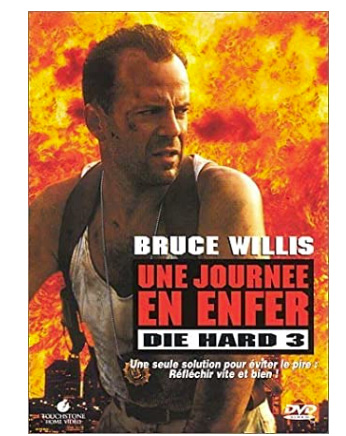
Die Hard with a Vengeance
Synopsis
New York is under attack by a mysterious bomber who calls himself Simon. He forces police officer John McClane and a reluctant shopkeeper, Zeus Carver, to play a deadly game of riddles across the city. Each mistake could cost lives. Behind the game lies a far larger plan.
The Making of the Film
The film was directed by John McTiernan, who had also made the first Die Hard. The script was originally an unrelated screenplay by Jonathan Hensleigh, which was reworked into a Die Hard sequel. It introduced Simon Gruber, the brother of Hans Gruber, as the villain. Bruce Willis returned as McClane and Samuel L. Jackson joined him.
Reviews and reception
Summary of professional reviews: Critics were generally positive, praising the chemistry between Willis and Jackson and the sustained pace. Some found it less claustrophobic and tense than the original.
Audience reception: The film was a huge success and one of the top-grossing films of 1995 worldwide, with more than $360 million.
Behind-the-scenes anecdotes
Production difficulties: Filming took place on location in New York, with some scenes shot in real streets to give the film an authentic feel. The mixture of action and humour became a hallmark.
Themes explored
The film explores revenge, the burden of the past and the unlikely friendship between two very different men. It also plays with the idea of a city held hostage by a puzzle.
Ending explained
McClane and Zeus track Simon to Canada and manage to stop his plan. Simon dies in a helicopter explosion, and McClane makes peace with his difficult situation.
Meaning of the title
The title echoes the original Die Hard and refers to the vengeance sought by Simon Gruber for the death of his brother Hans.
Soundtrack
Michael Kamen's score reuses elements of the first film, mixing in the playful use of "When Johnny Comes Marching Home" as the main theme.
Similar films
Fans of this film might enjoy Die Hard, Lethal Weapon, Speed, Under Siege or Mission: Impossible.