

 Français
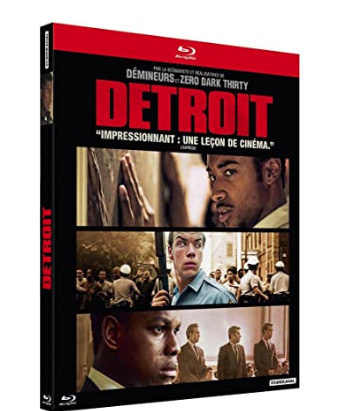
Detroit
Synopsis
During the devastating and racially charged 1967 Detroit riots, a harrowing incident unfolds at the Algiers Motel involving rogue police officers and terrified civilians. Triggered by a perceived sniper threat, a group of racist police officers terrorize, interrogate, and brutalize a group of young Black men and two white women over several agonizing hours. The psychological abuse and violence push the victims to the absolute brink of survival while the city burns outside. The event becomes one of the most shameful and haunting chapters in American civil rights history.
The Making of the Film
Director Kathryn Bigelow and screenwriter Mark Boal committed to telling the harrowing real-life story of the Algiers Motel incident to shed light on systemic police brutality and racial injustice. The filmmakers conducted extensive interviews with survivors, witnesses, and historical experts to reconstruct the events with absolute documentary-like precision. The production aimed to immerse audiences directly into the terrifying claustrophobia and chaos of that fateful night. The project was timed to coincide with the 50th anniversary of the Detroit riots.
Critical Reception
Professional reviews were largely positive, with critics praising Kathryn Bigelow's intense, unflinching direction and the powerful, gut-wrenching performances of the ensemble cast, particularly Will Poulter and John Boyega. Reviewers lauded the film for its harrowing realism and its vital engagement with historical racial trauma in America. However, some critics debated whether the harrowing violence overshadowed the broader sociopolitical context of the riots.
Public reception was emotionally profound, sparking intense discussions about modern racial inequalities and police accountability in society. While box office returns were modest for a serious historical drama, word-of-mouth solidified its reputation as an essential and gripping cinematic experience. Viewers found the motel sequence uniquely terrifying and emotionally draining.
Awards recognition included critical association prizes and film festival accolades, though it was surprisingly snubbed in major Academy Award categories, sparking widespread industry conversations about its bold subject matter.
Shooting anecdotes
Director Kathryn Bigelow drew inspiration from classic investigative journalism and verité documentary filmmaking to capture the chaotic urgency of the riots.
Production faced massive logistical hurdles orchestrating large-scale crowd riots and recreating 1960s Detroit streetscapes on location in Massachusetts and Michigan.
During the filming of the intense motel interrogation scenes, the young actors playing the victims remained separated from the antagonist officers between takes to maintain genuine emotional tension.
Initial casting sought versatile dramatic actors who could authentically portray extreme terror and psychological abuse without sensationalizing the historical tragedy.
Themes explored
The film explores systemic racism, police brutality, abuse of authority, historical trauma, and civil unrest. It examines how institutional corruption protects perpetrators of violence while crushing innocent lives. It also highlights individual courage and survival in the face of absolute tyranny.
Explanation of the ending
Following the tragic deaths and subsequent courtroom trial, the ending reveals the shocking miscarriage of justice as the officers are acquitted by an all-white jury. It closes with a sobering historical reminder of the deep wounds left behind and the long road toward true civil rights accountability.
Meaning of the title
The title references the major American city where the historic riots took place, symbolizing a collective urban trauma and a national reckoning with racial injustice.
The powerful and evocative original score composed by James Newton Howard received critical praise for blending soulful 1960s Motown vibes with tense, mournful orchestral arrangements.
Schindler's List, United 93, 12 Years a Slave, Fruitvale Station