

 Français
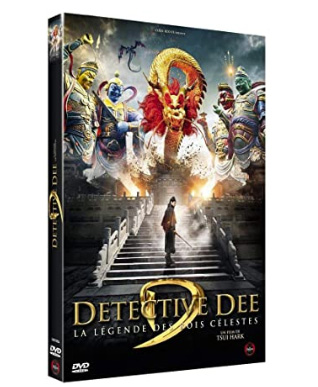
Detective Dee: The Four Heavenly Kings
Synopsis
Set during the Tang Dynasty in ancient China, master detective Dee Jen-jie is appointed by the Emperor to oversee the prestigious imperial military division while wielding the powerful Dragon Taming Mace. Empress Wu Zetian, suspicious of Dee's growing authority and fearing he will use the legendary mace against her throne, secretly hires a deadly clan of mystical sorcerers and illusionists to assassinate him and steal the weapon. As bizarre supernatural occurrences, phantom illusions, and murderous attacks plague the imperial palace, Detective Dee must use his unmatched intellect and martial arts skills to unravel the conspiracy. Facing illusionary demons and political betrayal, Dee fights to protect the Tang Dynasty from destruction.
The Making of the Film
Directed by legendary Hong Kong filmmaker Tsui Hark, the fantasy martial arts blockbuster was conceived as the third installment in the highly successful Detective Dee franchise. Tsui Hark sought to push the boundaries of digital visual effects, 3D cinematography, and imaginative ancient Chinese fantasy world-building. Mark Chao returned to portray the iconic historical detective. The production utilized massive digital soundstages in China to render elaborate Tang Dynasty palaces and mystical creatures.
Critical Reception
Critical reception for the film was generally positive among action and fantasy enthusiasts, who praised its dazzling visual effects, inventive martial arts choreography, and Tsui Hark's wildly imaginative directorial style. Critics lauded the movie for blending historical political intrigue with high-energy fantasy sorcery. Audiences across Asian markets turned the blockbuster into a massive box office smash. It is celebrated as a high-water mark of modern Chinese fantasy cinema.
Behind-the-Scenes Stories
Mark Chao trained extensively in martial arts wire-work and historical dialogue delivery to portray Detective Dee accurately. Director Tsui Hark oversaw hundreds of digital visual effects artists in Beijing to bring complex phantom creatures and illusions to life. The elaborate imperial palace sets were meticulously constructed with intricate Tang Dynasty architecture. The action choreography integrated traditional kung fu with supernatural wire stunts.
Themes Explored
The film explores imperial politics, mystical illusionism, martial arts combat, loyalty to the crown, and supernatural mysteries. It highlights intellect over brute force, betrayal, and ancient Chinese folklore. Imperial court intrigue drives the fantasy plot. It also touches upon justice.
Ending Explained
Detective Dee exposes the master illusionist behind the palace plot, defeating the mystical sorcerers and proving his unwavering loyalty to the Emperor and Empress Wu Zetian. The dangerous Dragon Taming Mace is secured safely within imperial custody, and the political conspiracy is dismantled. Empress Wu Zetian acknowledges Dee's brilliance, ending her assassination attempts as mutual respect is established. The conclusion provides a triumphant, action-heavy fantasy wrap-up.
Meaning of the Title
The international title refers directly to the central mythical guardian statues and heavenly protectors invoked in the film's plot: "The Four Heavenly Kings." It symbolizes divine protection and mystery. The phrase sets an epic fantasy martial arts tone.
Kenji Kawai composed a thunderous, epic orchestral and traditional Asian instrumental score that amplified the martial arts action and fantasy scope.
Detective Dee: Mystery of the Phantom Flame, Young Detective Dee: Rise of the Sea Dragon, Shadow, The Monkey King