

 Français
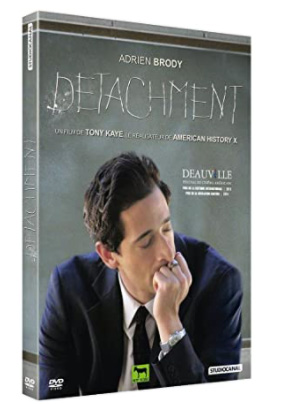
Detachment
Synopsis
This powerful, uncompromising psychological drama follows Henry Barthes, a substitute high school teacher gifted at connecting with troubled youths but haunted by a deeply traumatic past. Taking on a temporary assignment at a dysfunctional, underfunded public school, Henry attempts to guide alienated students while keeping emotional attachments at arm's length. Amidst bureaucratic pressure, hostile parents, and volatile classroom dynamics, he forms a poignant bond with a homeless runaway he takes in off the streets. It is a bleak, profoundly moving exploration of modern educational collapse and human empathy.
The Making of the Film
Project origins stemmed from director Tony Kaye's desire to expose the systemic failures, emotional exhaustion, and bureaucratic decay plaguing the American public school system. Filmmakers sought to blend gritty realism with surrealist animation interludes and documentary-style talking-head segments to mirror the psychological weight of teaching. Inspiration was drawn from real teacher testimonials, educational sociology, and inner-city urban struggles. The creative team aimed to craft an unflinching, emotionally devastating portrait of institutional neglect.
Critical Reception
Critics offered a mixed-to-positive array of reviews, heavily praising Adrien Brody's towering lead performance and the film's raw emotional sincerity while critiquing its occasionally heavy-handed pessimism. Reviewers noted that Brody successfully captured the profound burnout, empathy, and quiet desperation of a dedicated educator trying to survive a broken system. The supporting cast—including brilliant young newcomers and veteran actors—received wide acclaim for their authentic portrayals of troubled students and stressed faculty. While its unrelenting bleakness polarized some reviewers, its powerful resonance left a lasting mark.
Audience reception was deeply appreciative among independent film enthusiasts and educators, finding profound emotional truth in its stark depiction of urban school struggles. Viewers on public rating platforms commended the film's poetic narration, haunting musical score, and poignant character relationships. Word-of-mouth spread steadily across independent streaming networks, turning the indie drama into a respected critical darling. Many praised its courage in tackling taboo subjects like emotional abuse and systemic abandonment.
Awards season brought notable recognition at international film festivals, honoring Adrien Brody's remarkable acting achievement and Tony Kaye's bold directorial vision. Critics' associations praised the film for its uncompromising artistic integrity and powerful social commentary. The independent production also secured top honors at various European cinema ceremonies for its unique blend of fiction and documentary aesthetics. These accolades cemented its status as a modern masterpiece of social drama.
Behind-the-Scenes Stories
The director drew aesthetic inspiration from documentary photography, gritty inner-city classrooms, and expressionist art to establish a stark, melancholic visual style. Every classroom and hallway set was designed to feel decaying, sterile, and hostile, reflecting the institutional abandonment of the students. The production team collaborated with real-world educators and social workers to ensure that teacher burnout and classroom friction mirrored authentic conditions. These artistic choices created a hauntingly realistic atmosphere.
Production presented intense emotional and logistical hurdles, requiring the cast to inhabit a deeply taxing psychological space throughout the grueling shoot. Adrien Brody immersed himself thoroughly in the mindset of a detached substitute teacher, interacting closely with non-professional young actors to foster natural friction. Shooting on location in actual struggling public schools exposed the crew to authentic urban environments. Furthermore, integrating hand-drawn animated sequences required meticulous coordination between live-action photography and animation studios.
During the filming of the intense classroom confrontation sequences, the director encouraged organic improvisation to capture genuine emotional volatility and student frustration. To maintain authentic exhaustion, the lead actor relied on quiet preparation and psychological immersion between takes. The crew utilized natural window light and desaturated color palettes to emphasize the bleak institutional reality. This rigorous dedication resulted in raw, unforgettable dramatic performances.
Casting was anchored by securing an elite ensemble of acclaimed dramatic actors willing to tackle uncomfortable social themes with total commitment. Adrien Brody was chosen for his extraordinary ability to convey deep vulnerability and quiet strength beneath a weary exterior. Supporting roles featured legendary actors like James Caan, Marcia Gay Harden, and Christina Hendricks, who brought immense gravitas to the administration and faculty. This star-studded casting strategy anchored the bleak social commentary in deeply believable human interactions.
Themes Explored
The narrative deeply explores themes of systemic educational failure, emotional trauma, and the desperate need for human connection in a fractured world. It examines teacher burnout, institutional apathy, and the devastating consequences of child abuse. Additionally, it highlights empathy, isolation, and the burden of carrying generational pain. Ultimately, the film reflects on resilience, compassion, and finding meaning amidst despair.
Ending Explained
The bleak climax reveals that despite Henry's best efforts, the troubled student Meredith suffers a public breakdown, and the school faces imminent restructuring while Henry quietly packs his classroom. In the final haunting sequence, Henry returns to an empty, decaying room, symbolizing the cyclical, inescapable nature of institutional neglect. This devastating conclusion underscores that one compassionate individual cannot easily fix a broken society.
Meaning of the Title
The title refers metaphorically to the emotional defense mechanism of detachment that the protagonist uses to protect himself from further trauma.
Original Soundtrack
The melancholic musical score by The Newton Brothers received praise for utilizing haunting piano melodies and atmospheric strings to amplify the film's emotional devastation.
Similar Films
Films sharing similar gritty school drama and teacher-student redemption themes include Dead Poets Society (1989), Freedom Writers (2007), and Dangerous Minds (1995).