

 Français
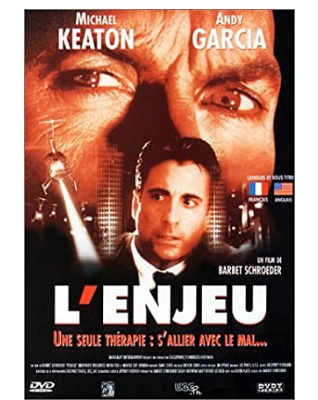
Desperate Measures
Synopsis
San Francisco police officer Frank Conner, a widowed father, is desperate to find a bone marrow donor for his young son Matt, who is dying of leukemia. The only perfect match turns out to be Peter McCabe, a brilliant and ruthless killer serving a life sentence. McCabe agrees to the procedure but sees it as the perfect opportunity to escape, and he takes control of the hospital where the operation is meant to take place. Conner is forced into an uneasy game of cat and mouse, since he must capture the man he hates without letting him die.
The Making of the Film
Desperate Measures grew from a script by David Klass, built around a deliciously cruel moral dilemma. A father must protect the life of a vicious criminal because that man holds the only chance of saving his child. The idea gave the thriller a strong emotional engine, pitting parental love against the instinct to see justice done. Barbet Schroeder, the Franco-Swiss director known for Reversal of Fortune and Single White Female, took on the project and also served as one of its producers. The film was developed at TriStar Pictures with Mandalay Entertainment as a production partner. After production began, the screenplay was reworked by several uncredited writers, as Schroeder tried to sharpen the story. The film was shot in the San Francisco Bay Area and in downtown Pittsburgh, using landmarks such as the Oakland Bay Bridge. With a budget reported at around 50 million dollars, it was positioned as a mainstream suspense thriller built around two charismatic leads.
Reviews and Reception
Critics were largely unkind, and many described the film as a contrived thriller that piled up implausible twists. Several reviewers regretted that a director with Schroeder's pedigree had settled for a conventional action formula. The performances were treated more kindly, in particular Michael Keaton's menacing turn as McCabe, although some felt he pushed the villainy too hard. Andy Garcia's intensity as the desperate father was generally seen as the film's emotional anchor. The central dilemma was widely acknowledged as a strong premise that the execution failed to exploit.
At the box office the film performed poorly and was considered a commercial disappointment given its budget. Audiences did not seem to connect with a plot that critics had found improbable. Over time it has been remembered mostly as a minor thriller of the late 1990s. It still finds viewers who enjoy the clash between its two leads.
Andy Garcia won an ALMA Award in 1999 for Outstanding Actor in a Feature Film in a Crossover Role for his performance. Beyond this recognition, the film was not a significant presence in the awards season. Its legacy rests more on its premise than on its honors.
Filming Anecdotes
The most notable production story concerns the script. After filming began, Schroeder had the screenplay reworked by a number of writers who were not credited on the finished film. This kind of heavy rewriting is common on big studio thrillers, but it was unusually extensive here. The result was a story that changed shape during production, which may explain some of the plot jumps critics noticed.
The production moved between two cities, using the San Francisco Bay Area for its identity as a Californian police story and downtown Pittsburgh for key hospital and street scenes. The Oakland Bay Bridge provides the backdrop for the climactic chase. Shooting on busy locations required careful coordination, especially for the sequences involving SWAT teams, explosions and a high-speed car chase through the city.
Themes Explored
The film is built on a moral paradox: the life of an innocent child depends on the cooperation of a man who has taken many lives. This pushes the hero to question how far a parent can go, and at what cost to his principles. The relationship between Conner and McCabe becomes a study in opposites, a devoted father facing a man who believes in nothing and trusts no one. Sacrifice is a central idea, since Conner repeatedly puts himself in danger to keep his enemy alive. The story also explores the limits of institutional justice, as Conner's superiors insist that the law must come before one boy's survival. Redemption flickers at the edges of McCabe's character, especially when he sees how much Conner loves his son.
Ending Explained
In the climax, McCabe takes Matt hostage and descends to the lower levels of the hospital, but the boy's courage impresses him and he spares the child, leaving him for Conner to find. McCabe then escapes into the city, and Conner chases him to a bridge, determined to bring him back alive. When a sniper opens fire, Conner shields McCabe again and is wounded in the arm. Conner wounds McCabe, sending him off the bridge and into the bay, and then dives in himself to save him. The conclusion confirms the film's core idea: a father's love is so strong that he will risk his own life to save the one man who can save his son.
Meaning of the Title
The title comes from the old proverb that desperate times call for desperate measures, which sums up the ethical bargain at the heart of the film. Conner's measures are indeed extreme, since he breaks into FBI files, aids an escaped convict and defies his own captain. The phrase also describes McCabe, who uses the same desperation to his own advantage. The title therefore applies to both men, each driven to extremes by very different motives.
Similar Films
- The Fugitive (1993), Andrew Davis
- Con Air (1997), Simon West
- Face/Off (1997), John Woo
- The Silence of the Lambs (1991), Jonathan Demme
- Cape Fear (1991), Martin Scorsese