

 Français
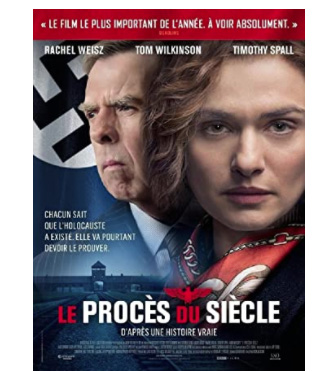
Denial
Synopsis
American professor and author Deborah Lipstadt finds herself sued for libel in the British court system by notorious Holocaust denier David Irving. Because British libel laws place the burden of proof on the defendant, Lipstadt and her legal team must legally prove that the Holocaust actually occurred in a court of law. Alongside her solicitor Anthony Julius and barrister Richard Rampton, she must endure a grueling trial while refusing to give Holocaust deniers a public platform on the witness stand. Their meticulous legal battle becomes a monumental defense of historical truth.
The Making of the Film
Based on Deborah Lipstadt's gripping memoir History on Trial: My Day in Court with a Holocaust Denier, the film adaptation was championed by screenwriter David Hare and director Mick Jackson. The filmmakers wanted to craft a dignified, intellectual courtroom drama that addressed the dangerous rise of historical revisionism and post-truth rhetoric. The screenplay was carefully structured to emphasize legal strategy, courtroom decorum, and the moral weight of protecting historical facts. The production prioritized authenticity by filming in actual London courts.
Critical Reception
Professional critics gave the film generally favorable reviews, praising Rachel Weisz, Timothy Spall, and Tom Wilkinson for their stellar, restrained lead performances. Reviewers lauded the movie's intelligent script, courtroom tension, and its vital message about the defense of objective truth in modern society. Some critics noted that the narrative felt somewhat traditional in its dramatic structure, but commended its emotional gravity and importance.
Public reception was appreciative among audiences drawn to thoughtful historical dramas and biographical legal thrillers. Viewers commended the film for tackling a sensitive, crucial historical topic with immense grace and precision. It found a dedicated following on streaming and art-house circuits.
The film earned recognition at various independent film awards, celebrated for its powerful screenplay and exceptional acting ensemble.
Behind-the-Scenes Stories
Director Mick Jackson drew inspiration from classic British courtroom dramas and authentic legal transcripts from the 2000 libel trial.
Production faced strict scheduling constraints while securing permission to film key exterior sequences around historic London legal institutions.
During the filming of the intense courtroom cross-examination scenes, Timothy Spall captured David Irving's controversial demeanor with chilling precision.
The casting process successfully secured Rachel Weisz to portray Deborah Lipstadt, bringing intellectual grit and emotional vulnerability to the role.
Core Themes Explored
The film explores historical truth versus free speech, Holocaust denial, legal strategy, integrity, and the defense of facts.
Themes Explored
Holocaust denial, courtroom trial, historical truth, libel law, and freedom of speech.
The conclusion delivers the historic judgment in favor of Lipstadt, legally establishing that David Irving is a falsifier of history and an antisemitic denier. The victory preserves historical integrity and offers a profound sense of justice for survivors.
The title refers to the psychological and historical phenomenon of denial, specifically regarding the documented atrocities of the Holocaust.
The film features a poignant, understated musical score composed by Howard Shore, providing solemn and reflective emotional backing to the courtroom proceedings.
Spotlight, The Post, Bridge of Spies, Darkest Hour