

 Français
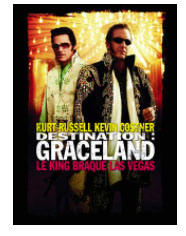
3000 Miles to Graceland
Synopsis
Note: Full title is 3000 Miles to Graceland. Fresh out of prison, an ex-con named Michael joins a crew of hardened criminals disguised as Elvis Presley impersonators to rob a Las Vegas casino during convention week. The heist goes bloody and chaotic when greed overtakes the crew, leading to a massive shootout leaving bags of stolen cash up for grabs. Surviving crew members Murphy and Michael embark on a violent cross-country road trip while double-crossing each other for the loot. Along the way, they pick up a vulnerable single mother and her young son as unwitting hostages and accomplices. Ultimately, a final explosive showdown in the desert decides who walks away with the fortune.
The Making of the Film
Director Demian Lichtenstein co-wrote the high-octane action screenplay with Richard Recco to create a flashy, hyper-violent Vegas crime caper. The project was conceived as an explosive modern western blending stylized violence, dark humor, and iconic rock-and-roll iconography. Lichtenstein drew inspiration from classic heist films, Quentin Tarantino aesthetics, and the enduring global phenomenon of Elvis impersonators. The production utilized massive physical casino sets in Las Vegas and expansive desert locations in Nevada and British Columbia.
Critical Reception
Critics panned the film upon release, criticizing its excessive violence, derivative plot points, and cartoonish over-the-top style. Reviewers noted that it relied too heavily on flashy slow-motion action tropes reminiscent of inferior 1990s crime thrillers. Some film critics, however, praised the charismatic star power and on-screen friction between Kurt Russell and Kevin Costner. Despite universal critical thrashing, action cinema enthusiasts later reevaluated it as a guilty-pleasure cult classic.
Audiences enjoyed the high-octane spectacle for its explosive shootouts, dark humor, and the rare sight of Kevin Costner playing a ruthless villain. Viewers on home video platforms commended the flashy soundtrack, Vegas atmosphere, and Kurt Russell's cool anti-hero persona. While it bombed during its initial theatrical run, it developed a loyal cult following among fans of unapologetic, violent 2000s popcorn action. Many appreciated that it did not take itself seriously, focusing purely on chaotic entertainment.
Although major mainstream awards bypassed the explosive crime thriller, it earned recognition among stunt and technical effect guilds for its massive shootouts. The practical pyrotechnics and Vegas casino heist choreography received praise from stunt coordinators. Kevin Costner's rare villainous turn was celebrated by action fans for its distinct swagger. These milestones helped cement its reputation as a memorable, wild action ride of the early 2000s.
Behind-the-Scenes Stories
Demian Lichtenstein was inspired by the surreal spectacle of thousands of Elvis impersonators gathering in Las Vegas every year. He wanted to use the iconic white sequined jumpsuits as a visual motif for a bloody, high-stakes criminal heist. The visual style utilized saturated desert colors, neon casino lights, stylized slow-motion gun battles, and gritty western framing. The director also drew from classic outlaw road-trip cinema of the 1970s.
Executing the massive casino heist shootout required immense coordination, hundreds of stunt extras, and complex practical pyrotechnics. Production took place across real Las Vegas locations and expansive desert highways in Nevada, presenting severe heat and logistical challenges. Kurt Russell and Kevin Costner performed many of their own action sequences under expert stunt supervision. Despite studio interference and challenging desert conditions, the technical crew successfully delivered a visually striking action spectacle.
During the filming of the tense motel and desert confrontation sequences, Kurt Russell and Kevin Costner brought fierce, antagonistic energy to their on-screen rivalry. Courteney Cox brought emotional grounding to her role as the tough single mother caught in the crossfire. Crew members reported feeling deafened by the sheer volume of blank-firing firearms used during the massive casino shootout days. The high-energy camaraderie among the criminal ensemble kept set morale strong through grueling night shoots.
Casting directors searched for two powerhouse leading men to anchor the violent criminal double-cross. Kurt Russell was secured for the anti-hero role of Michael, bringing rugged western charm. Kevin Costner took a rare and daring against-type turn as the psychotic, gold-toothed villain Murphy. The supporting cast featuring Christian Slater, David Arquette, and Bokeem Woodbine rounded out the doomed Elvis heist crew.
Themes Explored
The film heavily explores greed, betrayal, and the violent breakdown of criminal loyalty. It examines the American obsession with celebrity culture, specifically the mythos of Elvis Presley, twisted through a criminal lens. Another core motif is the unlikely formation of a makeshift family on a bloody road trip. It also touches upon vengeance, survival, and flashy style over substance.
Ending Explained
The film concludes with a massive final shootout at a desert airplane hangar where Murphy and Michael face off for the remaining stolen casino cash. Michael manages to outsmart and defeat Murphy in a fiery, explosive showdown, but police forces quickly surround the area. Rather than surrendering, Michael heroically ensures that the single mother and her young son escape safely with a portion of the fortune. The final shots show him walking into a blaze of gunfire, sealing his legendary outlaw status.
Meaning of the Title
The title refers literally and metaphorically to the geographical distance between the casino heist in Las Vegas and the ultimate spiritual home of Elvis Presley in Graceland, Memphis. It highlights the criminal journey undertaken by the characters across the American desert. The numeric and geographic phrasing sets an immediate outlaw road-trip expectation. It encapsulates the wild, rock-and-roll crime spree driving the narrative.
Similar films include Con Air, Desperado, Point Break, and Reservoir Dogs, which feature high-stakes heists, gritty shootouts, and charismatic criminal ensembles.