

 Français
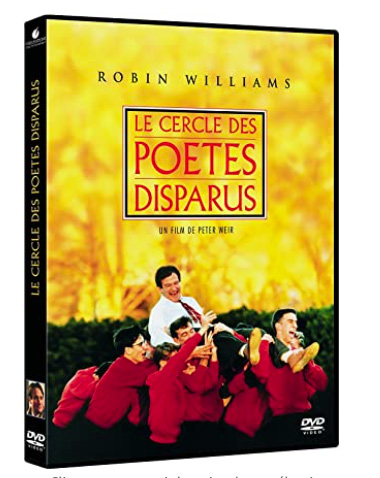
Dead Poets Society
Synopsis
In 1959, a new English teacher named John Keating arrives at a strict boys' boarding school where tradition, discipline and academic achievement dominate everyday life. Through unconventional lessons, he encourages his students to think independently, appreciate poetry and make the most of their lives. Inspired by his teaching, a group of boys revive a secret society dedicated to poetry and personal expression. As they begin to challenge the expectations imposed on them, they discover both the excitement and the risks of pursuing their own dreams.
The Making of the Film
Dead Poets Society was directed by Peter Weir from a screenplay written by Tom Schulman. Schulman drew inspiration from his own experiences in education and from teachers who encouraged students to think independently. The story was conceived as a drama about the influence a passionate educator can have on young people facing strict social expectations. Peter Weir was attracted to the emotional conflict between individual freedom and institutional tradition. Robin Williams was cast as John Keating, a teacher whose humour and enthusiasm conceal a deep understanding of human vulnerability. The production used the atmosphere of a traditional American preparatory school to reinforce the contrast between discipline and imagination. The young actors were selected to portray students with different personalities, ambitions and family pressures. The filmmakers worked carefully to create a sense of friendship and collective discovery among the boys. The result became an enduring drama about education, poetry and the courage required to follow one's own path.
Critical Reception
Professional critical response: Dead Poets Society received very positive reviews, particularly for Robin Williams' performance and the emotional strength of its screenplay. Critics praised the film's ability to make poetry and literature accessible without losing their seriousness. Peter Weir's direction was also recognised for balancing humour, youthful enthusiasm and tragedy. Some commentators considered the school's portrayal idealised, but the film's central questions about education and personal freedom were widely appreciated. Its dialogue and memorable scenes quickly became part of popular cultural discussion.
Audience reception: The film was a major commercial success and connected strongly with audiences across different generations. Many viewers identified with the students' desire to discover their own interests and resist expectations imposed by others. Robin Williams' performance made Keating an especially memorable teacher figure. The phrase Carpe Diem became closely associated with the film and its message about making meaningful use of life. Its emotional conclusion has continued to generate discussion among viewers.
Awards and recognition: Dead Poets Society won the Academy Award for Best Original Screenplay for Tom Schulman. It also received nominations for Best Picture, Best Director and Best Actor for Robin Williams. The film earned several other awards and nominations from international critics and professional organisations. Its screenplay and central performance were particularly recognised. The film remains one of the most celebrated educational dramas in modern American cinema.
Behind-the-Scenes Stories
Director's inspirations: Peter Weir was interested in the conflict between personal freedom and institutions that place tradition above individual expression. The school environment provides a strong visual contrast between strict architecture and the imaginative possibilities of poetry. The director wanted the students' transformation to feel gradual and believable. He also sought to avoid presenting Keating as a perfect hero, giving the character humour, warmth and human limitations.
Production challenges: The young cast had to create the impression of a close-knit group of students whose friendships develop throughout the story. The production therefore placed considerable importance on rehearsals and the chemistry between the actors. The school setting required careful attention to costumes, classrooms and period details. The filmmakers also had to balance light-hearted classroom scenes with the increasingly serious consequences of the students' decisions.
A memorable scene: Keating asks his students to stand on their desks to see the world from a different perspective. The moment transforms a simple classroom into a symbol of intellectual independence. It expresses the idea that familiar assumptions can be questioned by changing the way one looks at things. The scene also illustrates Keating's teaching method, which relies on experience and curiosity rather than memorisation alone. Its simplicity has helped make it one of the film's most enduring images.
Originally considered casting: Robin Williams ultimately brought John Keating to life, while the young ensemble included Robert Sean Leonard, Ethan Hawke and Josh Charles. Their different personalities helped create a believable group of students with distinct hopes and fears. The casting was important because the story depends on the boys' emotional development as much as on the teacher's influence. The final ensemble gave the film much of its warmth and authenticity.
Themes Explored
Dead Poets Society explores individuality, education, friendship, artistic expression and the conflict between personal dreams and family expectations. Keating encourages his students to discover their own voices and understand that life should not be reduced to academic achievement or social status. The film also examines the dangers of rigid authority when obedience is valued more highly than emotional well-being. Poetry becomes a way of expressing feelings that the boys struggle to communicate directly. Their friendships provide support, but they also reveal the difficulties of making independent choices. The story ultimately asks what it means to live authentically and whether courage is possible within a restrictive environment.
Explaining the Ending
After Neil Perry's death, the school administration attempts to place responsibility on Keating and forces the students to sign statements supporting the official explanation. Keating is dismissed, but his influence has not disappeared. During his final visit to the classroom, several students stand on their desks and address him with the words O Captain! My Captain! This gesture demonstrates that they have understood the deeper meaning of his lessons. Their action is not simply an expression of gratitude, but a declaration that they have begun to think independently. The ending does not undo the tragedy or suggest that the school has changed completely. Instead, it shows that an idea can survive even when the person who introduced it is removed. The students' decision to stand represents a quiet act of courage and solidarity. Keating leaves knowing that his teaching has made a lasting difference.
The Meaning of the Title
The title Dead Poets Society refers to the secret group of students who gather to read poetry and celebrate artistic expression. The society becomes a symbol of freedom from the strict expectations of their school and families. Its name also suggests the continuing influence of writers whose words remain alive long after their deaths. The title therefore connects the students' personal awakening with the enduring power of literature and poetry.
The film features an original score by Maurice Jarre, whose music reinforces its nostalgic and emotional atmosphere. The compositions are restrained, allowing the dialogue and performances to remain central. The soundtrack also uses music that reflects the period and the students' growing sense of freedom. Its musical identity contributes to the film's mixture of warmth, melancholy and inspiration.
Similar films include The Emperor's Club, directed by Michael Hoffman, which explores education and moral responsibility; Good Will Hunting, directed by Gus Van Sant, which examines talent and mentorship; Mr. Holland's Opus, directed by Stephen Herek, which portrays the influence of a teacher; and The History Boys, directed by Nicholas Hytner, which explores education, ambition and intellectual independence.