

 Français
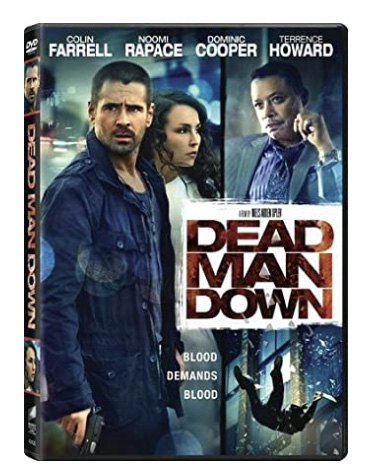
Dead Man Down
Synopsis
Victor is a quiet enforcer who works for a ruthless crime boss in New York, but he has his own secret plan to take revenge. His neighbor Beatrice, a woman with a scarred face, has seen something that gives her power over him. She blackmails him into helping her take revenge on the drunk driver who ruined her life. As they grow closer, the two damaged people find themselves entangled in a dangerous game.
The Making of the Film
Dead Man Down was written by J. H. Wyman, who had worked on the television series Fringe, and directed by Niels Arden Oplev, the Danish filmmaker behind the original Swedish version of The Girl with the Dragon Tattoo. It was Oplev's first English-language film. The project brought together Colin Farrell, who was looking for a darker and more subtle role, and Noomi Rapace, who had become internationally known as Lisbeth Salander. Terrence Howard, Dominic Cooper and Isabelle Huppert rounded out the cast. The film is a blend of crime thriller and romance. It was released by FilmDistrict in 2013.
Reviews and reception
Summary of professional reviews
Critics were divided, praising the performances of Farrell and Rapace but finding the plot overly complicated and the tone uneven. Some admired the moody atmosphere and the slow-burning relationship between the leads. Others thought the film took itself too seriously.
Audience reception
The film had a quiet theatrical run, earning only a modest sum at the box office. Audiences who saw it often appreciated its dark mood and the unusual romance at its center. It has since found a small following among fans of crime thrillers. It remains less well known than the other works of its director.
Awards and nominations
Dead Man Down did not receive major awards. It was shown at several festivals and received a few nominations from genre and thriller-focused organizations. Its performances were its main claim to recognition.
Filming anecdotes
Director's inspirations
Oplev wanted to explore revenge as a destructive force and to show how it can bring together two lonely people. He was influenced by gritty crime thrillers and by the moody atmosphere of his earlier film. The film's look uses cold colors and shadows to reflect the characters' inner lives.
Production difficulties
Working in an English-language production for the first time presented new challenges for the director. The shoot took place in busy urban locations in the northeastern United States, which meant dealing with weather and crowded streets. The film's tone, which mixes violence and romance, also had to be balanced carefully.
Anecdote about a particular scene
The scene in which Beatrice first shows Victor the video she recorded of him is the turning point of the film. Many viewers remember the final shootout, which brings the plot to a violent climax.
Themes explored
The film is about revenge and the way it can consume those who seek it. It also explores grief and the possibility of healing, as Victor and Beatrice both carry deep wounds. Identity and deception are central, since Victor has been living under a false name. The story asks whether a person can ever escape his past. Redemption is another important theme. The tone is somber and reflective.
Ending explained
Victor carries out his plan of revenge against the man responsible for the death of his family. In the process, he draws Beatrice into a dangerous situation and must protect her. After the violent confrontation, the two survivors are left to decide what comes next. The ending suggests a fragile hope that they might find peace together. It remains open to interpretation.
Meaning of the title
The title suggests the idea of a man who is already dead in spirit, since Victor has lost everything he loved. A dead man is also a man with nothing left to lose, which makes him dangerous. The phrase also plays on the thriller convention of a body that falls. It sets a tone of fatalism for the whole film.
Similar Films
- The Girl with the Dragon Tattoo (2011): a dark thriller with a damaged heroine.
- Drive (2011): a quiet loner caught in a criminal world.
- A History of Violence (2005): a man with a hidden past.
- Oldboy (2003): a revenge thriller with a twisted plot.
- The Gunman (2015): a hired killer seeks redemption.