

 Français
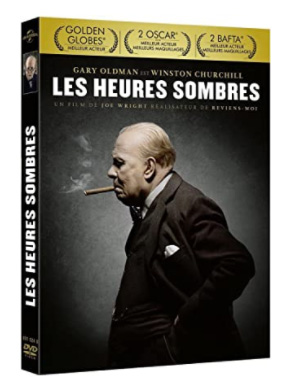
Darkest Hour
Synopsis
In May 1940, as Nazi Germany sweeps across Western Europe and threatens to overrun France, Great Britain faces its most perilous historical moment. Amidst political infighting and pressure from his own party to seek a negotiated peace with Hitler, recently appointed Prime Minister Winston Churchill must make the defining choice of his life. Refusing to surrender, he rallies the British nation and orchestrates the miraculous Dunkirk evacuation against impossible odds. His inspiring rhetoric transforms public despair into unyielding resolve.
The Making of the Film
Screenwriter Anthony McCarten spent years researching Winston Churchill's crucial first weeks in office during the spring of 1940, focusing specifically on the intense political pressure surrounding the Dunkirk crisis. Director Joe Wright was drawn to the project by the opportunity to portray Churchill not as a marble statue, but as a deeply flawed, vulnerable human being facing colossal decisions. The filmmakers aimed to capture the claustrophobic panic of the British war rooms and the stirring power of political speechcraft. The production relied on meticulous historical detail and immersive prosthetic makeup.
Critical Reception
Professional critics overwhelmingly praised the film, specifically highlighting Gary Oldman's astonishing, transformative Academy Award-winning performance as Winston Churchill. Reviewers lauded Wright's dynamic, cinematic direction, Bruno Delbonnel's striking cinematography, and the palpable tension inside the underground war rooms. Some critics noted minor historical dramatizations, but celebrated its overall dramatic power.
Public reception was enthusiastic among history enthusiasts and general audiences alike, captivated by the stirring patriotic speeches and Oldman's masterclass in acting. It became a major critical and commercial success worldwide.
The film achieved massive awards season success, winning two Academy Awards including Best Actor for Gary Oldman and Best Makeup and Hairstyling. These accolades cemented its status as a biographical masterpiece.
Behind-the-Scenes Stories
Director Joe Wright drew inspiration from classic war history and expressionistic art to capture the gloomy, atmospheric tension of wartime London.
Production faced immense daily hurdles applying a complex four-hour prosthetic makeup transformation to Gary Oldman to turn him into Churchill.
During the filming of the famous London Underground train scene—which was historically fictionalized—Gary Oldman delivered his lines with such emotional intensity that the extras wept genuinely.
The casting process immediately centered on Gary Oldman, who was the only actor director Wright wanted for the demanding role.
Core Themes Explored
The film explores political leadership under crisis, the danger of appeasement, the power of rhetoric, courage in defeat, and national resilience.
Themes Explored
World War II leadership, political crisis, appeasement debate, rhetoric, and British resilience.
The conclusion shows Churchill delivering his legendary "We shall fight on the beaches" speech to Parliament, winning over his political rivals and uniting the nation in total defiance. He walks out of the House of Commons into cheering crowds, having successfully forged the path to ultimate resistance.
The title refers to the darkest historical hour Britain faced during the spring of 1940 when invasion seemed imminent and defeat likely.
The film features a powerful, driving musical score composed by Dario Marianelli, blending classical orchestral arrangements with ticking clock motifs that amplify wartime urgency.
Dunkirk, The King's Speech, The Iron Lady, Churchill