

 Français
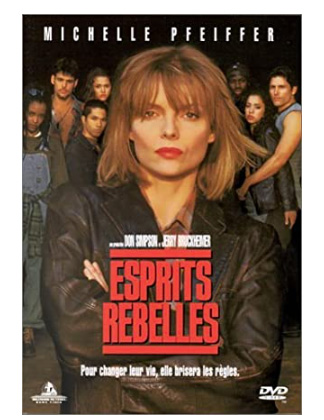
Dangerous Minds
Synopsis
LouAnne Johnson is a former Marine who accepts a teaching position at an inner-city high school in California. Her new students are teenagers who have developed little confidence in the education system and have become accustomed to being underestimated by adults. Faced with a difficult classroom environment, she decides to abandon several traditional teaching methods and introduces unconventional approaches designed to capture their attention. Through literature, personal encouragement and genuine commitment, she gradually earns the students' trust. Her efforts reveal the difficulties faced by young people growing up in disadvantaged environments and demonstrate how education can become a powerful instrument of personal transformation.
The film's origins
Dangerous Minds is based on the autobiographical book My Posse Don't Do Homework by LouAnne Johnson, published in 1992. The book recounts Johnson's experiences as a teacher working with disadvantaged teenagers in a high school environment marked by social difficulties and educational challenges. Producer Don Simpson and Jerry Bruckheimer recognized the dramatic potential of this story and developed it into a feature film. Screenwriter Ronald Bass adapted the original material, transforming selected real-life experiences into a more structured cinematic narrative. Director John N. Smith was interested in presenting the relationship between an unconventional teacher and students who had largely lost confidence in their own abilities. Michelle Pfeiffer was chosen to portray LouAnne Johnson, bringing both determination and emotional sensitivity to the character. The film was not intended to reproduce every detail of the original memoir, but rather to communicate its central message about education, dignity and the possibility of change. The filmmakers also wanted to address the social and economic difficulties experienced by young people in disadvantaged American neighborhoods. Its combination of classroom drama, personal relationships and contemporary music helped make the subject accessible to a wide audience.
Reviews and reception
Professional critical reviews:
Dangerous Minds received mixed reviews from professional critics. Michelle Pfeiffer's performance was frequently recognized as one of the film's strongest elements, particularly for her ability to portray a teacher who combines authority with genuine compassion. Some critics appreciated the film's attention to educational inequality and the difficulties experienced by disadvantaged students. Others argued that the screenplay relied on familiar inspirational-teacher conventions and simplified some of the social problems it attempted to portray. Despite these reservations, the film was widely discussed for its emotional message and its portrayal of the relationship between education and personal opportunity.
Audience reception:
The film found a large audience, particularly among viewers interested in school dramas and stories about personal transformation. Its emotional classroom sequences and Michelle Pfeiffer's performance helped it become a recognizable film of the 1990s. The soundtrack also played a major role in its popularity, especially following the enormous success of Coolio's song Gangsta's Paradise. The film's commercial performance demonstrated the appeal of stories centered on teachers who attempt to change the lives of their students. Its influence extended beyond cinema into discussions about education, youth culture and social inequality.
Awards and recognition:
Dangerous Minds received several awards and nominations during the 1995–1997 period. Michelle Pfeiffer received recognition for her dramatic performance, including a Blockbuster Entertainment Award for Favorite Actress in a Drama. The soundtrack also received important recognition, particularly through the success of Gangsta's Paradise, which won awards at the ASCAP Film and Television Music Awards. The song became one of the defining musical successes of 1995 and significantly increased the film's visibility. Although the film did not become a major Academy Award contender, its cultural impact was strengthened by its music and performances.
Behind-the-scenes stories
Director's inspirations:
John N. Smith approached the story as a drama about the relationship between education, personal dignity and social opportunity. Rather than presenting the students simply as difficult teenagers, the film attempts to show how their behavior is influenced by their environment and their previous experiences. The director wanted to highlight the importance of listening to young people instead of judging them according to their academic performance or social background. The autobiographical source provided a foundation for this approach, although the film introduced fictionalized elements to strengthen its dramatic structure.
Production challenges:
The production required recreating the atmosphere of an American high school in which social tensions and educational difficulties play an important role. Filming took place at several locations around the Los Angeles area, including Washington Middle School in Pasadena and Burlingame High School in Northern California. The production also used studio interiors to create additional classroom environments. Another challenge was assembling a believable group of young performers capable of conveying the different personalities and difficulties experienced by the students. The filmmakers needed to balance the emotional classroom scenes with the more dramatic events occurring outside school.
A memorable scene:
The classroom scenes in which LouAnne introduces poetry and literature through unconventional exercises are among the film's most memorable moments. Rather than relying exclusively on formal academic explanations, she tries to connect literary ideas with subjects that matter to her students. One particularly recognizable element is her use of Bob Dylan's music and Dylan Thomas's poetry to encourage students to interpret language differently. These scenes illustrate her belief that education should awaken curiosity rather than simply demand obedience. They also demonstrate how a teacher can establish a relationship of mutual respect by taking students' intelligence seriously.
Originally considered casting:
Michelle Pfeiffer ultimately became closely identified with the role of LouAnne Johnson. The production was developed around a dramatic performance capable of combining authority, determination and emotional vulnerability. There is insufficient reliable public documentation to establish a definitive list of alternative actresses initially considered for the leading role. The supporting cast includes several young performers whose characters represent different experiences within the school environment.
Themes explored
Education and opportunity: The film emphasizes that education can provide young people with tools to overcome difficult circumstances and build a different future.
Social inequality: The students face obstacles linked to poverty, discrimination and limited opportunities, revealing the influence of social conditions on academic achievement.
Self-esteem and personal dignity: LouAnne encourages her students to recognize their abilities and reject the negative expectations imposed on them.
Mentorship and commitment: The relationship between the teacher and her students illustrates the importance of adults who are willing to invest time and genuine attention in young people.
Prejudice and understanding: The film challenges the tendency to judge teenagers according to their appearance, neighborhood or behavior.
The transformative power of literature: Poetry and literature become instruments through which students can discover new ways of understanding themselves and the world.
Ending explained
The ending brings together the film's central message about education and personal responsibility. LouAnne has gradually established a relationship of trust with her students, demonstrating that they are capable of far more than the school system initially expects from them. However, the conclusion also acknowledges that changing an individual's life does not automatically resolve the social and economic difficulties surrounding them. The teacher must confront the limits of her influence and decide how far she can go in supporting her students. Her experience demonstrates that genuine educational progress requires more than academic instruction; it also demands patience, empathy and recognition of individual potential. The final emotional moments underline the importance of believing in young people, even when their circumstances make success appear unlikely. The film closes on a message of hope without suggesting that every problem can be solved through the efforts of a single teacher.
Meaning of the title
The title Dangerous Minds refers to the teenagers in LouAnne Johnson's classroom, whose behavior and social environment lead others to perceive them as dangerous or difficult. However, the expression also invites a deeper interpretation. Their minds are not inherently dangerous; they are young people whose intelligence and potential have been overlooked by a society that often judges them too quickly. The title therefore reflects the tension between external perceptions and the inner abilities of the students. It also suggests that challenging established educational expectations can be an uncomfortable process for institutions accustomed to traditional methods.
Original soundtrack
The soundtrack is one of the film's most recognizable elements. Its defining song is Gangsta's Paradise by Coolio featuring L.V., which became an international hit in 1995. The song uses a memorable musical foundation inspired by Stevie Wonder's Pastime Paradise and combines it with lyrics reflecting violence, social pressure and difficult urban experiences. The soundtrack also includes music associated with the film's contemporary urban setting. Wendy & Lisa contributed to the original film music, helping establish its dramatic atmosphere. Gangsta's Paradise became so closely associated with the production that it remains one of the most recognizable film songs of the decade.
Similar films
Dead Poets Society (1989): A celebrated school drama about an unconventional teacher who encourages students to think independently.
Freedom Writers (2007): A story about a dedicated teacher working with disadvantaged teenagers through literature and personal expression.
Stand and Deliver (1988): A drama based on a teacher who challenges the expectations imposed on students from disadvantaged backgrounds.
Coach Carter (2005): A film about discipline, education and the importance of personal responsibility in the lives of young people.
The Great Debaters (2007): A historical drama exploring education, confidence and the transformative power of intellectual achievement.