

 Français
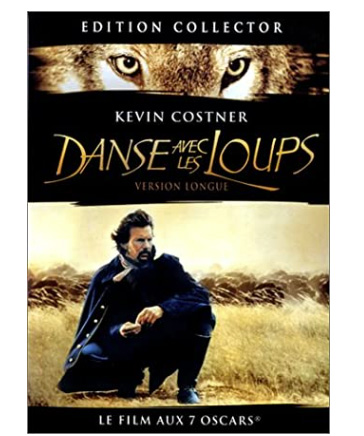
Dances with Wolves
Synopsis
In 1863, during the American Civil War, Lieutenant John Dunbar is posted at a remote frontier outpost after an act of bravery. Left alone, he gradually builds a relationship with a nearby Lakota Sioux tribe. As he learns their language and customs, he is accepted by the community and takes the name Dances with Wolves. His new life puts him in conflict with the army he once served.
The Making of the Film
The film is adapted from the 1988 novel by Michael Blake, who also wrote the screenplay. Kevin Costner, who had been given the book, became passionate about the project and chose it for his first film as director. Hollywood was sceptical about a long Western with large parts in the Lakota language, so Costner helped finance the film himself.
Reviews and reception
Summary of professional reviews: Critics praised the epic scope, Dean Semler's cinematography and the sympathetic portrayal of Native Americans. Some later critics pointed out that the story still centres on a white protagonist.
Audience reception: The film was a huge hit, grossing more than $400 million worldwide, and helped revive the Western genre. Audiences were moved by the mix of spectacle and human drama.
Awards won: The film won seven Oscars, including Best Picture and Best Director for Kevin Costner, as well as Adapted Screenplay, Cinematography, Editing, Sound and Original Score. It was nominated for twelve in total.
Behind-the-scenes anecdotes
Production difficulties: The production was ambitious: it was shot in South Dakota with a limited budget and large crowds. A significant part of the dialogue was in the Lakota language, which the cast had to learn.
Anecdote about a particular scene: The buffalo hunt is among the most celebrated sequences, filmed with a real herd of bison and a team of riders over several weeks.
Themes explored
The film deals with the clash between civilisations, the loss of a way of life and the possibility of finding one's identity in another culture. It also addresses friendship, respect for nature and the human cost of westward expansion.
Ending explained
Dunbar and Stands With a Fist leave the Lakota camp to avoid bringing the army down on the tribe. As they leave, Wind In His Hair shouts out his friend's name from the cliffs. A closing note explains that the Lakota way of life would soon be crushed, and the farewell has an elegiac feel.
Meaning of the title
Dances with Wolves is the Lakota name given to Dunbar, inspired by the way he plays with a wolf near his post. It marks his transformation from soldier to a member of the tribe.
Soundtrack
John Barry's Oscar-winning score is a major part of the film's identity, with sweeping themes that evoke the vast landscapes of the plains.
Similar films
Fans of this film might enjoy The Last of the Mohicans, Unforgiven, The Revenant, The Last Samurai or Little Big Man.