

 Français
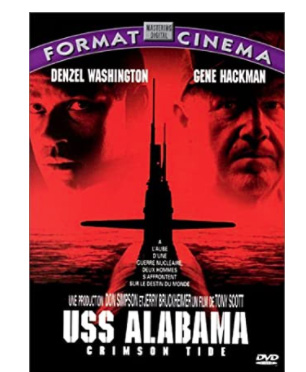
Crimson Tide
Synopsis
Set during a period of extreme geopolitical instability in post-Soviet Russia, a radical nationalist threatens to launch nuclear missiles against the United States. The nuclear missile submarine USS Alabama is dispatched on patrol with a seasoned, battle-hardened captain and a brilliant, intellectual executive officer. When communications are abruptly severed mid-message during an attempted rebel coup, a terrifying standoff erupts in the command room. The captain insists on launching a preemptive nuclear strike, while the executive officer demands verification, triggering a tense mutiny aboard the vessel.
The Making of the Film
Producer Jerry Bruckheimer and director Tony Scott sought to create a high-tension contemporary submarine thriller that combined claustrophobic naval warfare with razor-sharp ethical dilemmas. The original screenplay by Michael Schiffer received uncredited polishes from celebrated screenwriters like Quentin Tarantino, who injected sharp dialogue and pop-culture banter into the early scenes. The filmmakers drew inspiration from real-life Cold War naval incidents involving ambiguous command protocols and nuclear launch authorizations. This meticulous preparation ensured the film captured the authentic procedural tension of submarine operations.
Critical Reception
Upon its release, Crimson Tide was a major critical and commercial success, celebrated for its masterclass pacing, atmospheric tension, and powerhouse lead performances. Reviewers heaped praise on the electrifying onscreen chemistry and intellectual sparring between Denzel Washington and Gene Hackman. Critics highlighted how the film elevated standard action tropes into a profound philosophical debate regarding military obedience and human survival. It received three Academy Award nominations and remains widely regarded as one of the finest submarine thrillers ever made.
Behind-the-Scenes Stories
Denzel Washington and Gene Hackman maintained a formal, slightly distant working relationship on set to naturally fuel the intense ideological friction between their characters. The production team constructed an extraordinarily detailed, life-sized replica of a US Navy nuclear submarine interior, allowing cameras to move fluidly through tight corridors. Director Tony Scott utilized dynamic, sweeping camera angles and striking color palettes to heighten the claustrophobic anxiety of deep-sea combat. Several retired US Navy submariners served as technical advisors, ensuring procedural accuracy during crisis management scenes.
Themes Explored
The film deeply investigates the ethics of military obedience versus personal moral responsibility in times of crisis. It explores the psychological friction between old-school military instinct and modern intellectual calculation. Additionally, it touches upon racial dynamics in leadership and the terrifying mechanics of mutually assured destruction.
Explication_fin
Following a tense armed mutiny and a race against the clock, Hunter manages to prevent the premature missile launch just as communications are restored, confirming that the rebel coup has been crushed and war averted. During a formal naval inquiry board hearing, the admiralty praises Hunter's courageous adherence to protocol while acknowledging Ramsey's honorable motivations, leading to Ramsey taking early retirement. In the final scene, Ramsey gracefully passes the torch to Hunter at a retirement ceremony, cementing their mutual respect.
Meaning of the Title
setTitle: The English title Crimson Tide refers to the ominous military alert status and operational color codes associated with the submarine fleet during high-stakes combat readiness. It evokes a sense of overwhelming, blood-red danger and impending global catastrophe. The title establishes an appropriately brooding and urgent tone for the geopolitical thriller.
Hans Zimmer's monumental electronic and orchestral score earned widespread critical acclaim, blending massive synthesizer ostinatos with soaring brass themes to elevate the submarine tension into a cinematic masterpiece.
The Hunt for Red October, K-19: The Widowmaker, Das Boot, Hunter Killer