

 Français
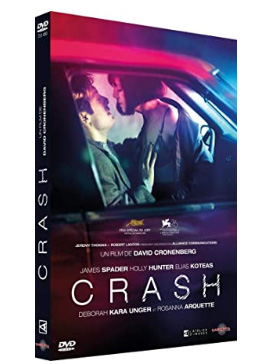
Crash
Synopsis
Following a near-fatal head-on car crash on a Los Angeles freeway, a detached television producer named James Ballard undergoes a bizarre psychological awakening. During his hospital recovery, he meets a charismatic subculture leader who views automobile collisions not as tragedies, but as transcendent erotic events that merge human flesh with modern machine technology. Drawn into this dangerous underground fetish community, James and his wife experience a reckless escalation of sexual encounters staged around high-speed vehicular wrecks. Their obsession alters their reality forever.
The Making of the Film
Director David Cronenberg adapted J.G. Ballard's controversial 1973 science fiction novel, bringing his signature body-horror sensibilities into a sleek urban psychological thriller. Producers faced immense studio resistance and censorship hurdles due to the book's taboo exploration of vehicular fetishism. The production utilized sprawling Los Angeles freeway interchanges and industrial garages to capture cold, metallic modernity. James Spader and Holly Hunter anchored the daring cast. Newmarket Films backed the indie production.
Critical Reception
Critics offered deeply divided reviews upon its premiere at the Cannes Film Festival, with some booing its explicit transgressive themes while others praised its brilliant cinematic audacity. The jury, headed by Francis Ford Coppola, awarded it the special Jury Prize for Originality, causing a minor media uproar. Audiences were polarized by its clinical detachment and sexualized mechanical carnage. It remains a fascinating cult classic of 1990s provocative cinema.
Behind-the-Scenes Stories
David Cronenberg drew visual inspiration from J.G. Ballard's technological alienation essays and sleek automotive advertising design. James Spader and Holly Hunter performed intense, intimate vehicular sex scenes inside cramped custom car interiors under strict technical supervision. During filming on Los Angeles freeways, stunt coordinators orchestrated precise, low-speed collisions using reinforced luxury sedans. Howard Shore composed a mesmerizing, multi-guitar minimalist score.
Themes Explored
The narrative explores technological fetishism, human-machine fusion, erotomania, psychological trauma, and mortality. It examines how modern urbanites seek transcendent intimacy through mechanical violence. Furthermore, it highlights alienation.
Ending Explained
James crashes his car again with his battered wife in the passenger seat, surviving the wreck to share a twisted, wordless smile of renewed sexual and psychological communion. A chilling, enigmatic resolution closes the film.
Meaning of the Title
The title 'Crash' refers directly to automotive collisions, symbolizing both physical destruction and a perverse awakening of sexual desire.
Howard Shore composed an extraordinary, hypnotic score featuring multiple electric guitars and harps that evokes the sterile, metallic pulse of modern freeways.
Other transgressive psychological and body-horror films such as Titane, Videodrome, and Naked Lunch.