

 Français
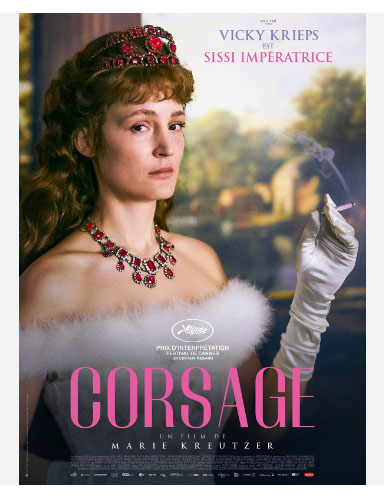
Corsage
Synopsis
In the year 1877, Empress Elisabeth of Austria, once celebrated for her legendary beauty, reaches her milestone fortieth birthday and is officially deemed middle-aged. Constricted by strict court protocols, public ceremonies, and the punishing physical demands of her tight corsetry, she begins to rebel against her gilded cage. She travels across Europe to escape royal obligations, seeking moments of personal freedom, intellectual stimulation, and physical expression. The film offers a bold, anachronistic portrait of a historical icon fighting for autonomy.
The Making of the Film
Director and writer Marie Kreutzer conceived the project as a rebellious feminist re-imagining of the life of Empress Elisabeth of Austria, known affectionately as Sisi. Kreutzer sought to strip away the romanticized myths surrounding the historical figure to explore the suffocating reality of female aging in the nineteenth century. The production utilized deliberate anachronisms in music and behavior to underscore how timeless the struggle for bodily autonomy remains. Filmmakers chose authentic European palaces and rural estates to ground the regal atmosphere.
Critical Reception
Critics praised the film for its daringly bold, revisionist approach to period drama and Vicky Krieps's mesmerizing lead performance. Reviewers commended the sharp thematic focus on the policing of women's bodies and royal confinement. Some critics debated the bold narrative liberties taken with historical facts, yet celebrated its artistic audacity. It won widespread acclaim on the international film festival circuit.
Audiences drawn to psychological period dramas and feminist cinema appreciated the film's raw emotional honesty and striking visual aesthetic. Viewers found the depiction of a monarch breaking free from societal chains empowering and profoundly moving. The poignant exploration of aging and vanity resonated deeply across diverse demographics. Many praised it as a refreshing antidote to traditional royal biopics.
The film earned critical triumphs, including Vicky Krieps winning the Best Performance award in the Un Certain Regard section at the Cannes Film Festival. It also captured major accolades at the European Film Awards, including Best Actress. The movie was selected as Austria's official entry for international feature recognition.
Behind-the-Scenes Stories
Director Marie Kreutzer was inspired by her own changing relationship with aging and society's rigid expectations regarding female physical appearance. She wanted to investigate the literal and metaphorical suffocation experienced by women confined to tight garments in royal courts. The costume design team engineered custom corsets that were historically accurate yet flexible enough for the actress to move dynamically.
Shooting across historical European palaces required strict scheduling restrictions to protect priceless artifacts and antique furnishings. Maintaining a delicate balance between nineteenth-century court etiquette and modern feminist sensibilities demanded rigorous directorial control. Managing the intense physical demands of the tight-laced costumes required specialized health monitoring for the cast.
During the pivotal rebellious dance sequences, actress Vicky Krieps incorporated modern movements and expressions to shatter traditional period-film conventions. The musical score by Camille featured contemporary pop songs reimagined for classical instruments, creating an intentional jarring effect for viewers. This creative choice reinforced the timeless nature of the protagonist's rebellion.
Vicky Krieps took on the demanding lead role of Empress Elisabeth, bringing fierce intelligence and raw vulnerability to the monarch. The supporting cast featured talented European actors portraying rigid royal family members and loyal attendants. Casting decisions prioritized performers capable of conveying complex psychological subtext without relying on heavy dialogue.
Themes Explored
The film explores the tyranny of public image, the societal policing of female aging, and the quest for bodily autonomy. It examines how royal status can trap individuals in gilded cages devoid of personal freedom. The narrative ultimately celebrates rebellion against oppressive patriarchal structures.
Ending Explained
The narrative concludes with a shocking, liberating act where Elisabeth leaps from a ship into the sea, breaking free from the suffocating expectations of royal life forever. Rather than depicting her historical assassination, the film offers a poetic, empowered re-imagining of her final exit on her own terms. The ending symbolizes ultimate freedom, transcending the physical and social corsets that bound her earthly existence.
Meaning of the Title
The title "Corsage" refers to the tight-laced garment historically used to mold the Empress's waist into socially mandated dimensions, serving as the central physical metaphor for her oppression. It symbolizes the painful constraints placed upon women by patriarchal society and royal etiquette. The unlacing and rejection of the corset mark her journey toward liberation.
Latest News
Following its international festival success, the film continues to be studied by scholars of feminist cinema and costume design.
Similar Films
Fans of revisionist historical dramas will enjoy The Favourite (2018), Marie Antoinette (2006), Spencer (2021), and Sofie (1992), all exploring women breaking free from royal confinement.