

 Français
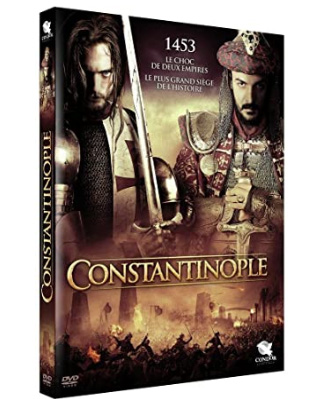
Conquest 1453
Synopsis
Set in 1453, the film chronicles the epic, historical military campaign led by the ambitious young Ottoman Sultan Mehmed II to conquer the impenetrable Byzantine capital of Constantinople. Facing massive medieval stone fortifications, Greek fire defenses, and formidable Christian crusader resistance, the Ottoman army engineers unprecedented tactics—including hauling warships overland across the hills—to breach the city walls. As bloody sieges unfold and heroes rise on both sides, the fate of two empires hangs in the balance during a historic fifty-three-day battle that reshapes world history forever.
The Making of the Film
Directed and co-written by Faruk Aksoy, the Turkish historical war epic was conceived as one of the most expensive and ambitious film productions in the history of Turkish cinema. Aksoy sought to portray the legendary 1453 conquest of Istanbul with grand cinematic scale, national pride, and massive battle sequences. The production spent years constructing enormous physical castle sets, digital visual effects pipelines, and period-accurate Ottoman and Byzantine armory. Devrim Evin and İbrahim Çelikkol led the historical cast.
Critical Reception
Critical reception for the film was mixed, with reviewers praising its stunning battle choreography, lavish costume design, and impressive production scale for Turkish cinema, while criticizing its heavy-handed nationalist bias and simplistic character writing. Audiences across Turkey and international Muslim-majority nations flocked to theaters in record numbers, turning the historical epic into a monumental blockbuster box office smash and one of the highest-grossing Turkish films of all time. It is celebrated as a milestone in Turkish historical filmmaking.
Behind-the-Scenes Stories
The production constructed massive, full-scale medieval fortress walls and ship-hauling slipway sets on massive soundstages in Istanbul. Thousands of background extras underwent rigorous military reenactment training to portray Ottoman janissaries and Byzantine defenders realistically. Director Faruk Aksoy utilized advanced CGI visual effects alongside practical pyrotechnics to stage the historic cannon bombardments. The historical Turkish dialogue required careful dialect coaching for the cast.
Themes Explored
The film explores medieval siege warfare, imperial expansion, clash of civilizations, religious faith, and historical destiny. It highlights military engineering, leadership under pressure, and patriotism. Constantinople siege drives the epic plot. It also touches upon sacrifice.
Ending Explained
Following a relentless, final all-out assault through the breached walls of Constantinople, Sultan Mehmed II leads his triumphant Ottoman forces into the captured city, bringing an end to the Byzantine Empire and renaming the city Istanbul. The young sultan displays mercy and religious tolerance toward the surviving citizens, establishing a new era of imperial rule. The historical victory secures his legacy as a legendary conqueror. The conclusion provides a magnificent, triumphant historical wrap-up.
Meaning of the Title
The original Turkish title "Fetih 1453" translates literally to "Conquest 1453" in English, commemorating the exact historical year of the fall of Constantinople by the Ottoman Empire. It symbolizes history and victory. The phrase sets an epic historical war tone.
Benjamin Wallfisch and Fırat Yükselir composed a thunderous, epic orchestral and choral score featuring traditional Turkish instruments that amplified the medieval siege.
Kingdom of Heaven, The Lord of the Rings, Alexander, 300