

 Français
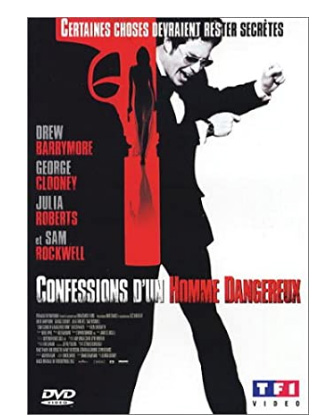
Confessions of a Dangerous Mind
Synopsis
Chuck Barris is a young television producer who becomes a household name by creating hit game shows such as The Dating Game and The Gong Show. According to his own bizarre memoir, he also led a secret double life as a CIA assassin, killing targets around the world while pretending to be on vacation. The film follows his rise to fame, his growing paranoia and his tangled relationships with the women in his life. Part biography, part spy farce, it asks the audience whether any of it could be true.
The Making of the Film
Confessions of a Dangerous Mind is based on the 1984 book by Chuck Barris, which he described as an unauthorized autobiography. In it, he claimed to have worked as a hired killer for the CIA, a claim that the agency and many observers have dismissed as fantasy. The screenplay was written by Charlie Kaufman, known for "Being John Malkovich", and the project had passed through the hands of several directors over the years. George Clooney made his directorial debut with the film, and Steven Soderbergh served as an executive producer. Sam Rockwell played Barris, alongside Drew Barrymore, Julia Roberts and Clooney himself in a supporting role. The film was released in the United States at the end of 2002 and reached France in 2003.
Reviews and Reception
Summary of Professional Reviews
Critics gave the film a mostly positive reception, praising Clooney's confident visual style and Sam Rockwell's charismatic performance. Many admired the way the story blurs the line between truth and invention. Some reviewers felt that the film was more interested in its tricks than in its character. Overall, it was seen as an ambitious and entertaining first film.
Audience Reception
The film was not a big commercial success, but it developed a cult following over the years. Audiences who enjoy offbeat, genre-bending stories appreciated its mix of satire and spy intrigue. Its playful look at television culture also attracted viewers curious about the real Chuck Barris. It remains one of the more unusual biographical films of its decade.
Awards Received
Sam Rockwell won the Silver Bear for Best Actor at the Berlin International Film Festival in 2003. The film also earned a number of nominations from critics' groups and independent film awards. These honors helped establish Clooney as a serious director.
Filming Anecdotes
Production Challenges
The project spent years in development, with several well-known directors attached at different points before Clooney took the helm. The studio reportedly had reservations about the casting of Sam Rockwell, who was not yet a major star. Clooney fought to keep him in the role, and the performance became one of the film's greatest strengths. The film also used a variety of visual styles to reflect the different eras and moods of Barris's life.
Themes Explored
The film is a satire of television culture and the hunger for fame. It plays with the idea that a person can be a different man in public and in private. Truth and fiction are deliberately blurred, so that the viewer is never sure what really happened. Loneliness and guilt run through the story, especially in Barris's relationships. The film also reflects on the cost of living a double life. At its core, it is a portrait of a man who may have invented his own legend.
Ending Explained
The film does not settle the question of whether Barris was really a CIA assassin. In its final scenes, he is shown alone in a hotel room, reflecting on his life and his regrets. This open ending suggests that the truth matters less than the stories people tell about themselves. It leaves the audience to decide how much of the confession to believe.
Meaning of the Title
The title echoes the language of confessional memoirs and refers directly to Chuck Barris's book. The phrase "dangerous mind" works as a pun, suggesting both a mind capable of violence and a mind that is slightly unhinged. It sets up the film's central ambiguity.
Similar Films
- Catch Me If You Can (2002): a fast-paced story about a charming con man.
- Being John Malkovich (1999): another Charlie Kaufman film full of strange ideas.
- Adaptation. (2002): a Kaufman screenplay about storytelling and identity.
- Good Night, and Good Luck (2005): Clooney's next film as director, about television.