

 Français
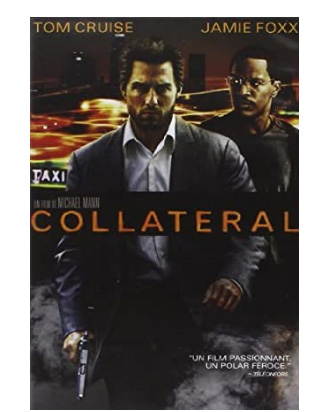
Collateral
Synopsis
Max Durocher is a weary Los Angeles cab driver dreaming of starting his own limousine business. His routine night takes a dangerous turn when he picks up Vincent, a sleek, silver-haired hitman carrying out a contract killing spree. Forced at gunpoint to drive Vincent to multiple targets across the sprawling city, Max must find a way to outwit the assassin and save the remaining targets. As dawn approaches, an intense game of cat and mouse unfolds on the neon-lit streets.
The Making of the Film
Screenwriter Stuart Beattie originally conceived the core concept as a teenager while taking a taxi ride through Sydney, Australia. He imagined a scenario where a cab driver is trapped in a car with a serial killer. Director Michael Mann was immediately drawn to the gritty urban atmosphere and elevated the material into a tense psychological thriller set in Los Angeles.
Critical Reception
Critics widely acclaimed Collateral for its stylish direction, taut suspense, and exceptional lead performances. Reviewers praised Tom Cruise for playing against type as a chilling, methodical villain, and commended Jamie Foxx for his grounded intensity. The film was also lauded for its pioneering digital cinematography capturing night-time Los Angeles.
Public reception was overwhelmingly positive, turning the thriller into a major box office hit worldwide. Audiences praised the relentless pacing, atmospheric tension, and the complex dynamic between the two main characters. It remains one of the definitive modern thrillers of the 2000s.
Jamie Foxx received an Academy Award nomination for Best Supporting Actor for his gripping performance as Max. The film also earned a nomination for Best Film Editing. Its technical achievements in low-light digital video photography were praised by industry professionals.
Filming Anecdotes
Director Michael Mann sought inspiration from neo-noir classics and wanted to portray Los Angeles as a living, breathing nocturnal ecosystem. He chose to shoot extensively on high-definition digital video cameras to capture the authentic glow of city lights. This visual choice gave the movie a raw, documentary-like immediacy that set it apart from traditional thrillers.
Production faced intense physical and logistical demands due to night-time shooting schedules across busy Los Angeles locations. Tom Cruise underwent rigorous covert operative training to handle firearms realistically and convincingly on screen. Jamie Foxx had to master authentic taxi driving maneuvers while delivering high-stakes dramatic dialogue in confined spaces.
A standout sequence takes place in a crowded jazz club where Vincent confronts a target while classic music plays in the background. The scene balances elegant atmosphere with chilling lethal efficiency, creating unbearable tension. Both actors executed their blocking with meticulous precision to heighten the dramatic impact.
The casting process paired two powerhouse actors in starkly contrasting roles to maximize dramatic friction. Tom Cruise radically altered his appearance with grey hair and a suit to play a cold-blooded antagonist. Jamie Foxx was chosen because Mann recognized his incredible dramatic depth beyond his comedic background.
Themes Explored
The film examines urban alienation, existential dread, and the unexpected connections forged between strangers. It contrasts the quiet, everyday aspirations of an ordinary worker with the cold nihilism of a professional killer. Moral choice and personal agency under extreme pressure are central motifs throughout the narrative.
NULL
Title Significance
The title refers to collateral damage, hinting at innocent lives caught in the crossfire of criminal enterprises. It underscores Maxs perilous position as an unintended pawn in the hitmans deadly mission.
NULL
NULL
Similar Films
Other similar films include Heat, Nightcrawler, and Drive.