

 Français
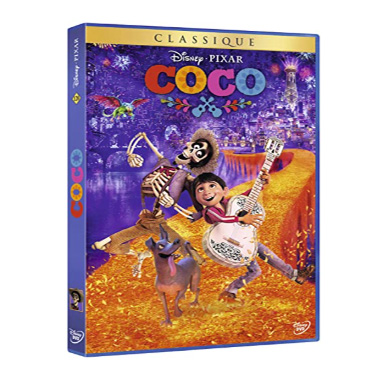
Coco
Synopsis
Young Miguel dreams of becoming a musician, even though his family has forbidden music for generations. During the Mexican Day of the Dead celebrations, he accidentally enters the Land of the Dead and discovers that he may be connected to a famous musician from the past. There, he meets the charming but unlucky Héctor, who offers to help him find the truth about his family. Miguel must uncover the story behind an old family conflict before he can return to the world of the living. His adventure teaches him the importance of memory, love and the bonds between generations.
The Making of the Film
Coco was developed by Pixar as an original animated feature inspired by the Mexican celebration of Día de los Muertos. Director Lee Unkrich became interested in the festival and the cultural traditions surrounding remembrance, family and the continuing presence of deceased relatives. The project was developed with Adrian Molina, who later became co-director and co-writer. The filmmakers wanted to create a story that respected the cultural significance of the celebration rather than using it merely as a colourful visual setting. They travelled to Mexico, visited communities and studied family traditions, music, architecture and the symbolism of the holiday. The story gradually took shape around a young boy who wants to become a musician despite a family prohibition. Music became the central element connecting the generations and revealing the family's hidden history. Pixar also worked with cultural advisers to improve the authenticity of the characters and setting. The film combines fantasy and adventure with a personal story about memory, identity and the importance of family.
Critical Reception
Professional Reviews
Coco received widespread critical acclaim and was praised for its animation, emotional storytelling and cultural richness. Reviewers particularly admired the visual design of the Land of the Dead, with its elaborate architecture, glowing colours and imaginative details. The relationship between Miguel and Héctor was frequently identified as the emotional centre of the film. Critics also praised the way the screenplay explores family history without losing the energy of an animated adventure. The music was considered an essential part of the storytelling rather than a simple decorative feature. Some discussions focused on the importance of cultural representation and the care taken to portray Mexican traditions. Overall, the film was regarded as one of Pixar's most moving and visually accomplished productions.
Audience Reception
Coco was warmly received by audiences around the world and became particularly successful in Mexico. Viewers responded strongly to its emotional treatment of family, memory and the loss of loved ones. The colourful world of the Land of the Dead and the memorable musical sequences helped make the film appealing to children and adults alike. Many families appreciated the way the story introduces the Day of the Dead traditions through an accessible adventure. The film's central song, Remember Me, also became widely recognised. Its emotional conclusion helped establish Coco as one of the most memorable animated films of its generation.
Awards
Coco won two Academy Awards in 2018: Best Animated Feature and Best Original Song for Remember Me. It also received the Golden Globe for Best Animated Feature and won several Annie Awards. The film was recognised by numerous critics' associations and international awards organisations. Its animation, music and cultural representation were particularly celebrated. The awards confirmed its place among the most successful animated productions of the late 2010s.
Behind the Scenes
Director Inspirations
Lee Unkrich and Adrian Molina were inspired by the Mexican tradition of Día de los Muertos and the idea that remembering loved ones keeps family connections alive. Their research involved repeated visits to Mexico and conversations with people who celebrate the holiday. The filmmakers wanted to understand the meaning of family altars, photographs, food and other traditions before translating them into animation. They also drew on Mexican music and popular culture to give the fictional town a convincing identity. The project was designed to celebrate the culture rather than present it as an exotic backdrop.
Production Challenges
One of the major challenges was creating a visually rich world that remained culturally respectful and coherent. The animation team developed complex designs for the Land of the Dead, including enormous cities, bridges and thousands of skeletal characters. The filmmakers also had to animate realistic-looking musical performances and make the characters' movements feel natural. Extensive research was necessary to represent traditional clothing, architecture and objects accurately. Pixar worked with cultural consultants and artists to refine the visual details. Another challenge was balancing the film's darker subject matter with an accessible tone for younger audiences.
A Particular Scene
The final performance of Remember Me is one of the film's most emotional moments. Miguel sings the song to Mamá Coco, whose memory is fading, and the music helps her reconnect with her father. The scene transforms a song that had previously been associated with fame and manipulation into an intimate expression of love. Its emotional power comes from the connection between music and personal memory. The sequence also reveals why remembering family members is so important to the story.
Music and Cultural Details
The filmmakers placed particular emphasis on the musical traditions that influenced the film. The soundtrack includes Mexican musical styles and performances that help establish the identity of the characters and their community. The design of the Land of the Dead also incorporates details inspired by Mexican art, architecture and the traditional use of marigolds. These elements were developed through research and consultation rather than being added solely for visual decoration.
Themes
Family and memory are the central themes of Coco. The film explores how the stories of previous generations shape the identity of people who are still alive. Miguel initially believes that his family's prohibition on music prevents him from fulfilling his dreams, but his journey reveals the painful history behind that rule. The story also examines forgiveness, showing how misunderstandings and resentment can survive across generations. Music becomes a bridge between the past and the present, allowing characters to communicate feelings that have been forgotten or suppressed. The Day of the Dead traditions provide a framework for reflecting on death without presenting it only as something frightening. The film suggests that a person can remain part of a family through memories, stories and photographs. Identity is also important because Miguel must understand where he comes from before deciding who he wants to become. The conflict between individual ambition and family loyalty gradually gives way to a more generous understanding of both. Ultimately, Coco celebrates the idea that love and remembrance can preserve human connections beyond death.
Ending Explained
Miguel discovers that Héctor, rather than Ernesto de la Cruz, was his true great-great-grandfather and the original author of Remember Me. Ernesto had stolen Héctor's songs and was responsible for his death, allowing him to build a celebrated musical career on someone else's work. Miguel returns to the world of the living with the truth and uses the song to help Mamá Coco remember her father. She retrieves a letter and photograph that confirm Héctor's place in the family history. This discovery restores his memory and prevents him from disappearing completely from the Land of the Dead. The family gradually accepts Miguel's musical ambitions and recognises the importance of preserving their history. The ending shows that remembrance is an active expression of love, not merely a ritual. Miguel is able to pursue music without abandoning his family. The final scenes bring together the living and the dead through shared memories and music.
Meaning of the Title
The title Coco refers to Mamá Coco, Miguel's great-grandmother and one of the most important people in his family. Although she appears frail and increasingly distant because of her age, her memories hold the key to the family's past. Her connection to Héctor is essential to the story because remembering him prevents his disappearance from the Land of the Dead. The title therefore places the emphasis on family relationships rather than on Miguel's musical ambition alone. It also gives importance to an older generation whose stories might otherwise be forgotten. The name Coco becomes a symbol of memory, affection and the continuity of family history.
Original Soundtrack
The soundtrack was composed by Michael Giacchino, with songs written by Kristen Anderson-Lopez and Robert Lopez. Remember Me is the film's central musical theme and appears in several different arrangements, each with a different emotional meaning. The soundtrack also features Mexican musical influences, including mariachi, traditional folk styles and regional rhythms. Songs such as Un Poco Loco and The World Es Mi Familia help define Miguel's musical journey. The music is essential to the narrative because it connects characters across generations and reveals important elements of the family's history. Remember Me won the Academy Award for Best Original Song.
Similar Films
- Encanto (2021), another animated film about family history, inherited expectations and personal identity.
- The Book of Life (2014), an animated adventure inspired by the Mexican Day of the Dead.
- Soul (2020), a Pixar film exploring music, purpose and the meaning of life.
- Up (2009), an emotional animated story about memory, loss and human connection.
- Kubo and the Two Strings (2016), a fantasy adventure about family, memory and the power of storytelling.